
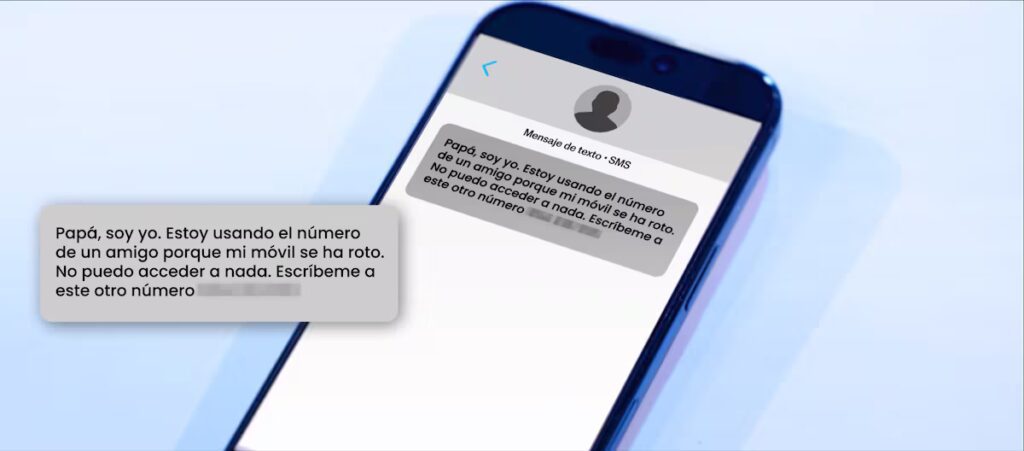
Some parents may go to great lengths to help their child in distress, often overlooking the possibility of fraud that could be prevented with an established keyword for emergencies.
Table of Contents
ToggleUnderstanding the Son-in-Dirt Scam
In this prevalent form of cyber fraud, scammers impersonate the victim's child. Using an unknown number, they initiate contact with a general greeting, claiming to be writing from a friend's phone due to a lost or dead battery. They then paint a scenario requiring urgent financial help, requesting money to be sent to a specified account or via a money transfer service like Bizum. This scam preys on the emotional bonds within families.
Recent Arrests Highlighting the Issue
In December 2025, the National Police arrested 20 individuals in Torrent and Paterna, Valencia, accused of defrauding approximately 120,000 euros from around 200 victims nationwide through this scheme. Additionally, a man in Cádiz was apprehended for defrauding a Valladolid resident of 9,811 euros. This occurred after he sent a message from an unknown number stating, “Mom, the phone is broken.”
Expert Insights from a Cyber Fraud Specialist
According to a fraud expert from CaixaBank, scammers often prolong the deception until the victim starts expressing doubts. They may resort to insults for disbelief and subsequently sever all communication.
Tips for Avoiding the Son-in-Dirt Scam
To protect yourself and your family from this type of scam, consider the following precautions:
- Be cautious with urgent messages from unknown numbers, even if they seem to come from “Mom” or “Dad.”
- Verify through a different channel: Call your child's usual phone number. If they don't respond, reach out to another family member or close friend.
- Question any request for secrecy or claims of unavailability for a call.
- Discuss fraud awareness at home to ensure all family members recognize potential scams.
- Establish a code word for emergencies or specific questions only your child would know to validate requests for help.
- If you suspect a scam, immediately cease communication and report the incident to the National Police or the Civil Guard. If money has been sent, also notify your bank.
- If any sensitive information was shared, report it to your financial institution to change your credentials.
The Mechanics of the Scam
The scam often begins with a mass message saying, “Hello, Mom/Dad, I need a favor.” Scammers send these messages to numbers collected or purchased from databases on the dark web—a part of the internet not indexed by search engines and accessible only through specific browsers. Cyber fraud expert Jordi Sánchez notes that if such a message reaches 500,000 individuals, a statistically significant number are likely to respond, believing the urgent message is genuine.
Understanding the Technology Behind the Scam
Victims typically interact with bots—automated programs designed to simulate human conversation—rather than real people. Scammers may only get involved if complications arise in the dialogue, allowing them to maintain anonymity while manipulating the situation.
Emerging Variations of the Son-in-Dirt Scam
New variations of this scam continue to surface, showcasing evolving tactics to deceive individuals. Regular awareness and vigilance are crucial to combatting such fraudulent schemes.