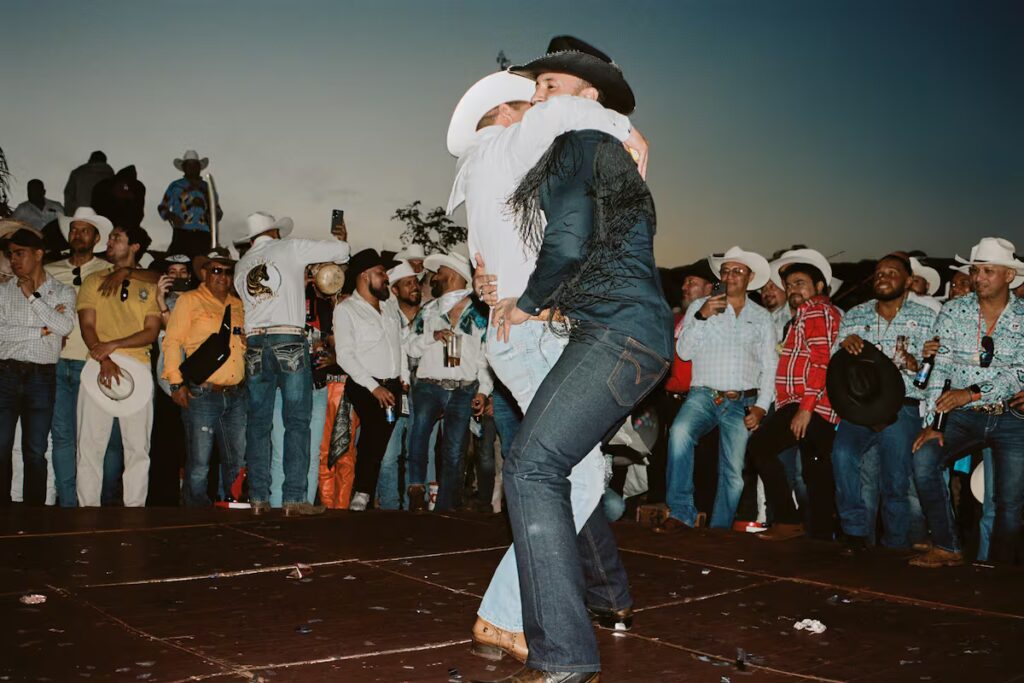
Every spring, hundreds of cowboys embark on a journey to various cities in central and northern Mexico for a unique kind of cowboy convention. These events are far from typical gatherings focused on cattle ranching techniques. Instead, attendees engage in dancing, socializing, dining, and even flirting, providing a chance to connect with like-minded individuals, make friends, and perhaps find romance.
Gay cowboy parties have emerged in Mexico and the United States as significant symbols of identity, resistance, and activism within the LGBTQ+ community. Mexican journalist and author Guillermo Osorno describes them as “oases” in regions far from Mexico City, where LGBTQ+ visibility is generally higher.
In April 2025, Osorno attended one of the largest gatherings of gay cowboys in Zacatecas, accompanied by Spanish photographer Pablo Sáez. Their collaboration, initiated by stylist Alba Melendo, culminated in a photography book titled Vaquero (Cowboy), which portrays the social and intimate lives of these men.
Table of Contents
ToggleThe Essence of Cowboy Gatherings
The cowboy aesthetic at these events is strikingly distinct. Participants typically don cowhide, crocodile, or ostrich-skin boots, fitted jeans, python belts, and elaborately embroidered shirts, topped off with wide-brimmed hats. This look, while instantly recognizable, varies in color and material, always preserving the quintessential cowboy image. Upon arrival, guests toast with Tecate beer and caballitos—tequila shots unique to Mexico—before moving to the dance floor to the beats of banda music, where bodies press together in rhythmic celebration.
Osorno explains that these gatherings have developed over the past two decades, driven by gay men in northern Mexico seeking safe spaces to express themselves without judgment and to dress according to their preferences. In regions characterized by industrial and ranching lifestyles, finding a sense of community as a gay man poses more challenges than in Mexico City, where a vigorous LGBTQ+ rights movement has been underway. This advocacy notably led to the legalization of same-sex marriage in Mexico City in 2009, with national recognition only occurring in 2022.
At these parties, attendees embrace their identities openly. Many are activists for LGBTQ+ rights from areas like Chihuahua, Zacatecas, and Ciudad Juárez. Some participants travel great distances—up to 200 kilometers (about 124 miles)—to attend these events, where they can shed the constraints of their everyday lives. Osorno notes that while some attendees run market stalls at home, at the cowboy parties, they express a truer version of themselves.
Celebration and Community
The Easter Week celebration in Zacatecas lasts three to four days and features live music, dancing, and ample food. A highlight is the Cowboy Face competition, a popularity contest that resembles traditional community celebrations, culminating in a horseback parade in nearby Jerez de García Salinas, where locals join the festivities.
Music plays a crucial role throughout these gatherings, showcasing cumbia sonidera and corridos norteños. The lyrics of the corridos often explore themes of love, heartbreak, and even drug trafficking, creating a soundtrack reflective of the regional context.
Culturally Rich Traditions
Participants proudly embody the cowboy aesthetic rooted in familial traditions. Many attendees hail from ranching families, where jeans, boots, and wide-brimmed hats are standard wear. Osorno points out that the history of cowboys in this region dates back to New Spain, with the Spanish conquest leading to the establishment of early cattle ranches and the evolution of the cowboy figure, which crossed borders during the 19th century.
While several attendees are genuinely engaged in ranching professions, others work in various fields such as education, policing, and healthcare. The adoption of the cowboy aesthetic serves as an assertion of identity while also carrying a layer of fetishism, standing as a potent symbol of strength and desire that challenges traditional notions of masculinity associated with cowboy culture.
Osorno and Sáez aimed to look beyond the hypermasculine portrayal of this subculture to discover the individuals behind the cowboy attire. While some participants were hesitant to be photographed, many embraced the opportunity to share their stories. The gatherings draw men of all ages and body types, although Osorno notes a predominance of middle-aged and older participants, an aspect that is valued within this community.
A Journey of Discovery
Osorno's exploration into this vibrant culture began in Mexico City when he learned about an event in León, Guanajuato, just three hours away. Upon witnessing the gathering of over 600 men dressed in cowboy attire for the first time, he felt compelled to delve deeper into this world.
In 2025, his chance encounter at a dinner led to the inspiration for a fashion editorial, which eventually transformed into the photography book. With the collaboration of Levi's, a brand synonymous with cowboy culture, Osorno and his team captured the essence of these gatherings at the Zacatecas party, weaving a narrative that reflects both tradition and modern identity among gay cowboys.