
Table of Contents
ToggleEmergence of Personal AI: Lenovo Unveils Qira at CES 2026
The generative AI revolution took many technology giants by surprise at the end of 2022. In response to the success of ChatGPT, Microsoft and Google adjusted their strategies, while Apple opted to step back until June 2024. Their upcoming personal intelligence initiative, which aims to simplify AI for everyday tasks, has been postponed by a year, now set to launch in spring 2025.
Lenovo's Ambitious Move in Personal AI
In contrast, Lenovo has been quietly developing its personal AI strategy. At the CES fair in Las Vegas, the Chinese technology giant introduced Qira, a personal AI assistant expected to launch in 2026. Qira will utilize user data from mobile phones, tablets, and computers to enhance interaction and memory recall, similar to the new generation of Siri Apple is working on.
Lenovo's CEO, Yuanquin Yang, explained that Qira will anticipate user needs and offer to complete unfinished tasks, emphasizing the importance of user consent in its operations. This feature aims to respect privacy, addressing concerns that generative AI might infringe on user privacy, particularly highlighted by issues surrounding Microsoft's Recall.
Operational Features of Qira
If permission is granted, Qira will activate across the latest Lenovo devices, including computers, tablets, Motorola smartphones, and smartwatches. Even when users are away from their workstations, Qira can assist in completing tasks like finalizing presentations. During CES demonstrations, Qira successfully carried out basic tasks, such as researching travel options.
As Dan Dery, Lenovo's Vice President of Artificial Intelligence, noted, Qira is “not just another assistant” but a “super agent” capable of operating across various devices. It utilizes hybrid AI technology, combining local processing on user devices with cloud services, akin to ChatGPT mechanisms.
Apple's Struggles and Shifts in Strategy
Apple's delay in launching its AI-enhanced Siri stems from challenges in developing reliable large language models (LLMs). Internal issues led to a shift toward second-generation software architecture to address initial limitations. Recent reports suggest that Apple may also incorporate Google's Gemini LLMs to accelerate its technology development.
The Importance of Partnerships in AI Development
Unlike Apple's approach, Lenovo has fostered partnerships with multiple AI model providers, including Microsoft and Stability AI. Tolga Kurtoglu, Lenovo's Chief Technology Officer, emphasized that collaboration is vital in the evolving AI landscape, stating that “no company can do everything alone.” This strategy enables Lenovo to choose the best-performing models for individual user needs while optimizing security and reducing costs.
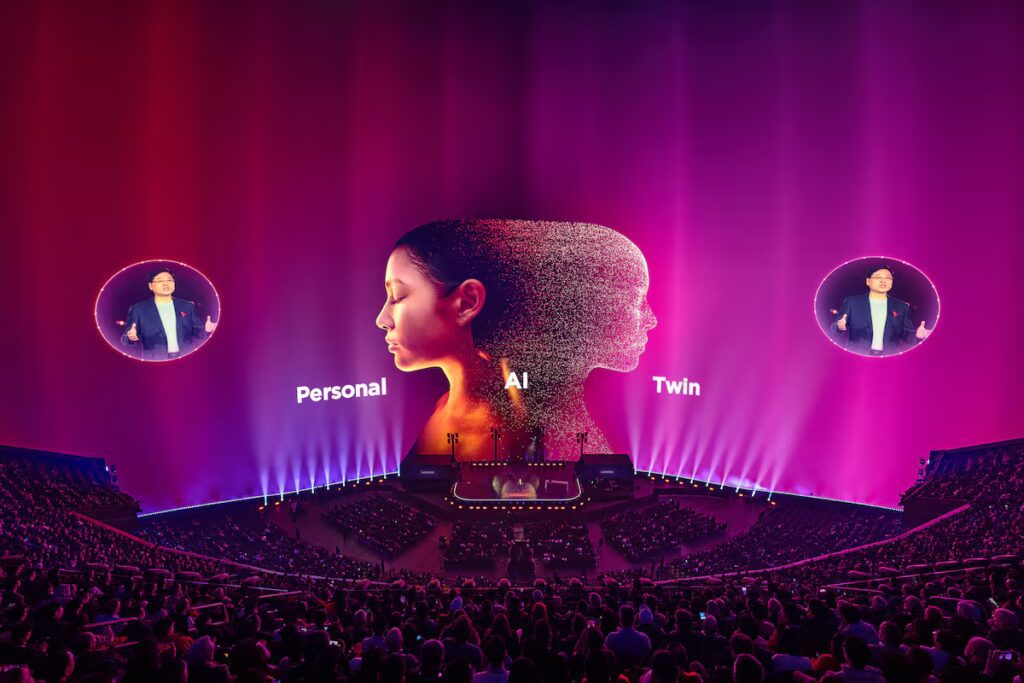
Lenovo's ambitions go beyond expectations, aiming to create “digital twins” of users that could analyze and process personal information more efficiently. However, this endeavor raises ethical questions about the implications of such advanced technology.
Competitive Landscape
While Lenovo's innovative approaches could lead to significant advancements in personal AI, Apple's extensive user base presents a competitive edge. The integration between Apple's devices, such as iPhones and Macs, enhances user experience in adopting AI technologies. In contrast, Lenovo's user ecosystem, which includes Motorola phones and Lenovo computers, remains smaller, potentially limiting the impact of Qira.