
Table of Contents
TogglePLD Space's ‘Miura 5': Spain's Path to Space Sovereignty
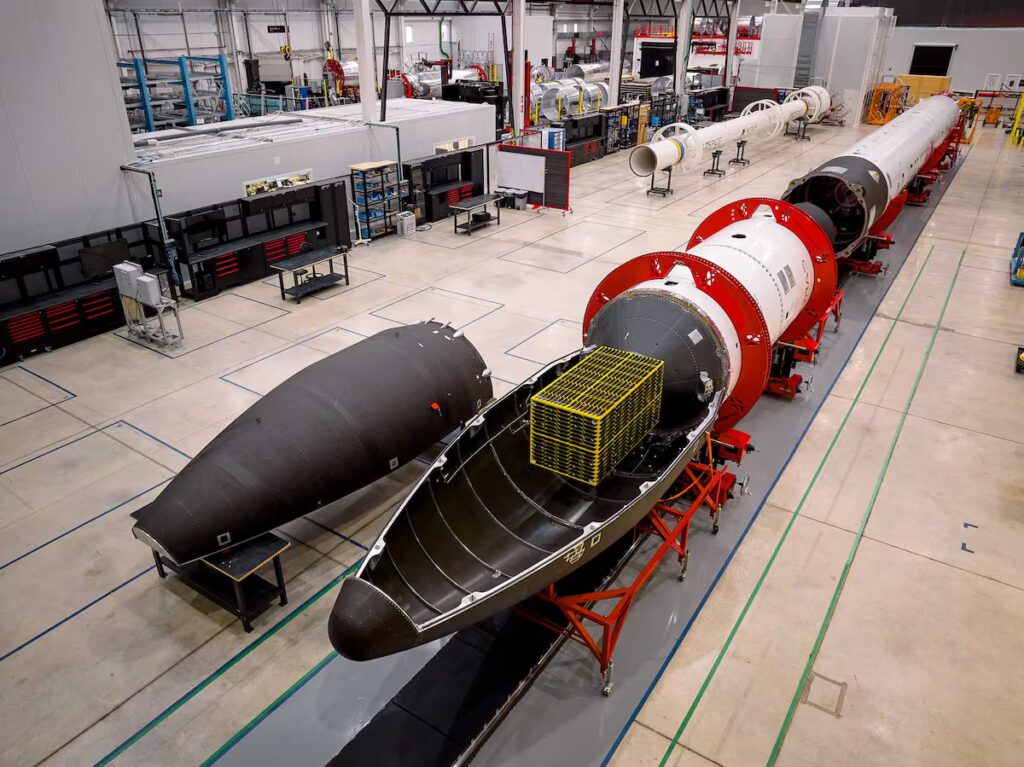
If PLD Space‘s plans come to fruition, Spain will join the ranks of countries with space sovereignty, marking a key milestone in its ability to launch and control satellites independently. The company is set to launch its first demonstration rocket, ‘Miura 5', in the latter half of this year from Kourou, French Guiana. While aerospace industry representatives recognize the significance of this advancement for national security, surveillance, and telecommunications, they emphasize that it should also align with European collaboration.
Lack of a National Spaceport
Despite its growing capabilities, Spain currently lacks a dedicated spaceport, similar to the European Space Agency's (ESA) Center Spatial Guyanais (CSG) managed by Arianespace in Kourou. Existing test facilities in Spain, like the ones operated by the National Institute of Aerospace Technology (INTA), cannot compare. Establishing a full-fledged spaceport in Spain would be financially challenging, requiring investments potentially exceeding 2.5 billion euros, along with annual maintenance costs over 100 million euros.
Advantages of Kourou
Louis Laurent, head of the Ariane 6 program, highlights the strategic advantages of operating from Kourou, including a 30% reduction in costs due to its proximity to the equator. The site offers greater operational efficiency and safety, being far removed from major urban centers in Europe.
Innovations in Launch Logistics
One logistical innovation enhancing transport efficiency is the ‘Canopy', a large sailboat specifically designed for the transportation of rocket components from Europe to Kourou. Éric Le Nechet, director of Ariane Group Transport, asserts that the Canopy, requiring only 11 crew members, reduces fuel consumption by 30% compared to traditional maritime transport.
Timeline for Miura 5
Rafael Verdú, co-founder of PLD Space, states that the first ‘Miura 5' unit is expected in French Guiana by early summer. The upcoming test flight is crucial for validating the rocket's performance, with commercial flights scheduled to commence by 2027. PLD Space has already secured a partnership with Spanish satellite telecommunications operator Sateliot, which plans to use the ‘Miura' to deploy two satellites, ‘Trito', for high-capacity 5G services.
Focus on Future Reusability
This year's demonstration flight aims to ensure operational efficacy and to test systems for potential future launcher recovery. According to Verdú, the recent launch of Ariane 6-4, coupled with initiatives like PLD Space, marks the end of what has been termed the European “space winter”. Verdú emphasizes that the evolution of the industry, driven by both emerging companies and the need for competitiveness, has the taxpayer as a significant beneficiary.
Global Ambitions of PLD Space
Verdú expresses that Spain has historically been an aerospace power, albeit subdued in its launch capabilities. He insists that the goal is not just national or continental but global, aiming to position Europe competitively in the international arena while developing a company that serves various global markets, including regions like Japan, the U.S., Canada, and Latin America.
Commercial Ventures and Technological Advancements
PLD Space's inaugural commercial client, Sateliot, led by Jaume Sanpera, recognizes the transformative changes in the satellite industry. The company specializes in standards-based communications and aims to provide global connectivity services that challenge dominant players like SpaceX's Starlink.
Investment in Space Infrastructure
Sanpera emphasizes the need for increased investment in the Spanish space sector, despite demonstrating existing technological capabilities for autonomy. He highlights that the burgeoning demand for satellite-connected devices by 2030 necessitates robust investment strategies in space.
Collaborative Efforts in European Space Strategy
Carlos Fernández de la Peña, CEO of Telespazio Ibérica, notes the disparity in budgets between European and U.S. space agencies but believes Europe is evolving, particularly with major programs like Galileo, Copernicus, and Iris². He advocates for a balanced approach that ensures collective national capabilities while avoiding unnecessary duplication of efforts within European nations.
Fernández de la Peña calls for a united front in building a strong European presence in the global space sector, underlining the necessity for cooperation among nations to address contemporary challenges in space exploration and utilization.