
Table of Contents
ToggleTim Berners-Lee Addresses Mobile World Congress in Barcelona
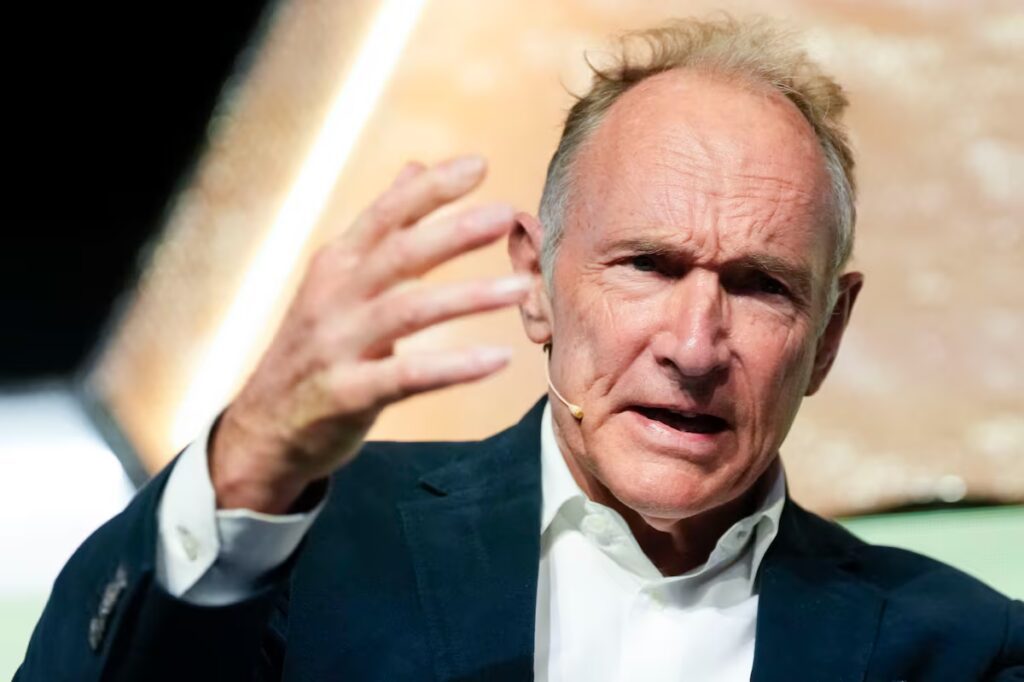
Sir Tim Berners-Lee, the inventor of the World Wide Web, made a prominent appearance at the Mobile World Congress held in Barcelona‘s Talent Arena this Tuesday. Surrounded by vibrant yellow and orange lights and accompanied by electronic music, Berners-Lee engaged in a dialogue with BBC presenter Spencer Kelly, focusing on the importance of community and innovation in addressing global challenges.
Concerns Over Addictive Social Media Algorithms
During his speech, Berners-Lee highlighted the risks posed by the “addictive algorithms” utilized by certain social media platforms, notably TikTok. While he expressed satisfaction with much of the web's evolution, he conveyed disappointment regarding aspects of it leveraged by social networks with these algorithms. “These platforms have developed artificial intelligence systems designed to keep users engaged at all costs,” he noted. He urged developers to take inspiration from less addictive platforms like Pinterest and advised against designing social media in the manner of TikTok. Additionally, he supported a proposed ban on social media usage for individuals under the age of 16, citing insights from conversations with children in Australia who appreciated a technology-free environment for socializing.
Hope for the Future of the Internet
Berners-Lee acknowledged various challenges facing the digital landscape but maintained optimism for the future, primarily due to the proactive nature of communities engaged in open source projects. He emphasized the role of these groups in shaping a more equitable internet.
Legacy of an Innovator
Born in London in 1955, Sir Tim Berners-Lee is recognized as a pivotal figure in advancing information sharing, revolutionizing how data is created and accessed. His latest initiative, Solid, aims to create a more privacy-centric internet, distancing itself from the centralization of major tech corporations like Google, Amazon, and Facebook.