
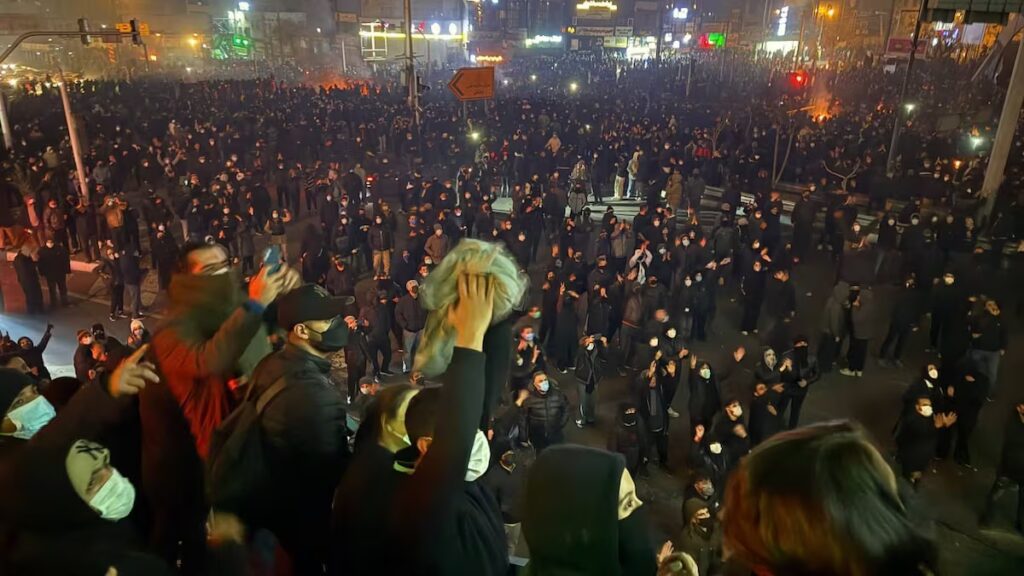
Recently, Iran enacted a total internet blackout starting around 8:30 PM local time on January 8, affecting approximately 85 million citizens. The regime implemented this measure in a bid to quell ongoing protests that erupted in December in Tehran, driven by a significant drop in currency value and rampant inflation.
According to NetBlocks, a platform that monitors internet activity and censorship, the day after the blackout, 99% of internet access in Iran was cut off. The government not only severed internet access but also halted landline and mobile communication. Notably, Iranian authorities initiated a widespread campaign to disrupt GPS signals and block access to Starlink, Elon Musk‘s satellite internet service, which had previously provided a means of connection during protests.
This tactic of cutting off communications is not unique to Iran; it forms part of a broader trend seen in authoritarian regimes attempting to suppress dissent. Amnesty International identifies such internet shutdowns as a means to “hide violations in a growing and deadly repression against protesters.”
Table of Contents
ToggleHistory of Blackouts in Iran
This marks Iran's third significant internet blackout. The initial shutdown occurred in November 2019 amidst protests over rising fuel prices, resulting in the deaths of more than 300 individuals. The second blackout was in 2022 following the tragic death of Mahsa Amini while in police custody, who was arrested for improperly wearing a hijab.
Technical Execution of Blackouts
The feasibility of an internet blackout largely hinges on a country's infrastructure. Centralized systems, where a limited number of mobile providers exist, make it easier to enforce such outages. The primary means of executing these shutdowns involves manipulating the Border Gateway Protocol (BGP), the framework that directs internet traffic.
BGP functions like a vast network of highways for data, directing messages from one server to another. Each large network, such as Movistar or Iran's national infrastructure, is assigned a unique identification number known as an Autonomous System Number (ASN). Governments employ a tactic called null routing, instructing routers to discard all traffic directed toward certain destinations, rendering the data nonexistent.
Government Methods of Implementation
In countries like Iran with centralized internet infrastructure, the government exerts control over main internet service providers. One common method includes ceasing to advertise its BGP routes, causing the rest of the world to lose the ability to send data to Iran. Additionally, governments may utilize null routing to block outgoing global internet traffic, or in extreme cases, physically disable infrastructure, cut cables, or deactivate antennas.
Citizen Escape Routes
Historically, Virtual Private Networks (VPNs) have served as a primary method for individuals to circumvent censorship. However, Proton VPN reported a significant drop in its traffic from Iran following the onset of the blackout, underscoring that critical infrastructure enabling internet access is being dismantled.
Starlink's Role
Starlink's satellite internet has provided some Iranians a means to bypass government-enforced blackouts, although the user base is limited, with estimates suggesting around 40,000 to 50,000 subscribers in the country. Following the January 8 blackout, Iranian authorities intensified efforts to disrupt Starlink access, resulting in an estimated 30% packet data loss. Digital security expert Amir Rashidi noted that some areas experienced up to an 80% loss, indicating that the government is employing military-grade jamming technology to obstruct signals from GPS satellites.
Global Context of Internet Shutdowns
In 2024, there were 296 recorded internet outages across 54 countries, as detailed in a report by digital rights NGO Access Now. Myanmar (85 outages), India (84), and Pakistan (21) topped the list of nations implementing the most significant internet disruptions. Notably, India has maintained a global lead for seven consecutive years, conducting 200 shutdowns between 2023 and 2024, while Iran faced 18 blackouts during 2022 alone.
Africa also witnessed a surge in internet shutdowns, with 21 outages recorded in 15 countries in 2024. Ethiopia holds the record for the most significant disruptions on the continent, tallying around 30 cuts over the past decade.
Drivers Behind Internet Cutoffs
Internal conflicts and foreign wars were the leading triggers for blackouts, accounting for 103 documented incidents across 11 countries. Social protests and election-related disruptions also significantly contribute to these outages. In 2024, twelve election-related blackouts occurred in eight nations, including Azerbaijan, Comoros, and Venezuela. Additionally, several countries ceased internet access 16 times to curb cheating during school exams, with Algeria, India, and Syria among them.
Legal and Diplomatic Repercussions
In terms of legal consequences, minimal repercussions exist for governments enforcing internet shutdowns. Although such actions are disproportionately excessive under international human rights law and should be avoided, as stated by Amnesty International, there have been instances of successful legal challenges. For example, after a blackout in Nigeria, civil society won a case in court, compelling the government to revoke the shutdown.