
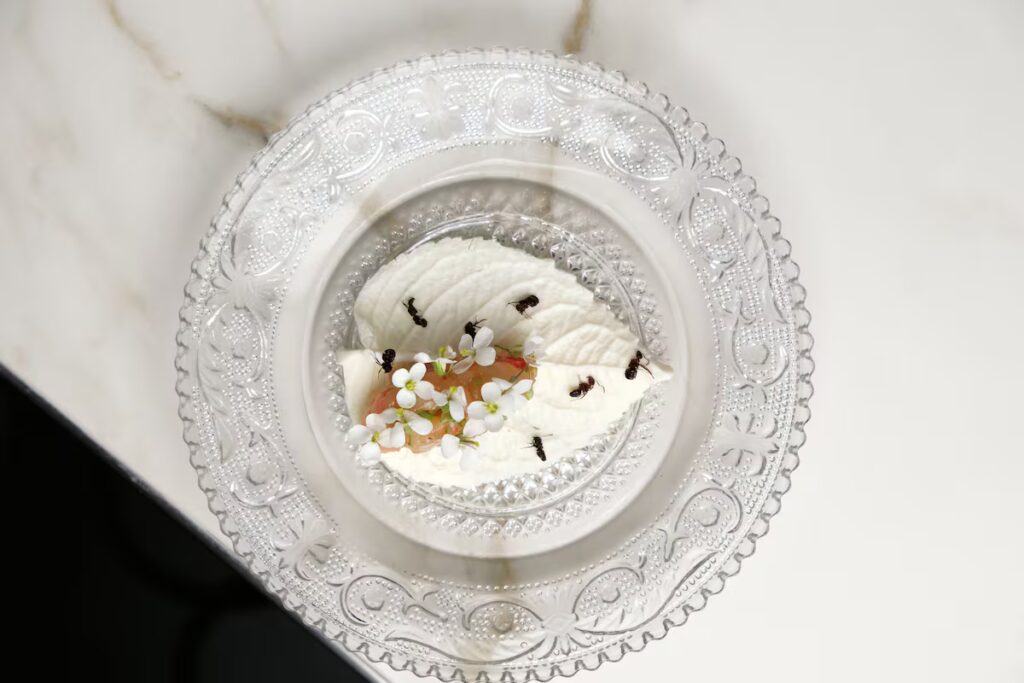
For many years, the idea of consuming insects was largely unthinkable in Western countries. However, in regions like Mexico, Colombia, Thailand, Vietnam, Peru, Cambodia, and China, entomophagy— the practice of eating insects— is an integral part of culinary traditions. Typical dishes include crispy cockroaches, scorpion skewers, stewed tarantulas, and ant larvae sauce.
Table of Contents
ToggleInsect Consumption in Europe
In recent years, attitudes toward eating insects have started to shift in Europe. Several restaurants in cities such as London, Berlin, Copenhagen, Brussels, and Paris have begun featuring insects on their menus. Spain has also seen limited offerings, mainly as starters or snacks in specialized tastings. European legislation currently restricts the sale of edible insects to four species: mealworm larvae, migratory locusts, house crickets, and dung beetle larvae.
The Insectum Store in Spain
One of the prominent businesses in Spain, Insectum, located in the Ruzafa market in Valencia, offers a variety of insect-based products. Alberto José Pérez, the owner, provides options ranging from jars of crickets and worms to protein bars, chips, and even insect-infused beer. However, he notes that regulations have impacted the availability of many insect species. Prior to 2018, a wider variety of insects could be imported, but legal changes have led to a significant reduction in business.
Changing Perceptions
Despite the challenges, Pérez has observed a gradual acceptance of insect consumption in Spain. “People are now admitting that insects can be eaten,” he says, though he acknowledges that actual consumption is still limited. He markets to a variety of clients, including chefs, restaurant professionals, and cooking schools.
A Niche Market
Pérez indicates that the current demand for edible insects in Spain remains insufficient for a mainstream market. “There’s a lack of culture and tradition regarding insects as food,” he explains. He notes that the high cost—over €70 ($76) per kilogram of crickets—also hinders broader acceptance. He anticipates that insect consumption may eventually become more common as an ingredient in mixed foods such as bread or pizza.
Pioneers in Insect Marketing
Isaac Petràs, a trailblazer in insect marketing, began selling insects at Barcelona’s La Boqueria market between 2003 and 2008. His strategy involved introducing edible insects as a fun culinary adventure, thereby helping to dispel prejudices. Petràs emphasizes that many familiar dishes, such as snails or frog legs, are accepted by local diners, much like certain insect dishes could be.
Insect Cuisine at Cantina Machito
In Barcelona, the Mexican restaurant Cantina Machito has been serving insect-based dishes for years. Options include chicatana ants topped with morita salsa and grasshoppers in tacos. Chef Javier Ruiz reports that these dishes were popular but had to be removed from the menu due to regulatory restrictions.
Innovation in Haute Cuisine
Some chefs, like Diego Prado, strive to innovate with insect ingredients in haute cuisine. With over 15 years of experience, Prado emphasizes that each insect species has unique flavors and textures. He purposely avoids serving dishes solely for novelty’s sake and has experimented with various invertebrates in his culinary research.
Prado’s innovative approach to insect cuisine is showcased through pop-up events and special tastings, where diners are open to exploring new flavors. “When they try them, they say, ‘Wow, it’s delicious!’” he shares.