
Table of Contents
ToggleMeeting of Meta’s Director with Spanish Congress
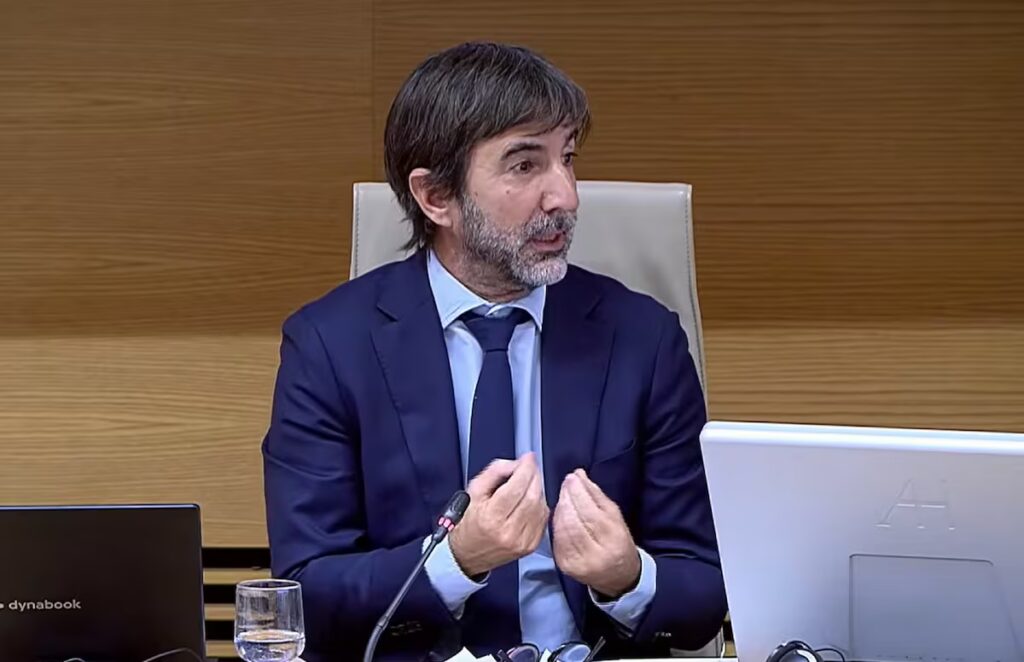
The President of the Spanish Government, Pedro Sánchez, sought to invite Meta’s founder and CEO, Mark Zuckerberg, to Congress for an explanation regarding potential breaches of user privacy affecting millions. Ultimately, it was José Luis Zimmermann, Meta’s Director of Public Policies for Spain and Portugal, who appeared before the Economy, Commerce, and Digital Transformation Commission.
Concerns Over User Tracking
During the session, Zimmermann addressed concerns raised by Socialist Party (PSOE) deputy Patricia Blanquer, who referenced a study by IMDEA Networks, the Catholic University of Louvain, and Radboud University. The study suggested that Meta had potentially used a covert mechanism to track the web activity of Android users via the Facebook and Instagram applications.
In response, Zimmermann defended Meta’s practices, stating, “There are websites that utilize Meta’s business tools to enhance their product and service offerings in the digital space. This is subject to rigorous protection protocols within our services. Today, Meta does not use that information from user activity to personalize ads.”
Commitment to Regulatory Compliance
Zimmermann emphasized that Meta adheres to both European and national laws. “Meta is committed to these principles and demonstrates compliance in various ways,” he noted. He expressed the company’s aspiration for its platforms to be safe and reliable, while facilitating free expression.
To support this, Zimmermann outlined the measures Meta implements, including community rules, user-friendly reporting tools, user appeal mechanisms, and technology designed to detect and act against harmful content, sometimes even prior to public visibility.
Addressing Misinformation and Polarization
On the topic of misinformation and social polarization, Zimmermann downplayed social media’s role, admitting it is a genuine concern but questioning claims of the platforms as primary contributors. He cited various studies suggesting the drivers of political polarization are multifaceted—encompassing economic conditions, institutional trust, and shifts in the media landscape—many of which existed before social networks emerged.
“The evidence indicates that social networks may not be the leading factor in polarization,” he contended, underlining the need for proportionate and evidence-based responses to these issues.
Managing Fake Accounts and Protecting Minors
Zimmermann also spoke about efforts to combat fake accounts, particularly those created for malicious purposes like scams and impersonation. He acknowledged the difficulty in navigating the fine line between legitimate and illegitimate content due to the vast volume of posts.
Regarding minors, Zimmermann highlighted Meta’s commitment to enhancing protections for users under 16, including restrictions on who may contact them and the types of content accessible. He called upon parents to monitor their children’s online activities and advocated for the establishment of a digital age of majority, as seen in Australia, which recognizes users aged 16 and older for this purpose.
However, he noted the challenge of verifying users’ ages: “If we cannot accurately determine a user’s age, tailoring their online experience becomes difficult.”
Responses from Political Representatives
The session featured participation from representatives of the PSOE, Sumar, PP, and Vox. Teslem Andala from Sumar reiterated the significant impact of digital content on democratic quality and the exercise of fundamental rights, recalling penalties imposed on Meta for regulatory non-compliance.
Vox’s Manuel Mariscal, while addressing polarization, criticized content moderation practices and insinuated that the Government advocates for the removal of unfavorable content, referencing RTVE as a source of misinformation.
Juan Luis Pedreño from PP questioned the lack of Zuckerberg’s attendance and scrutinized the PSOE’s motives behind requesting Meta’s representation in the commission tasked with processing a bill on digital services governance.