
Table of Contents
ToggleTikTok's Transition to a U.S. Company Raises Concerns
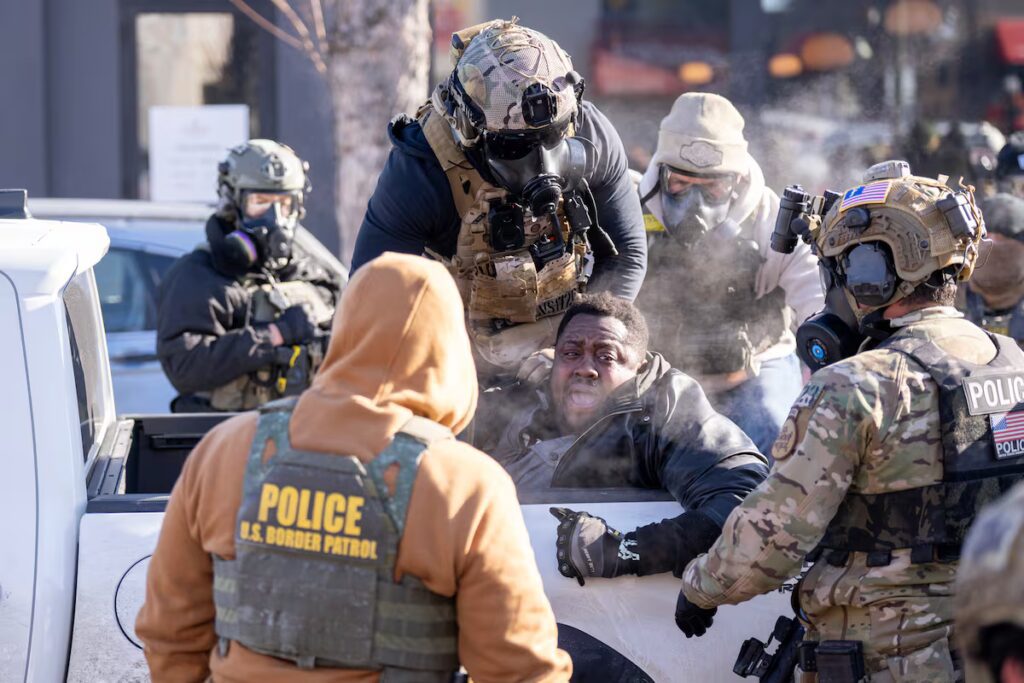
Last Friday, TikTok announced the formation of a new company in the United States, in partnership with its parent company, ByteDance, and several American stakeholders, including prominent figures such as Larry Ellison, the founder of Oracle and an ally of former President Donald Trump. Among the agreement's stipulations is a commitment to “retrain and update the content recommendation algorithm” for TikTok. Just a day later, a tragic incident involving U.S. immigration police (ICE) occurred, resulting in the death of nurse Alex Pretti in Minneapolis.
Concerns Over Censorship and Free Speech
The combination of these developments has stirred suspicions regarding freedom of expression on the platform and the overarching influence of major digital corporations on content visibility. Users expressed concerns about having to agree to new terms of service from TikTok that addressed sensitive topics like geolocation and immigration status. While these aspects were not significantly different from previous terms, the timing heightened apprehensions. Following the announcement, multiple users reported that videos related to ICE or Minnesota received zero views.
TikTok is now state-controlled media.
This morning I posted a TikTok about my legislation allowing people to sue ICE agents. It's sitting at zero views, and I'm not the only person this is happening to. pic.twitter.com/Zahy4aRh03
— Senator Scott Wiener (@Scott_Wiener) January 26, 2026
California state representative Scott Wiener showcased his TikTok account with a video that also recorded zero views, wherein he advocated for legislation allowing citizens to file complaints against federal agents. TikTok later stated that this issue was related to a technical malfunction due to an electrical outage at one of its data centers. Despite this explanation, the circumstances have raised political eyebrows, particularly as other unrelated videos also seemed to perform poorly.
Investigation into TikTok's Practices
In addition to the visibility issues, users reported that private messages containing the word “Epstein” were blocked on TikTok in the U.S. In response to these allegations, California Governor Gavin Newsom announced an investigation into whether TikTok's actions violated state law. This scrutiny is occurring amid a broader consensus that any alterations to the platform's algorithm could be politically motivated or, if unintended, indicate deeper-rooted issues for its new U.S.-based management.
It's time to investigate.
I am launching a review into whether TikTok is violating state law by censoring Trump-critical content. https://t.co/AZ2mWW68xa
— Governor Gavin Newsom (@CAgovernor) January 27, 2026
Democratic Senator Chris Murphy referred to TikTok's recent conduct as a significant threat to democracy, stating that vigilance is vital given the platform's influence in shaping public discourse post-nationalization. The legislative push to bring TikTok under U.S. control was supported by President Joe Biden, aiming to reduce the risks associated with its Chinese ownership. Congressman Ro Khanna expressed regret over the original law aimed at banning TikTok, emphasizing the need for constitutional protections of free speech.
User Exodus and Rising Alternatives
Following these developments, there has been a noticeable increase in users seeking alternatives to TikTok. According to data from SensorTower, uninstalls of TikTok surged by 150% compared to the previous three months. This trend has propelled a platform called UpScrolled, created by Issam Hijazi, into the spotlight as one of the most downloaded apps in the U.S. and other English-speaking nations.
This isn't an algorithm. This isn't a half push.
This is you, showing up and sending a message to big tech: We want something different.
Three countries.
Organic growth.
Real change.
Thank you for believing in an alternative. This is yours. pic.twitter.com/IH0oJQfZEf— UpScrolled (@realUpScrolled) January 27, 2026
Other platforms are attempting to capitalize on TikTok's turmoil. Kick, a controversial streaming service, announced benefits for influencers with over 500,000 followers on TikTok, while Rumble, a video-sharing site with a conservative focus, introduced short-form vertical videos to attract similar content creators.
Heightened Scrutiny of Content Moderation
The current situation with TikTok has intensified scrutiny of content moderation practices on other major networks, including those owned by Meta. Users reported being unable to post links to the Icelist website, which aims to disclose the identities of ICE agents, due to compliance with community standards. Despite the site's existence since summer, Meta's recent enforcement of this restriction raised questions about motivations behind their moderation policies.
NEW: @tim_cook responds to ICE killing in Minneapolis in internal memo to employees, saying it's “time for deescalation” and that he had a “good conversation” with Trump about the situation this week where he shared his views. Story on @TheTerminal. pic.twitter.com/DYtsU01h7N
— Mark Gurman (@markgurman) January 28, 2026
The tragic events in Minneapolis have prompted leaders in the tech industry to issue statements, symbolically distancing themselves from the White House as they respond to employee grievances and public protests. Tim Cook, CEO of Apple, emphasized the need for de-escalation, while other tech executives underscored their commitment to preserving democratic values. The ongoing challenges for TikTok in its new phase invite continued examination of platform practices and public accountability.




![Middle-Aged Men in [Location] Prefer Coffee Machines Over Convertibles for Unique Experiences](https://instantvista.com/wp-content/uploads/2026/09/Middle-Aged-Men-in-Location-Prefer-Coffee-Machines-Over-Convertibles-for-150x150.jpg "Middle-Aged Men in [Location] Prefer Coffee Machines Over Convertibles for Unique Experiences 5 - Instant Vista")