
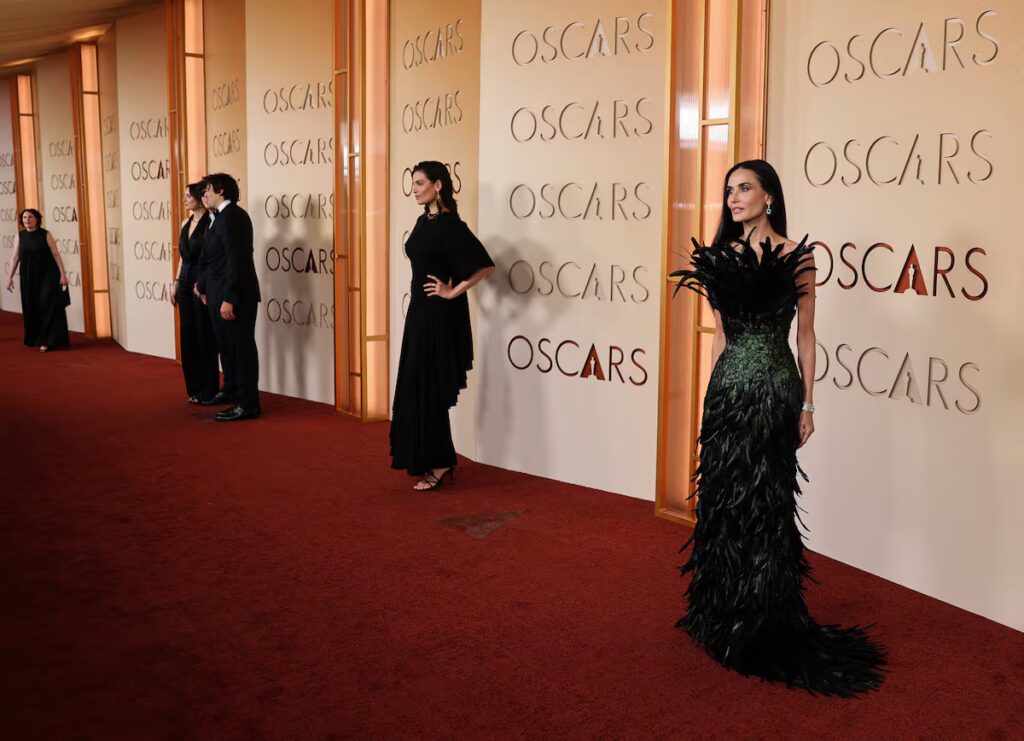
Director and screenwriter Chloé Wallace recently ignited a social media firestorm following the Oscars by voicing her concerns over the resurgence of extreme thinness as a beauty standard. In an impactful Instagram post, she declared her “rage” at the pervasive imagery of ever-thinner individuals across red carpets and social media platforms, likening it to an unnamed competition that everyone appears to be participating in. “Before, it was about not eating, counting calories, restricting. Now it's a weekly injection that suppresses hunger. It's the return of thinness as capital. It's not aesthetic, it's political,” she warned, highlighting a serious societal trend.
Wallace struck a chord with her audience, garnering over 72,000 likes, 12,000 shares, and more than a thousand comments within hours. Her message echoes concerns raised by experts regarding the revival of the “heroin chic” aesthetic of the 1990s, amplified by social media's relentless influence. This time, however, it is cloaked in a dangerous guise of health and well-being.
Table of Contents
ToggleConcerns from Experts
Nutritionist Azahara Nieto emphasized that society has shifted from a period of “body neutrality,” which focused less on aesthetics, back to a dangerous obsession with extreme thinness. “It's being disguised as health,” she states. Unlike the explicit aesthetics of the 1990s, today's depictions of thinness are more insidious, marketed under the umbrella of well-being and discipline. “Now it's medicalized and legitimized, making it harder to detect and question,” explains Violeta Moizé, a dietitian at Hospital Clínic in Barcelona.
The relationship with body control is notably changing, with social media acting as both a megaphone and fuel for this trend. Experts warn that this environment significantly increases the risk of developing eating disorders and issues related to body image. “Recovering from an eating disorder in such a society is incredibly challenging,” Nieto notes.
Philosopher Magdalena Piñeyro posits that the revival of the thin body ideal is a reaction against substantial advances made by movements advocating body diversity and anti-fatphobia over the past decade. “It's a counterattack promoted by media, culture, and fashion,” she argues.
The Impact of Anti-Obesity Medications
The introduction of anti-obesity drugs like Ozempic has fueled this trend by making extreme weight loss more accessible. These medications mimic natural hormones that promote satiety and have been shown to assist users in losing 15% to 25% of their body weight. However, they also pose significant risks when misused and marketed without proper medical guidance. “They are being marketed as if they were harmless,” Nieto critiques.
Moizé highlights the troubling trend of trivializing obesity treatment, whereby these medications are viewed purely as cosmetic solutions rather than addressing serious health conditions. For instance, campaigns featuring celebrities, such as tennis player Serena Williams, can shift perception towards an aesthetic focus, undermining the importance of body diversity.
Andreea Ciudin, head of the Comprehensive Obesity Treatment Unit at Vall d'Hebron Hospital, warns of the risks associated with the unsupervised use of these medications. The potential for misuse is high, leading to malnutrition as people sometimes begin treatment at excessively high doses.
Understanding the Underlying Ideology
The narrative surrounding thinness as a symbol of status and control reinforces societal values centered on discipline and productivity. Moizé points out the revaluation of traditional ideals that align with these standards, particularly in environments like the so-called “manosphere.” She notes that these changes can lead to unhealthy relationships with food, exercise, and body image—a perilous combination of self-care and validation.
Piñeyro contends that the belief in the malleability of the body is misleading, asserting that societal conditions significantly shape health outcomes. The relentless pursuit of thinness can ultimately result in frustration and an array of health issues, leading to an increase in eating disorders among younger populations.
As experts caution, it is vital to question the prevalent notion equating thinness with health, particularly as many individuals may suffer adverse health effects in the quest to achieve an imposed beauty standard.