
In 2018, Melania Trump embarked on a high-profile visit to several African countries, including Kenya and Egypt, aiming to improve relations following her husband’s controversial remarks about the region. Donald Trump had previously referred to parts of Africa as being in a “shithole” region. During her trip, Melania Trump attracted criticism for sporting a pith helmet on safari—an item historically associated with colonialism and a stereotypical image of African explorers. While admiring the pyramids in Egypt, she opted for a Panama hat, which also drew backlash, as many accused her of conveying white supremacy through her fashion choices. Melania defended her wardrobe, urging the media to focus on her substantive actions like visiting schools and engaging with local cultures instead of her attire.
This incident exemplifies the central themes in the new essay by Spanish professor and journalist Ana Velasco Molpeceres, titled Moda y política. Las apariencias del poder (Fashion and Politics: The Appearances of Power), released in March. The essay furthers her exploration of fashion’s historical and social ramifications.
Table of Contents
ToggleFashion as Political Language
“Fashion has been the most despised and persecuted political language as well as the most explicit and admired. Legitimacy requires staging. Power, before instituting laws, constructs images, and one of its first manifestations is the clothed body,” she asserts in the introduction. The essay spans a comprehensive history from the Persian Empire (550-330 BC) to contemporary attitudes observed within the current U.S. administration. It highlights how fashion is intricately tied to authority, and how adherence to fashion codes was rigorously enforced across different civilizations. The purple color used in togas and ornaments, sourced from the mollusk Murex brandaris, served as a symbol of governance for Hebrews, Romans, and medieval cardinals. Such colors historically conveyed reverence and submission.
Historical Significance of Colors and Garments
Throughout the centuries, specific garments and colors have transitioned in meaning. For instance, white and mauve represented the suffragettes at the close of the 19th century, while purple was a prominent feature of the Spanish republican flag (1931-1939), later influencing the Podemos party in Spain. These instances illustrate how colors that once symbolized privilege have been repurposed for democratic movements. Moreover, women’s hairstyles evolved dramatically over time, from long hair covered by veils—considered a threat to Christianity from the 2nd to 4th centuries—to the garçon cut in the early 20th century.
Revolutionary Fashion Movements
In revolutionary Russia, influential artists and designers like Aleksandra Ekster, Nadezhda Lamanova, and Alla Levashova contributed to the development of proletarian fashion characterized by abstract designs and geometric patterns. During the Cold War, Western fashion influences from designers such as Yves Saint Laurent and Christian Dior found their way into Soviet fashion, despite mixed receptions. Under Slava Zaitsev, who led the Soviet Union’s Fashion House from 1965 to 1978, a greater openness to fashion emerged, earning him the nickname “Red Dior” by the 1980s.
Accessories and Symbols of Power
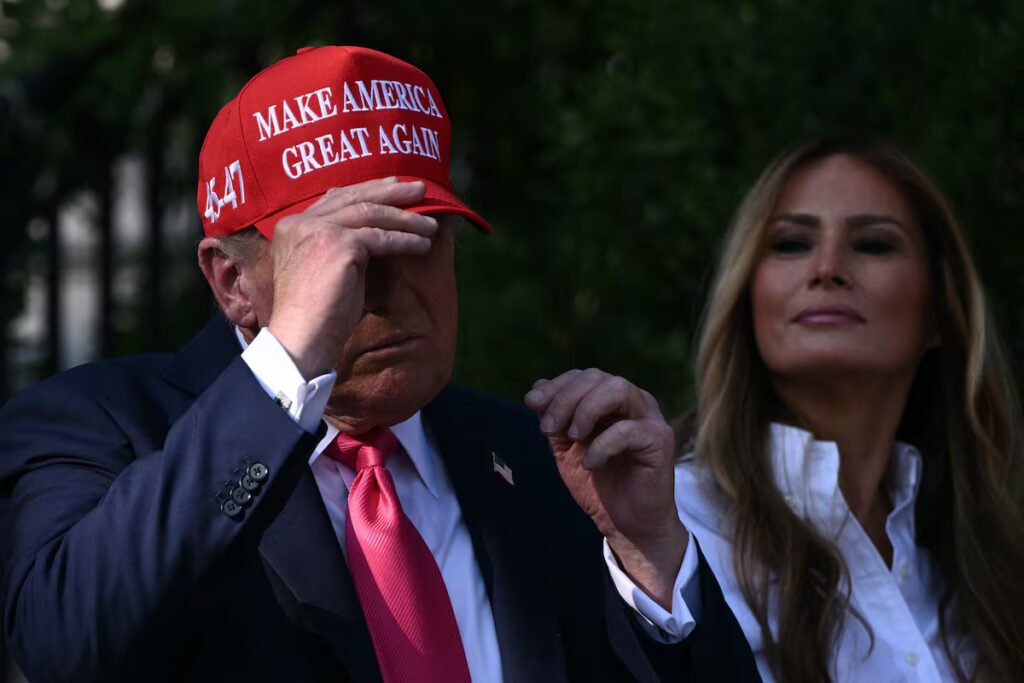
The essay also emphasizes the critical role of accessories in projecting authority. Notable examples include the coin-covered cape of the Count of Villamediana, the embellished pendant awarded by Queen Elizabeth I to Francis Drake, and the Phrygian caps worn by Members of the French Commune. Political militias throughout history, such as those led by Garibaldi, the Spanish Falange, and factions within fascist and Nazi parties, also utilized distinct clothing styles and colors to signify their ideologies. Additionally, modern examples like the Trump campaign’s signature “Make America Great Again” cap, inspired by Ronald Reagan’s era, further illustrate fashion’s enduring role in politics.
Fashion: A Double-Edged Sword
This exploration of fashion, from political pins to iconic dresses worn by figures like Jacqueline Kennedy, underscores the tension between classism and inclusion, as well as elegance and ambition. Fashion is not merely superficial; it plays a vital role in defining how one seeks to lead or challenge societal norms. Thus, it is essential to be mindful of how one presents themselves, as every occasion calls for a carefully curated appearance.