
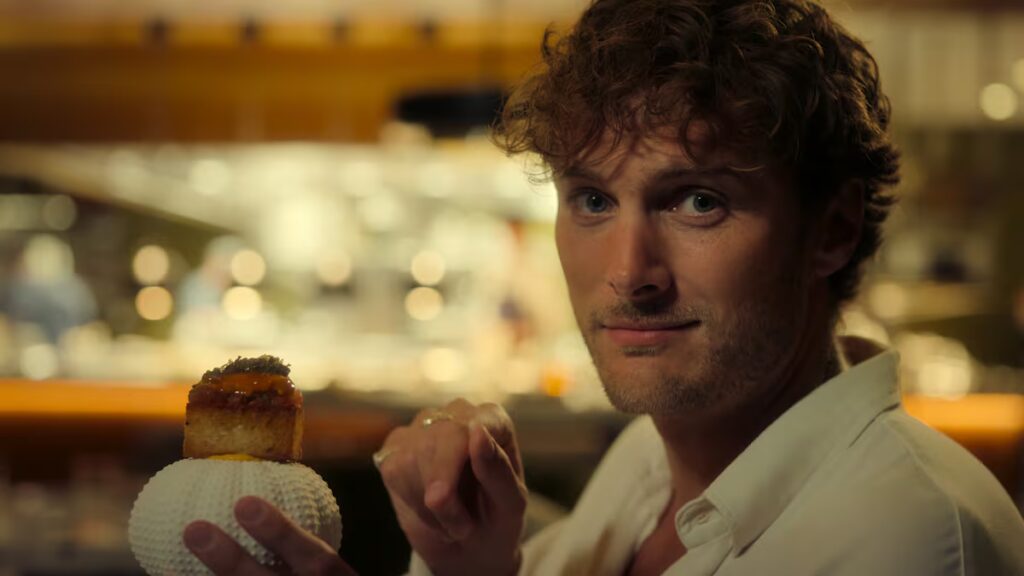
Jesse Burgess, the host, filmmaker, and co-founder of the acclaimed food and travel channel Topjaw, describes his involvement in the documentary series Knife Edge: Chasing Michelin Stars as his dream job. The series is a sophisticated extension of his previous social media projects, where he explores the intense world of haute cuisine, visiting and sampling dishes at some of the most prestigious restaurants globally during the Michelin Guide's annual evaluation.
“It's a dream job, yet dining in such an environment can be stressful, especially with three cameras recording while surrounded by other diners. You aim not to disturb anyone despite having bright lights pointed at you, and you also try to avoid embarrassing moments while eating,” Burgess shares in a video interview. He notes the challenges faced by the technical crew who must navigate tight kitchen spaces while respecting chefs deeply engaged during crucial service periods.
The second season of Knife Edge: Chasing Michelin Stars, recently launched on Apple TV, features eight episodes that showcase 16 exclusive establishments and delve into personal narratives surpassing many scripted dramas. One compelling story involves chefs Adam Dahlberg and Albin Wessman, who, after closing their Michelin-starred restaurant in Stockholm, are tasked with re-establishing their reputation in a larger venue within 52 days—essentially risking their star. “They held on to their star for a decade, and I admired their bravery in embracing change. Another chef, Niklas Ekstedt, ventured into cooking without electricity, relying solely on fire and traditional Scandinavian techniques in hopes of securing a second star,” Burgess observes.
This season also highlights a chef attempting to place a small island on the Michelin Guide's radar, along with a father-son duo in central Rio de Janeiro representing two generations of culinary talent, each striving for individual recognition within close proximity.
Additionally, the series captures a sandwich shop transforming into a fine-dining restaurant each evening, while a young couple endeavors to elevate Filipino cuisine in the competitive U.S. culinary scene. Although these stories vary significantly, they all face the same fundamental question: what will the Michelin judges decide, and will their hard work yield results?
Describing a high-end kitchen atmosphere, Burgess likens it to a “choreographed dance,” emphasizing that it resembles performing on stage daily. “Unlike soldiers, who might train for years without applying their skills in real life, chefs use their training every day with little time for practice,” he explains.
The educational value of the documentary is further enhanced by insights from Michelin Guide inspectors, who reveal their evaluation criteria while maintaining their trademark discretion. The series also elucidates why even establishments with premium pricing often have slim profit margins. When discussing DiverXo, which notably raised its menu price by 23% to €450, Burgess supports chef Dabiz Muñoz's decision, challenging common misconceptions about restaurant profits.
“It's a misconception to think that high prices equate to large profits for chefs. Many of these elite restaurants have few tables, so a shortfall in a single table can erase the night's profits. Some restaurants achieve full bookings but only see a 4% annual profit margin. Unexpected events, like a pandemic, can jeopardize their viability,” he points out.
Burgess traces his culinary passion back to his childhood. “My mother was a flight attendant who brought home food from her travels starting when I was five. By 11, I had tasted everything from Russian caviar to Mediterranean prawns and Danish pastries. I became obsessed with her experiences,” he recalls.
Knife Edge: Chasing Michelin Stars is executive produced by chef Gordon Ramsay, known for his strict demeanor and viral online moments from Kitchen Nightmares. Burgess humorously responds to the idea of being the subject of Ramsay's legendary vitriol, noting that Ramsay's skill in engaging audiences has significantly benefitted the project.





![Protest in [Location]: Cyclists Go Nude to Demand Safer Roads](https://instantvista.com/wp-content/smush-webp/2026/09/Protest-in-Location-Cyclists-Go-Nude-to-Demand-Safer-Roads-150x150.jpg.webp "Protest in [Location]: Cyclists Go Nude to Demand Safer Roads 12 - Instant Vista")