
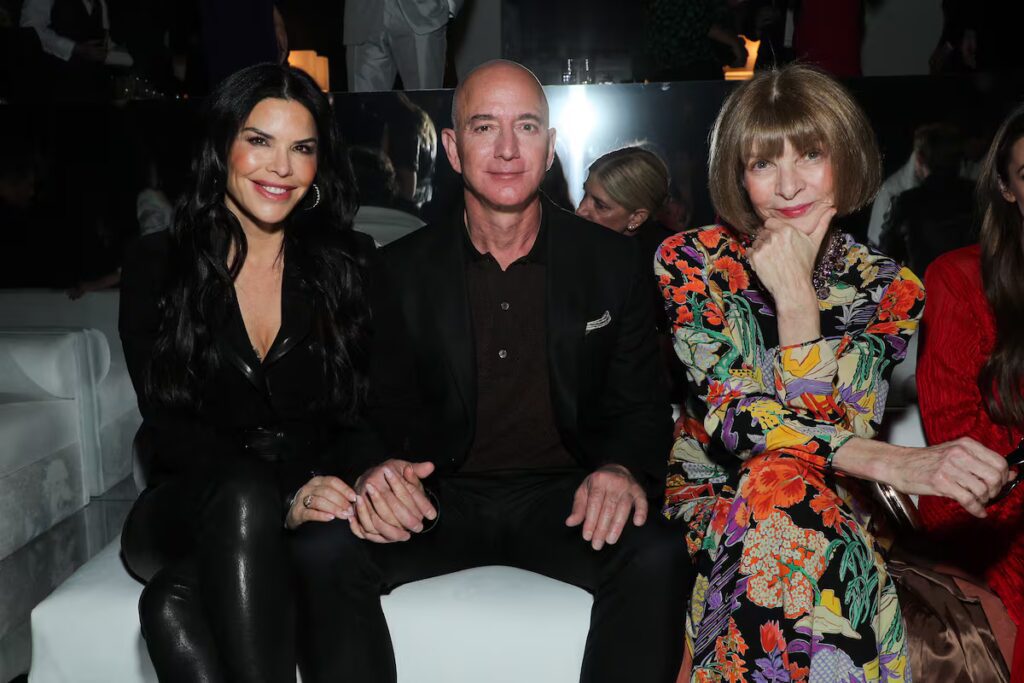
Jeff Bezos and Lauren Sánchez are set to make a notable impact at the upcoming Costume Institute gala at the Metropolitan Museum of Art in New York, scheduled for May 2026. Their sponsorship of $6 million (approximately €5.2 million) marks a significant contribution, although it pales in comparison to the $125 million donated by financier Oscar L. Tang and his wife, Agnes Hsu-Tang, for the renovation of the Costume Institute's modern and contemporary art wing. This ambitious project, designed by Mexican architect Frida Escobedo—the first woman to participate in the Met's design in its 150-year history—will double the exhibition space and will be inaugurated in 2030 as the Tang Wing.
Table of Contents
ToggleHigh Stakes in the World of Philanthropy
While the $6 million from Bezos and Sánchez is substantial, it seems modest next to the Tangs' monumental financial commitment. The current cultural landscape suggests that wealthy individuals, particularly those in tech, are increasingly vying for recognition through large donations, often to iconic cultural events like the Met Gala. Tech companies like Amazon have previously sponsored these events, further entwining the worlds of fashion and finance.
Changing Dynamics of Wealth and Recognition
The rise of billionaires has led to a redefinition of “immortality,” with wealthy individuals now seeking to secure their legacies through naming rights and significant contributions. William Drennan, a former law professor, observes that donations often serve personal agendas rather than genuine altruism, allowing the wealthy to bolster their public personas while minimizing tax burdens. This trend raises questions about the motives behind such philanthropy, with billionaires like Mark Zuckerberg also involved. For example, Zuckerberg and Priscilla Chan famously donated $75 million to rename the San Francisco General Hospital after themselves.
Implications of Philanthropic Trends
These shifts in funding practices extend beyond individual institutions. For instance, the expansion of the Costume Institute, estimated at $50 million, has led to internal conflict within the Met regarding priorities. Critics, including curators, argue that the glitz surrounding high-profile donations overshadows important research and exhibitions.
Meet the Tangs: A New Model of Philanthropy
Oscar L. Tang, a veteran board member of the Met and a dedicated philanthropist, has embraced a model of giving that emphasizes community reinvestment. Alongside Agnes Hsu-Tang, the couple manifests their philanthropic vision through collaborative projects, viewing them as legacies akin to children. Their commitments span various causes, reflecting a distinctive approach amid a culture often dominated by high-profile, affluent individuals.
As this landscape evolves, the intertwining realms of wealth, recognition, and cultural capital continue to shape the future of institutions like the Met, where the influence of billionaires raises ongoing questions about the true essence of philanthropy.