
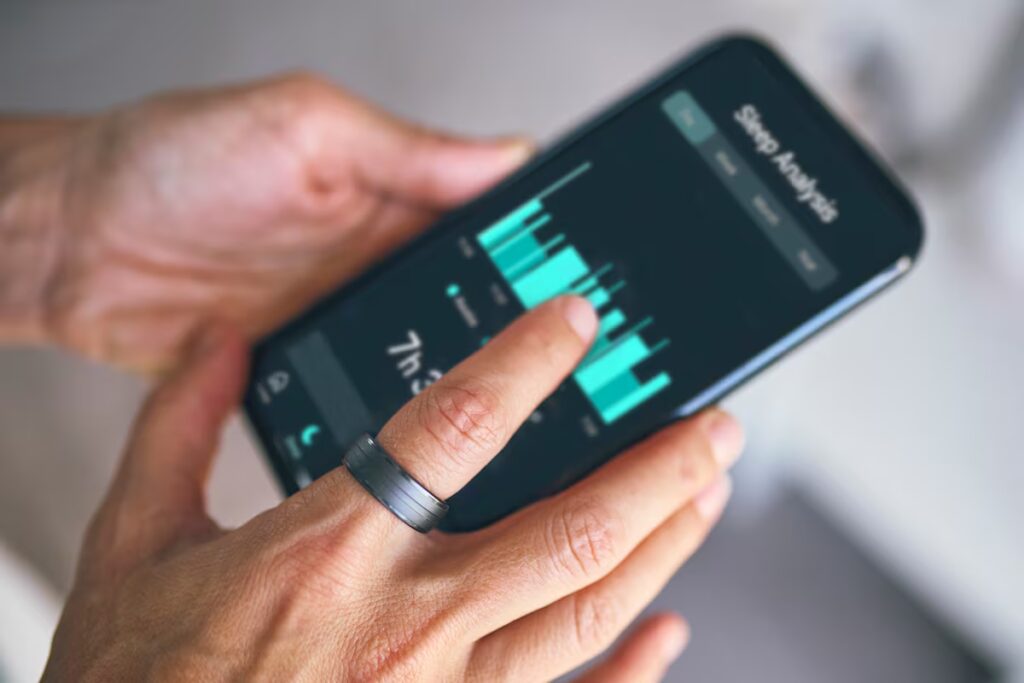
Smartwatches have long dominated the wearables market, but an emerging competitor —smart rings—has begun to carve out its niche. This shift isn’t merely aesthetic; each new generation of smart rings enhances health and activity tracking capabilities, offering many functions similar to those of smartwatches but in a more subtle format. The pressing question is: can a smart ring truly replace a smartwatch?
Table of Contents
ToggleSmart Ring Features and Functionality
Smart rings act as compact biometric laboratories, equipped with optical sensors that continuously monitor health metrics such as heart rate, blood oxygen saturation, and body temperature. Their location on the finger, an area abundant in blood vessels, allows for more consistent and sometimes more accurate readings. These data points feed into advanced metrics that analyze sleep patterns (including REM, deep, and light sleep), stress levels (through heart rate variability), and daily physical activity (steps, calories burned, movement).
For instance, the Circular Ring 2 measures over 140 different signals categorized into various health metrics. It tracks cardiovascular health by monitoring heart rate, resting heart rate, heart rate variability (HRV), ECG heart rate, and blood oxygen levels (SpO₂). This data can help identify irregularities, evaluate recovery, and estimate stress levels. Furthermore, it measures skin temperature and respiratory rate, which can indicate bodily changes such as fever or fatigue. Sleep analysis includes metrics on total sleep duration, sleep phase breakdown, interruptions, and breathing patterns, generating scores that can guide recovery assessments. In terms of activity, it monitors steps, calories burned, exercise intensity, estimated VO2 max, and overall activity volume, providing insights into physical performance.
Additionally, some models, like the Renpho Lynx, focus specifically on women’s health. This ring includes features for cycle tracking, allowing users to log menstrual data and associated symptoms such as pain or appetite changes, thereby helping to recognize health patterns.
User Experience: Advantages of Smart Rings
In terms of user comfort, smart rings have a distinct advantage over smartwatches. They are lightweight and discreet, designed for continuous wear without interfering with sleep — a crucial factor for accurate rest measurement. Users often forget they are wearing the rings, making them ideal for continuous health monitoring. The absence of a screen eliminates distractions like notifications or app alerts, allowing users to focus solely on their health data, which is accessible through a mobile app.
Moreover, smart rings typically offer longer battery life, with many models lasting several days to a week on a single charge. An exemplary model is the Ultrahuman Ring Pro, which boasts up to 37 days of usage without recharging. It also comes with a unique PRO Charger case that enhances battery longevity up to 45 days, featuring a magnetic charging system that minimizes heat generation, ultimately preserving battery health. This model includes unique functionalities such as data retention for up to a year without connection and a find-my-charger feature.
Limitations of Smart Rings Compared to Smartwatches
While smart rings excel in comfort and battery life, they do have limitations compared to smartwatches. Smartwatches offer greater versatility by not only tracking health metrics but also enabling users to read and respond to notifications, utilize real-time GPS, and engage with various apps. Smart rings typically function in a more passive manner — collecting data without real-time interaction with the user, which may make them less suitable for athletes needing immediate feedback.
Choosing Between Smart Rings and Smartwatches
The decision between a smart ring and a smartwatch largely depends on the user’s priorities. Smart rings are ideal for individuals who prioritize health tracking and restful sleep over interactive sports features. They are especially suited for users seeking a discreet and distraction-free device while relying on their smartphones for notifications.
Conversely, for active athletes or those requiring real-time interaction and advanced functionalities, smartwatches remain essential. However, the trend indicates a growing acceptance of using both devices in tandem: smart rings for continuous health monitoring and smartwatches for activity tracking and communication notifications.