
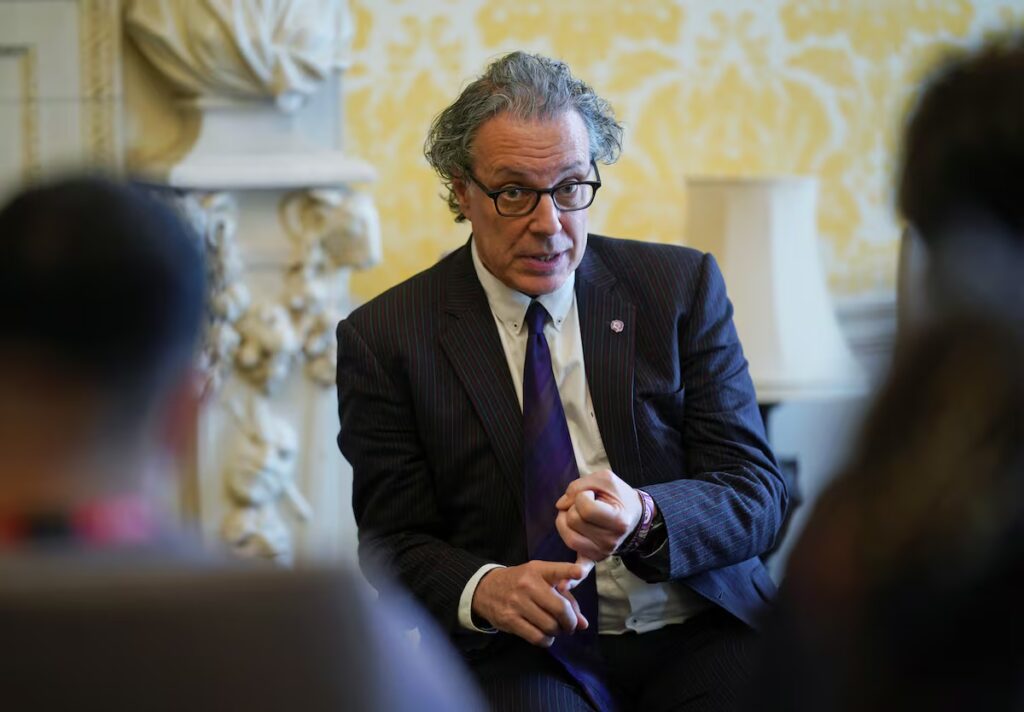
Ian Russell, a British father, has faced challenges related to the dangers of teenage social networks long before most parents. His daughter Molly, aged 14, tragically died on November 20, 2017, “after an act of self-harm, in a context of depression and exposure to harmful content on the internet,” as revealed by the investigation into her death. In the final six months of her life, Molly encountered 2,100 harmful messages on Instagram alone. Russell spent years fighting with social media platforms to obtain the necessary evidence related to her case.
In response, he founded the Molly Rose Foundation, which aims to support families grappling with similar situations and to investigate the impact of social media on adolescents. “The online safety for children nowadays is unacceptable,” Russell states via videoconference. He emphasizes that governments globally have allowed this situation to develop, leading concerned parents to feel they cannot completely protect their children.
Table of Contents
ToggleGovernment Action on Social Networks
In response to growing concerns, governments are beginning to take action. Spanish Prime Minister Pedro Sánchez recently announced a ban on social networks for minors under 16 years of age. Australia pioneered this measure in December, with countries like France, Denmark, Portugal, and Finland following suit.
Concerns Over Bans on Teen Networks
However, Russell questions whether a blanket ban is the optimal solution. He acknowledges that while such bans seem plausible to protect children from online dangers, they also eliminate the positive aspects of social networks, including connection and creativity. He argues that prohibitions often lead teenagers to seek alternative, unregulated platforms, bypass restrictions, and potentially miss out on supportive communities online. Moreover, there is concern that bans could drive children to hide their online behaviors, complicating open conversations with parents. “Molly never had the courage to share what she viewed online, which I do not blame her for, as it's a difficult conversation to initiate,” Russell explains.
Recognizing Warning Signs
Russell raises questions about the warning signs parents should look for regarding their children's online habits. In Molly's case, there were no overt signs of mental health issues. Russell observes that Molly began to withdraw from her interests, expressing a desire to stop horse riding, indicating a struggle. As time passed, he recognized a pattern of withdrawal in her behavior, reminiscent of her older sisters.
Reflecting on their experiences, Russell expresses regret for not having the courage to ask Molly the difficult questions regarding her mental health. “Asking whether a person is contemplating suicide is challenging, but it is far safer to inquire than to remain silent,” he acknowledges.
Pressure on Social Media Platforms
If complete bans are not the answer, what then is the solution? Russell advocates for increased regulation across social media platforms. He supports the British Online Safety Law, enacted in 2023, to impose stricter controls on these platforms. “I advocate for young people spending less time online. The addictive nature of algorithms and platform designs is concerning,” he states. He proposes that platforms should feature age ratings similar to those used for movies. If a platform behaves inappropriately, access for children under 16 should be restricted, or even until the age of 18, depending on compliance with safety standards.
Moreover, Russell argues that it is impractical to fully trust social media platforms based solely on their promises. He points out that, of the features Instagram promised for teen accounts, only a small fraction remain active.
Additionally, he urges a dynamic approach to regulation that evolves with technology. He notes that technology laws must be flexible and responsive, rather than static and outdated.
Another measure to enhance safety could involve eliminating algorithmic recommendations for younger users. Russell highlights recent demands from the European Commission for TikTok to alter its service design, advocating for a significant shift in how networks operate. He insists on stringent consequences for non-compliance, promoting a firmer regulatory approach toward these powerful corporations, emphasizing the discrepancy in power dynamics between them and national governments.
In summary, Russell stresses the urgent need for more robust regulations to address the influence and power of social media platforms, advocating for protective measures for vulnerable adolescents.