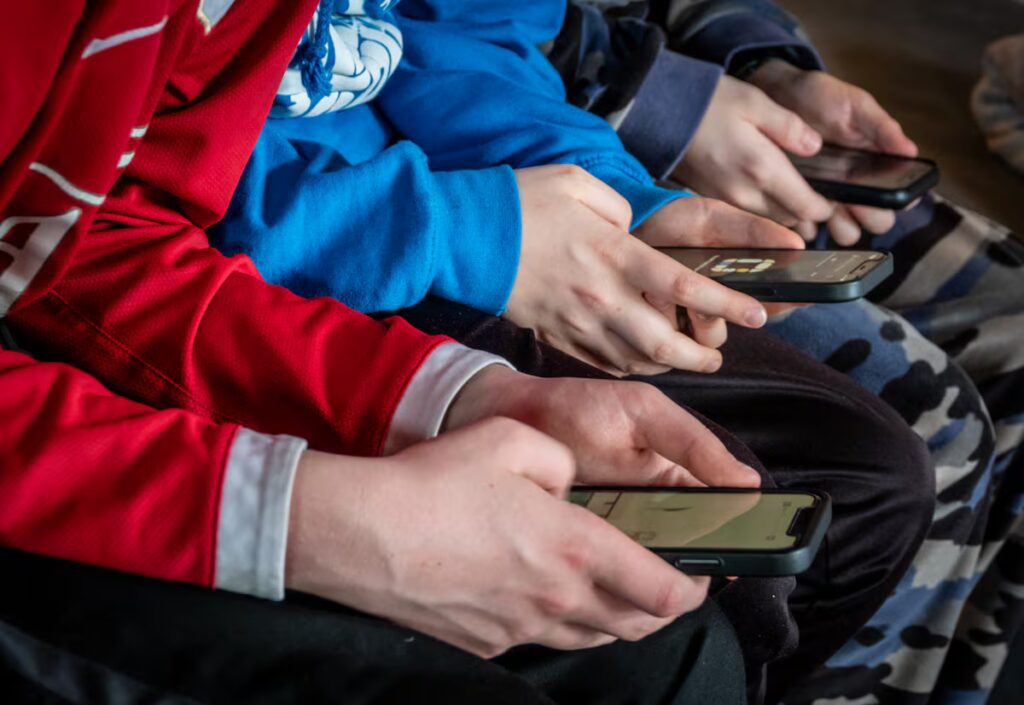
France is on the verge of becoming the first European nation to implement a ban on social media for individuals under the age of 15. Last Monday night, the National Assembly passed a pivotal article of a bill aimed at safeguarding youth from the potential harms associated with social networks. This legislation, which enjoys backing from the French government and President Emmanuel Macron, is anticipated to be finalized in a vote scheduled for Tuesday afternoon, with a potential enactment date set for September 2026. If approved, France would join Australia as one of the few countries to take such legislative action.
The central tenet of the bill states, “Access to an online social networking service provided by an online platform is prohibited to minors under 15 years of age.” This amendment received significant support, with 116 votes favoring it from various political factions, including the ruling party, the far-right National Rally, and several left-wing and independent groups.
However, the leftist party La France Insoumise (LFI) strongly opposed this measure, casting 23 votes against it. They criticized the law as a form of “digital paternalism” that employs authoritarian tactics instead of promoting education and critical thinking. LFI advocates for equipping young people with the resources necessary to navigate online platforms, rather than establishing prohibitive measures that could lead to undemocratic repercussions.
Interdire les réseaux sociaux aux moins de 15 ans: c'est ce que préconisent les scientifiques, c'est ce que demandent massivement les Français.
After a fruitful job with the Gouvernement, the National Assembly comes from now on.
This is une majeure étape.…
— Emmanuel Macron (@EmmanuelMacron) January 26, 2026
Additionally, the approved legislation includes an amendment proposed by socialist deputy Ayda Hadizadeh, which mandates that social media providers must “ensure that minors are not exposed to excessive commercial pressure.” It also prohibits the promotion of products or services that could negatively impact their physical or mental health on platforms aimed at younger users.
The platform TikTok has specifically been emphasized in the discussions surrounding this law. According to supporters, TikTok can severely affect mental health, especially among younger individuals who are still developing cognitive capabilities. It has been described as a platform that can entrap users in cycles of violent and disturbing content that could encourage self-harm or suicidal thoughts. This concern has been detailed in the explanatory notes for the proposed law, which received backing from President Macron, who has shown a commitment to addressing the issue through legislation.
On Tuesday, lawmakers will also deliberate other related issues, including a potential ban on mobile phones in high schools, mirroring existing regulations in colleges and schools. Should the complete text be approved, it will move on to the Senate by mid-February.
“What the French Demand”
President Macron has heralded the National Assembly's decision as “an important step” in alignment with “scientific recommendations and the overwhelming demands of the French populace.” He has asked the government to initiate an accelerated legislative procedure to expedite implementation by the next school year. Macron emphasized, “The minds of our children are not for sale—neither to American platforms nor to Chinese networks. Their dreams should not be dictated by algorithms, and we aspire to cultivate a generation that believes in France, the Republic, and its values.” He assured the public that by September 1, protections for children and adolescents would be firmly in place.
In Spain, the Organic Law aimed at protecting minors in digital environments is currently awaiting discussion in Congress. This legislation aims to increase the minimum age for data processing consent from 14 to 16 years and require mobile devices to incorporate default parental control systems.