
Table of Contents
ToggleThe Space Race: Amazon's Entry into Satellite Internet
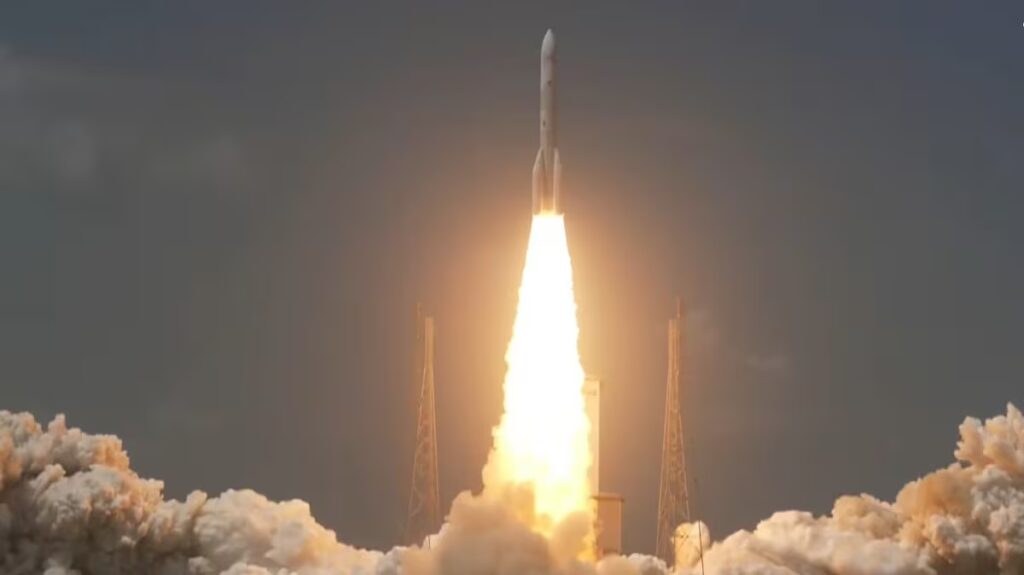
The competition for satellite supremacy has intensified with Amazon's recent entrance into the market. Previously dominated by Elon Musk‘s Starlink microsatellites, the satellite landscape is changing rapidly. This afternoon, Amazon launched its first Leo constellation (formerly known as Kuiper) from the Kourou space center in French Guiana, managed by Arianespace. This move not only challenges Musk's monopoly but also aims to reduce the digital divide, particularly in underserved regions. However, this urgency raises concerns about potential space debris and its impact on astronomical observations.
The Growing Satellite Landscape
As the space race escalates, China is also planning to deploy tens of thousands of satellites to enhance its strategic capabilities. This surge of activity in space telecommunications could lead to a staggering total of up to one million satellites orbiting the Earth by 2030, according to a NASA study.
As two of the wealthiest individuals globally, Jeff Bezos and Elon Musk are now vying for dominance in another competitive arena. Their respective companies—Blue Origin and SpaceX—are focused on securing a return to the Moon for humanity. Musk's spacecraft are integral to U.S. efforts to land astronauts on the lunar surface, while Bezos has announced a renewed commitment of Blue Origin towards lunar exploration.
Amazon's Ambitious Leo Project
The Leo project aims to bring reliable, high-speed internet access to over 2.5 billion users. Naveen Kachroo, responsible for Amazon's deployment, stated this vision during the project's announcement three years ago. The launch was executed flawlessly, showcasing European aerospace capabilities before an audience of over 300 at the Kourou site and across various media outlets.
The Current State of Satellites
According to the European company Look Up, approximately 16,000 satellites currently orbit the Earth, with 13,026 of them active. SpaceX's Starlink constellation comprises the majority, with 8,366 active satellites and plans to double that number shortly. In contrast, China has 1,102 active satellites and plans to add 27,000 as part of projects like Gouwang and Qianfan.
Currently, the European Union relies on North American companies for communications and intelligence systems, a situation highlighted by recent geopolitical conflicts. In response, the EU initiated the IRIS² program in 2023, aimed at securing independence in satellite communications. However, projections estimate only about 300 satellites in orbit by 2030 for Europe, significantly trailing competitors.
Challenges of Space Debris
The rapid increase in satellites raises serious concerns about space debris, which poses threats to both operational satellites and astronomical observation. Currently, approximately 94% of objects in orbit are space debris, which includes inactive satellites and fragments from past collisions. The European Space Agency estimates that around three pieces of space debris re-enter the atmosphere daily, with potential risks of impacts being higher than reported, according to experts.
Leo's Technology and Market Plans
The Leo system employs various antenna sizes to meet diverse internet traffic needs, capable of delivering speeds from 100 Mbps to 1 Gbps. These capabilities are vital for efficiently utilizing the satellites launched over the past three years, with a goal of deploying 3,226 satellites by the decade's end.
Global Internet Access Disparities
As of the latest figures, around 5.56 billion people globally have internet access, while 32% of the population still lacks connectivity, echoing conditions from three decades ago. Many of these individuals reside in rural and isolated areas where internet access is significantly lower than in urban environments. Historically, these underserved populations have relied primarily on Musk's Starlink for satellite communications.
Lisa Scalope, Amazon's Leo consumer director, has not disclosed specific pricing plans for the service, which targets the northern hemisphere this year before expanding globally. However, she noted that pricing would be adjustable based on local conditions, hinting at a variable cost structure referencing Starlink's existing rates of $40 to $120 per month based on service levels.