Table of Contents
ToggleThe Origins of the Málaga Virus: A Journey into Cybersecurity
In the early 1990s, an unknown virus emerged, infecting computers at the Polytechnic School of the University of Malaga. Rather than being malicious, it was an annoyance, leaving students and faculty puzzled about its origins. Adolfo Cid, a professor, challenged one of his students, young Bernardo Quintero, to resolve the issue in exchange for a higher grade. Quintero took on the challenge, succeeded, and not only improved his academic standing but also discovered his passion for cybersecurity. Soon after, he founded Hispasec, Spain‘s first computer security company, and later developed VirusTotal, which Google acquired in 2012. Today, Quintero serves as the director of Google's cybersecurity center in Malaga.
The Mystery of the Málaga Virus
In recent interviews, Quintero often reflects on the beginnings of his career, frequently mentioning the mysterious virus that ultimately changed his life. The malware, dubbed the “Málaga Virus” by major antivirus companies like McAfee and Panda, was known for its peculiar behavior. Despite being just 2,610 bytes, it was advanced for its time. Instead of deleting files or hindering computer use, the virus lay dormant, transmitting a cryptic message every first of the month: “HB=ETA=MURDERERS. DEATH PENALTY FOR TERRORISM,” a nod to the prevailing ETA attacks of that era.
A New Quest for Answers
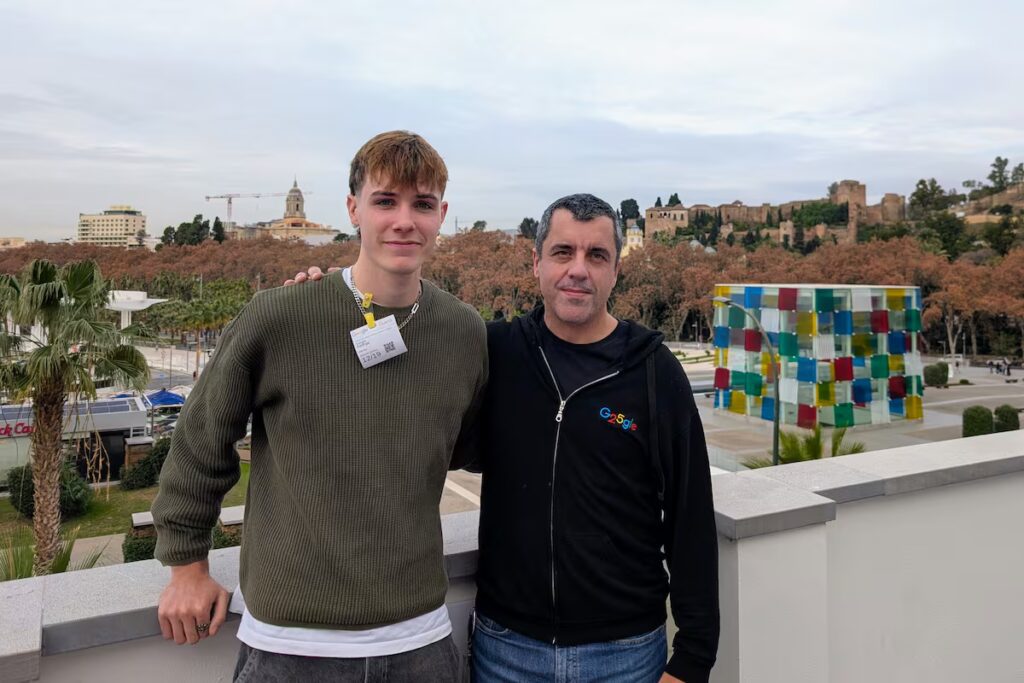
This week, while on vacation, Quintero reignited his search for the virus's creator. Previously attempting to track down the individual in 2022 without success, he took to social media again, inviting anyone with information to come forward. His nostalgic prompt elicited vague responses; however, one message piqued his interest. It came from Adolfo Ariza, a Córdoba City Council employee, who claimed to be a classmate of the virus's creator, Antonio Astorga, and revealed that Astorga had passed away years prior. This connection hinted at a deeper story behind the code.
Unraveling the Identity of the Creator
Upon further investigation into Astorga's background, Quintero discovered that Astorga was a computer science teacher at the Miraya del Mar Institute in Torre del Mar, near Vélez-Málaga. There, he had developed several projects, including a tool for tracking student performance used by the Junta de Andalucía. Despite this revelation, the phrase “KIKESOYYO” found in the virus's code didn't align with Astorga's name. Quintero reached out to Astorga's sister, who provided crucial insights: Astorga's middle name was Enrique, and he was affectionately known as “Kike.” This led Quintero to make contact with Kike's son, Sergio, who was astonished by the director of Google reaching out to him.
A Strong Connection to the Past
During their meeting, Sergio shared memories of his late father's pride in his work on a computer virus. As a young software engineer, he found the reconnection exhilarating yet bittersweet, given the news of his father's passing. Quintero described the emotional experience of uncovering the history behind the virus that had inadvertently shaped his career and highlighted the closeness of their worldviews. Concluding the meeting, he expressed a desire to honor Astorga's legacy, assuring that he would share this story with the broader community.