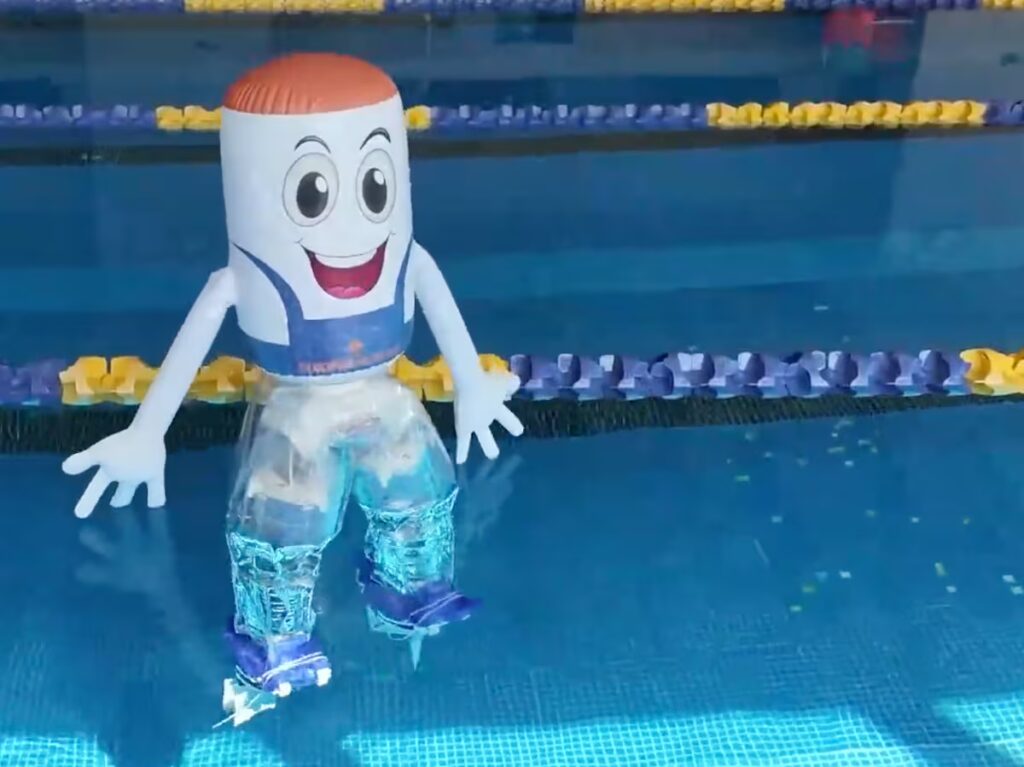
The prototype can crawl, float, swim, fly, and shrink to fit through narrow spaces.
Each year, various humanoid robot prototypes are introduced, often drawing more attention when they closely resemble humans. However, researchers from the Southern University of Science and Technology have developed a unique invention resembling a buoy with extendable legs, which may prove useful in disaster relief efforts. This innovative robot can contract and crawl through narrow spaces, inflate to walk steadily, as well as float, swim, and fly.
Table of Contents
ToggleInnovative Design Features
The key to this prototype lies in its retractable legs. Led by Hao Liu, the team has created structures that can extend by 315% through air injection, supported by servomotors that maintain stability. Each leg weighs 350 grams and can reliably bear heavy loads once deployed. Incorporated into a humanoid robot, these retractable components enable the machine to reduce its height by 36% and width by 61%, facilitating navigation through tight spaces.
Versatile Functionality
Equipped with an inflatable torso design that allows it to float and support the weight of a user as a flotation device, this robot can swim using its legs and walk on water. Furthermore, it can feature four rotors similar to drones for flight. In its contracted version, it appears like a single tube and can crawl like a caterpillar, enabling it to access confined areas.
Potential Applications
The versatility of this robot positions it as a solution for various situations. Co-author Ting Wang states, “It could be utilized in catastrophic scenarios due to its inflatable design, lightweight, adaptability to different environments, and safety features.” The prototype's ability to dramatically modify its height and form allows it to traverse narrow, inaccessible areas that traditional robots cannot reach, while its lightweight but robust structure (weighing 4.5 kg) ensures safe interaction with people and resistance to impacts.
Technical Challenges and Inspirations
Engineers have long endeavored to create humanoid robots that mimic human mechanics, facing challenges such as enabling growth, ensuring durability combined with lightness, and effectively absorbing impacts. However, Liu and his team have designed a humanoid robot capable of growth without excessive weight increase. This robot is not only multifunctional but also rapid, efficient, and properly sized for maintaining dynamic balance.
Research and Development
Details of their developmental process are outlined in a study published in Science Advances. One of the major challenges tackled was designing lightweight structures that do not deform when deflated while remaining capable of walking or standing once contracted. Inspired by human bone structure and Disney's inflatable robot Baymax from Big Hero 6, they created a design that balances safety and adaptability.
Future Prospects
With the completion of the extension and contraction system for its legs, the researchers foresee numerous improvement avenues, including increased autonomy and more powerful servomotors for enhanced performance. They also consider utilizing advanced language models to improve the robot's learning algorithms, potentially leading to the deployment of humanoid robots in complex, dynamic, or hazardous environments where they can safely and effectively assist humans.