
Table of Contents
ToggleSpain’s Commitment to Artificial Intelligence Governance
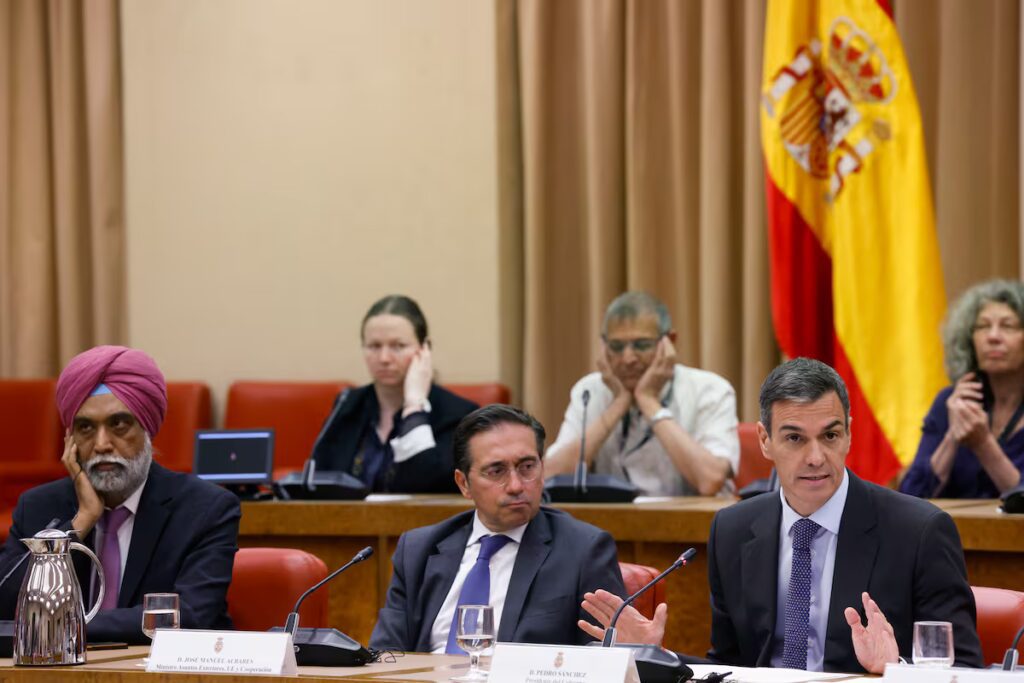
Spanish Prime Minister Pedro Sánchez emphasized the growing concentration of power in artificial intelligence (AI) and outlined Spain’s intention to lead in AI development while addressing the inherent risks associated with its unchecked deployment. During the inaugural meeting of the UN Panel of Experts on Artificial Intelligence, hosted in the Congress of Deputies, Sánchez highlighted the potential for AI to exacerbate social inequalities, concentrate wealth, undermine democratic systems, and affect climate change.
Governance of AI: A Priority for Spain
Sánchez criticized the current governance of AI, stating that it is steered not by society, democratically elected governments, or market forces, but by a select group of major corporations. He pointed out that five companies dominate nearly 60% of the global AI market, representing a form of “silent colonialism.”
“This is not merely a concentration of capacity, but a concentration of power, because technology equates to power,” he remarked. He stressed the necessity for a global multilateral approach that fosters collaboration between businesses, academic institutions, scientists, legislative bodies, and executive authorities.
Addressing Digital Challenges
Sánchez highlighted recent government initiatives aimed at mitigating the impact of social media, particularly on minors. Measures include a request to the Prosecutor’s Office to investigate the spread of illegal content, such as AI-generated child pornography. He cautioned that these platforms possess significant economic power that can jeopardize social cohesion and democracy.
UN Panel of Experts on Artificial Intelligence
Established by the UN General Assembly in August 2025, the panel comprises 40 experts, including 19 women and 21 men, from academia, the private sector, civil society, and international organizations. It is led by Yoshua Bengio, a pioneer in deep learning and winner of the Turing Prize, alongside Maria Ressa, a journalist and 2021 Nobel Peace Prize recipient known for her critique of digital misinformation.
Technological Speed and Challenges Ahead
In his remarks, Yoshua Bengio cautioned against the rapid pace of technological innovation, stressing the need for timely, scientifically grounded responses. He recounted how the emergence of tools like ChatGPT shifted his research priorities, acknowledging both the beneficial and dangerous potentials of technology. “We must prioritize the protection of our global infrastructure,” Bengio asserted, highlighting current inadequacies in risk management.
Building Trust Through Cooperation
Bengio emphasized that the success of the panel’s initiatives hinges on fostering trust and cooperation among its members. “Human connection is essential for developing something this significant,” he concluded.
AI’s Impact on Democracy
Maria Ressa brought attention to the implications of AI within the democratic landscape. She outlined a three-phase degradation of democratic institutions, beginning with a “narrative war” where repeated falsehoods become perceived truths. Ressa warned that AI not only spreads misinformation but can also generate it en masse, leading to what she termed “synthetic consensus.”
Ressa stressed that this trend threatens institutions such as the media and judiciary, fostering corruption and diminishing accountability. “Without facts, there is no truth; without truth, there is no trust; and without these elements, we cannot establish a shared reality,” she summarized.