
Table of Contents
ToggleExploring Technological and Economic Trends: Insights from Key Figures
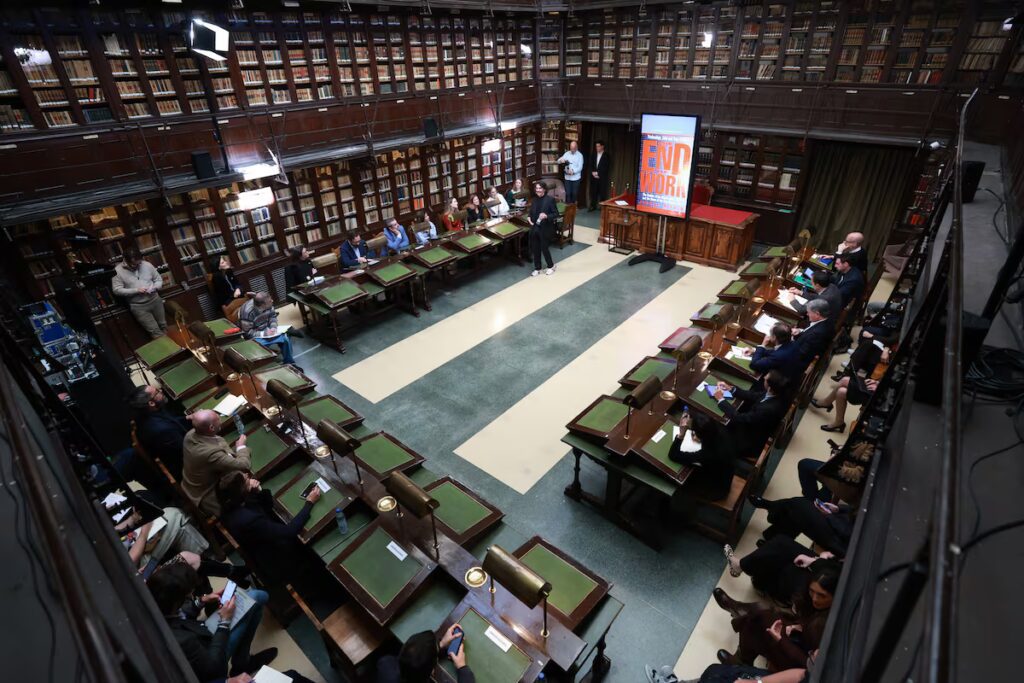
Remarkable coincidences occur in the fields of technology and engineering. For instance, a notable book by the influential physicist Enrico Fermi lies unnoticed in the historic library of the Ateneo de Madrid. The Italian edition of his Introduction to Atomic Physics serves as a quiet reminder of his groundbreaking work in quantum physics, for which he received the Nobel Prize in 1938.
Retina Observatory: Economic Outlook
The eighth edition of the Retina Observatory, a significant event supported by Santander and Google, highlights economic trends. Attendees noted that the year had been relatively encouraging for the economy, evidenced by the robust performance of the Ibex 35 stock index and positive results from major companies like Inditex and Banco Santander. However, challenges persist, particularly in the digital sector, where startups face difficulties accessing capital, and merger activity remains subdued. There is a consensus that future developments will likely diverge from current expectations, marking a shift in digital entrepreneurship.
Geopolitical and Technological Risks
Turning to geopolitical landscapes, experts indicated that rising tensions among the United States, China, and Europe shape current discussions. The term “sustainability,” once highly prominent, has slipped in priority while “security” has emerged as a defining focus for strategists and businesses. This evolution reflects changing priorities in technology adoption, particularly in artificial intelligence (AI), which consistently ranks as a leading “enabling technology.” Enrique Arribas, vice president of the Spanish Marketing Association, advocates for integrating humanity into current models of environmental, social, and governance (ESG) strategies.
Challenges and Opportunities in Technology
Speakers, including Fernando Suárez from the Council of Computer Engineers, warned about the vulnerability of citizens amidst growing technological dominance. He urged the necessity for Europe to invest strategically in emerging technologies like quantum computing to compete globally. Suárez emphasized that technological advancements should not lead to a societal divide and that safeguarding public interests is paramount.
Despite the potential challenges presented by advancements in AI, Miguel Alexandre Barreiro, CEO of Eira, advocates for understanding AI as infrastructure rather than a mere novelty. As applications become increasingly integrated across sectors, concerns about the socio-political implications of technology continue to be relevant. Barreiro indicated that while mobility and housing access are critical current issues, they also shape the broader political landscape.
Positive Projections for the Future
Amid discussions of AI, Miguel Escassi, director of Public Policies at Google Spain, raised the notion of “rational optimism,” emphasizing that societal adaptation to transformative technologies can fuel progress. Initiatives that successfully utilize AI to filter harmful content bolster the argument that technology serves as a complementary force in work rather than a replacement. Escassi highlighted Europe's unique opportunity to innovate across various technology sectors including platforms, clouds, and applications.
Trends on the Horizon
As the National Innovation Company (ENISA) supports dual-use technologies, its CEO, Carolina Rodríguez, reiterated the growing intersection of technology with security, especially in light of increasing cyber threats. The observatory indicates a necessary focus on cybersecurity as a strategic priority.
AI remains a driving force behind significant technological applications, with 50% of Google's code reportedly generated through AI, underscoring its role as a collaborative tool for engineers. Nevertheless, concerns surrounding job displacement due to technological advancements linger, as noted by Miguel Vicente from Tech Barcelona, who highlighted Europe's competitive edge in attracting digital talent compared to China and the US.
As sectors evolve, the pressing questions addressed by industry leaders include addressing the impact of automation on employment and preparing for significant shifts in workforce dynamics. David Liras, CDIO at Moeve, suggests that the world is facing unprecedented transformations, prompting a reevaluation of economic structures.
Conclusion: Navigating the Future
In conclusion, as expressed by Andrea Barber, CEO of RatedPower, the evolution of technology brings forth opportunities for new job creation and societal adaptation. Emphasizing the importance of learning from past experiences, industry professionals convey optimism for fostering innovation and transcending current challenges. The insights from various leaders highlight an overarching theme: the need to embrace change and navigate the intricacies of modern technological landscapes.