“If you ever plan to motor west, travel my way, take the highway that is best. Get your kicks on Route 66,” advised Nat King Cole. However, the highway famously dubbed the Mother Road by John Steinbeck in The Grapes of Wrath (1939) was not originally intended for leisure. Established in 1926, Route 66 linked Chicago, Illinois, to Santa Monica, California, traversing Missouri, Kansas, Oklahoma, Texas, New Mexico, and Arizona.
During World War II, Route 66 played a vital role in troop movements; later, it became a favored path for families on vacation through the 1950s and 60s, famously featured in the television series Route 66. By the 1960s and 1970s, it became synonymous with road trips for hippies and beatniks. However, by the 1980s, the rise of express highways threatened its existence. Today, it endures thanks to local organizations and dedicated travelers.
As of November 11, 2026, Route 66 will celebrate its 100th anniversary amidst a mix of neglect and nostalgia. Certain segments have been expanded or vanished altogether, and some signs can be perplexing. Travelers often find establishments with irregular hours, leading to long stretches of isolation. Nevertheless, the journey remains captivating.
Table of Contents
ToggleDays 1 and 2: Chicago
Chicago, perched on the shores of Lake Michigan, invites exploration along its skyscraper-studded Riverwalk. Visitors can embrace culture at the Art Institute and appreciate modern marvels at Millennium Park, which hosts Anish Kapoor's Cloud Gate and Jaume Plensa's Crown Fountain. As the starting point of Route 66, the Windy City also boasts its iconic deep-dish pizza.
Day 3: Chicago to Springfield (218 miles)
In Joliet, you might feel a touch of Mexico at El Ranchito while stocking up on supplies. Notable landmarks include the Rialto Square Theatre and the prison immortalized in The Blues Brothers.
Departing Joliet, travelers enter a verdant expanse filled with corn and soybeans. Historic attractions like the Gemini Giant in Wilmington and the iconic Ambler-Becker Texaco station in Dwight still stand. Pontiac showcases remade façades, along with murals that capture the essence of Route 66. A brief stop in Atlanta reveals the Hot Dog Giant, where Abraham Lincoln reads a lawbook in the world's largest wagon. Dinner in Springfield at the Cozy Dog Drive In features its famous hot dog served since 1949.
Day 4: Springfield to Carthage (402 miles)
Before departing Springfield, site of Lincoln's historic home, visit the park-museum and his mausoleum. In Auburn, travelers can stroll along original cobblestones, and on the Chain of Rocks Bridge across the Mississippi, they can witness its unusual 22-degree bend.
After Saint Louis, stop in Cuba, known for its vibrant murals and the world's largest rocking chair. As they approach Carthage, travelers pass through yet another Springfield.
Day 5: Carthage to Stroud (204 miles)
The medieval-style administrative building in Carthage captivates visitors as they arrive at the 66 Drive-In. In Joplin, they can obtain a map of the Route 66 Tri-State Corridor. The area commemorates the mining history shared by Missouri, Kansas, and Oklahoma. A stop at the ‘Cars on the Route' attraction in Galena introduces visitors to Dean “Crazy Legs” Walker, inspiration for the Pixar character Tow Mater.
Crossing into the rolling landscape of Oklahoma celebrates humorist Will Rogers as travelers explore the historic Coleman Theater in Miami and visit the site of Route 66's construction visionary, Cyrus Avery, in Vinita. In Tulsa, the art deco architecture reflects its status as the former oil capital, while the Woody Guthrie Center pays homage to the song “Will Rogers Highway.”
Day 6: Stroud to Oklahoma City (113 miles)
After breakfast at the Rock Cafe, the journey continues to Oklahoma City, home to the National Cowboy & Western Heritage Museum, offering a dramatic portrayal of the West's challenges and Native American narratives. This experience contrasts starkly with the memorial dedicated to the 168 victims of the 1995 Oklahoma City bombing. Dinner at Sid's Diner in El Reno features the famed onion burger.
Day 7: Oklahoma City to Tucumcari (388 miles)
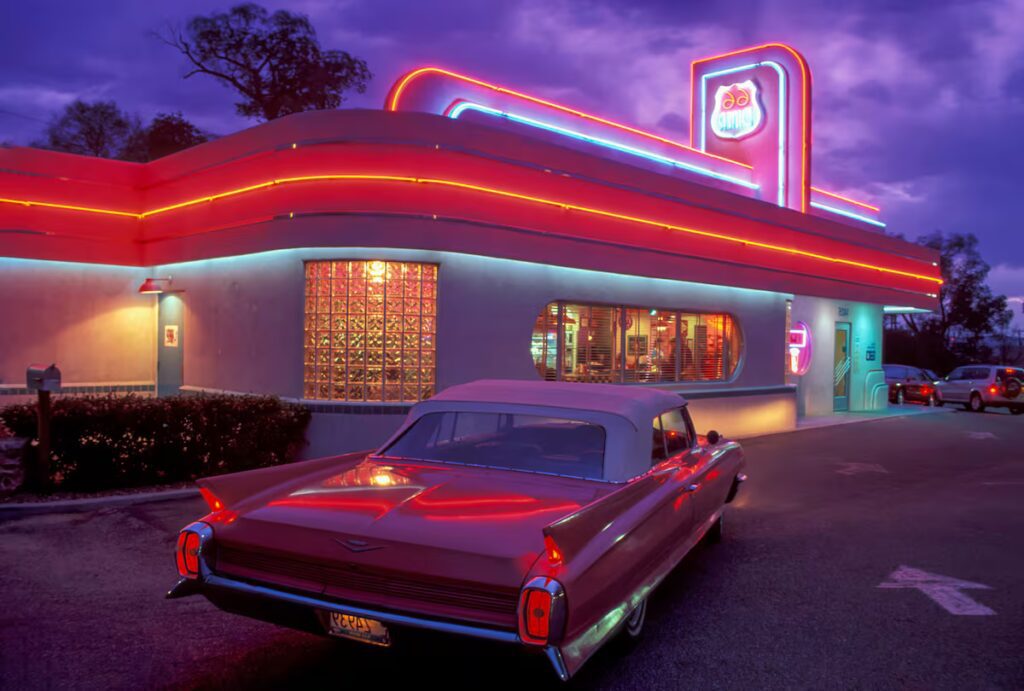
Arriving in Tucumcari, known for its neon signs, travelers stop at the Clinton Trail Museum and explore the recreated village in Elk City. The Big Texan Steak Ranch offers a chance to witness the 72-ounce steak challenge. Passing through Amarillo, they sketch the 2nd Amendment Giant and graffiti one of the vehicles at the Cadillac Ranch. Just in time, they capture a photo at the Midpoint Café before heading to New Mexico, where Tucumcari has fewer neon lights than expected but still offers about thirty murals.
Day 8: Tucumcari to Santa Fe (193 miles)
Crossing the bathroom at the Blue Hole in Santa Rosa, the route leads to Santa Fe, the oldest U.S. state capital (1610). The city's vibrant culture and welcoming atmosphere serve as a contrast to the deserted towns encountered earlier.
Day 9: Santa Fe
Visitors can learn about the city's history at the New Mexico History Museum, peruse the Georgia O'Keeffe Museum, and admire significant landmarks like the Palace of the Governors and the Basilica of St. Francis of Assisi. The miraculous staircase of the Chapel of Loreto, with its unique design, is another highlight.
Day 10: Santa Fe to Gallup (258 miles)
The journey begins in Santo Domingo. Notable stops include the colonial district of Albuquerque, where fans of Breaking Bad can dine at Los Pollos Hermanos. Soon after, the Continental Divide alerts travelers to the differing watersheds. Arriving in Gallup, the motel check-in process becomes a trendy digital affair with a receptionist from India.
Day 11: Gallup to Holbrook (127 miles)
Early morning brings a transition into Arizona, revealing the stunning Painted Desert and the Petrified Forest, which boasts the largest concentration of petrified wood globally.
Day 12: Holbrook to Williams (130 miles)
Route 66 presents numerous unique pit stops, from the Jack Rabbit Trading Post in Joseph City to Winslow, Arizona, where a statue honors singer Jackson Browne. Noteworthy attractions include the Meteor Crater and the historic Muffler Man in Flagstaff. Travelers end the day in Williams, the gateway to the Grand Canyon.
Day 13: Williams to Needles (193 miles)
The Delgadillo brothers championed Route 66's revival in Seligman, with Angel Delgadillo recognized as its guardian angel. Visitors can explore Oatman, where descendants of gold rush-era donkeys roam, before moving on to Needles and California.
Day 14: Needles to Pasadena (257 miles)
Interstate 40 parallels Route 66, creating an unadventurous experience, until the Bagdad Cafe in Newberry Springs draws in cinephile tourists. Approaching San Bernardino, known as the birthplace of McDonald's, the landscape greenens. After an overnight stay in Pasadena, travelers catch a glimpse of Santa Anita Park.
Day 15: Pasadena to Santa Monica (87 miles)
In the morning, travelers explore Hollywood at Warner Bros. studios and Griffith Observatory for iconic views of the Hollywood sign. They stroll along the Walk of Fame before concluding their journey at Santa Monica Pier, the celebrated endpoint of Route 66.