Table of Contents
ToggleHigh-Stakes Legal Battle: Sam Altman vs. Elon Musk Over OpenAI
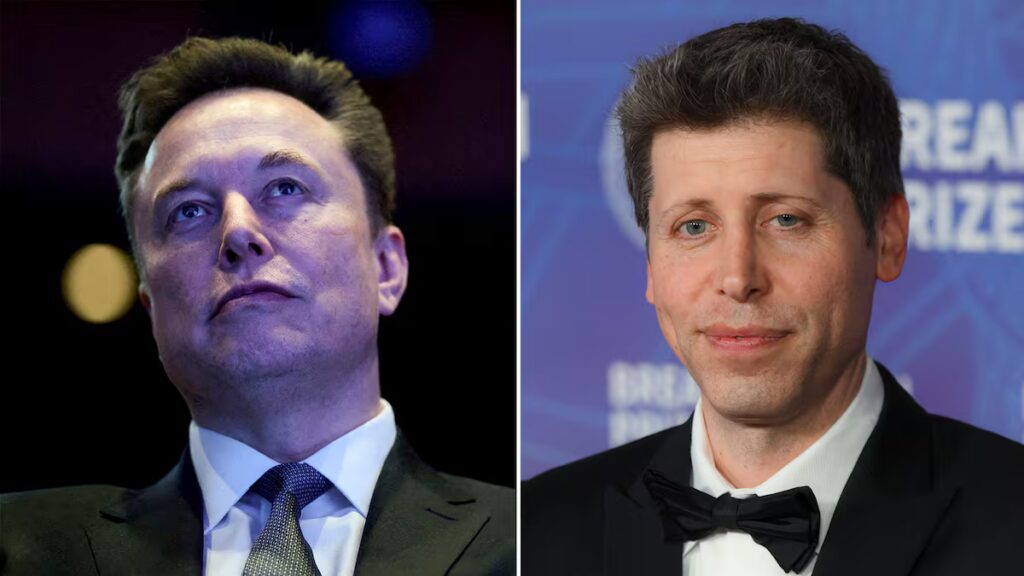
The Ronald V. Dellums courthouse in Oakland, California, is set to become the focal point of global attention as it hosts one of the year’s most significant legal battles. This quiet building in a city of approximately 440,000 residents, situated across the bay from San Francisco, will hear a case involving Sam Altman, CEO of OpenAI, and Elon Musk, the world’s richest man. At stake is not only the future of OpenAI, a leader in artificial intelligence, but also a staggering $150 billion in potential damages (approximately €130 billion).
Background of the Case
The litigation, initiated by Musk in March 2024, has been building amidst escalating tensions between the two tech titans. Musk, who co-founded OpenAI a decade ago, has accused Altman and other executives of straying from the organization’s original mission of benefiting humanity. He argues that OpenAI’s evolution into a profit-driven entity, especially after its partnership with Microsoft, contradicts its foundational purpose. Musk claims that guiding OpenAI towards maximizing profits has sidelined its altruistic goals.
Financial Contributions and Departure
Musk invested approximately $38 million into OpenAI when it was founded, aiming for it to operate without personal gain. However, by 2018, he stepped away from the organization, now voicing regret over this decision. He asserts that the current executives have betrayed the intent of the nonprofit model and unjustly enriched themselves. As a result, Musk is demanding $150 billion in damages from both OpenAI and Microsoft, intending to donate the funds to charities. He also seeks the reestablishment of OpenAI’s nonprofit status and the removal of Altman and president Greg Brockman from their roles.
The Accusations and Counterclaims
Altman and Brockman counter that Musk’s motivations are rooted in a desire to reclaim control over OpenAI to advance his own artificial intelligence venture, xAI. They assert that Musk himself championed the transition from a nonprofit to a for-profit organization.
Communications between the parties have further intensified on social media. OpenAI representatives stated their readiness to defend their case, emphasizing that the lawsuit is a misguided attempt by Musk to undermine a competitor. They also anticipate the chance to cross-examine Musk under oath.
Unique Case Characteristics
The jury selection process for this case, which commenced this week, has demonstrated unusual complexities. Judge Yvonne Gonzalez Rogers has called three times the usual number of candidates to ensure a robust selection. Key witnesses expected to testify include Musk, Altman, and Satya Nadella, CEO of Microsoft, highlighting the significant players involved.
Additional witnesses include Shivon Zilis, a former executive at Neuralink and a current board member of OpenAI, as well as Tasha McCauley, a robotics engineer and past board member of OpenAI. The case documents have already begun to leak, revealing contentious internal communications that may impact the trial’s narrative.
Venue and Context
Surprisingly, the trial is being held in Oakland, rather than the more prominent San Francisco. This choice is due to random assignment, despite Oakland’s socioeconomic challenges, which include a history of violence and economic downturns. The courtroom drama is expected to attract protests on its opening days.
The Future of OpenAI and AI Ethics
As OpenAI garners significant profits and expands its user base, its forthcoming IPO could value the company at up to $1 trillion. However, the organization faces increasing competition and growing scrutiny regarding the ethical implications of artificial intelligence. As public perceptions shift, the legal proceedings may have far-reaching consequences for the future of AI development.