Table of Contents
ToggleElon Musk’s Legal Battle with OpenAI: Day Three Highlights
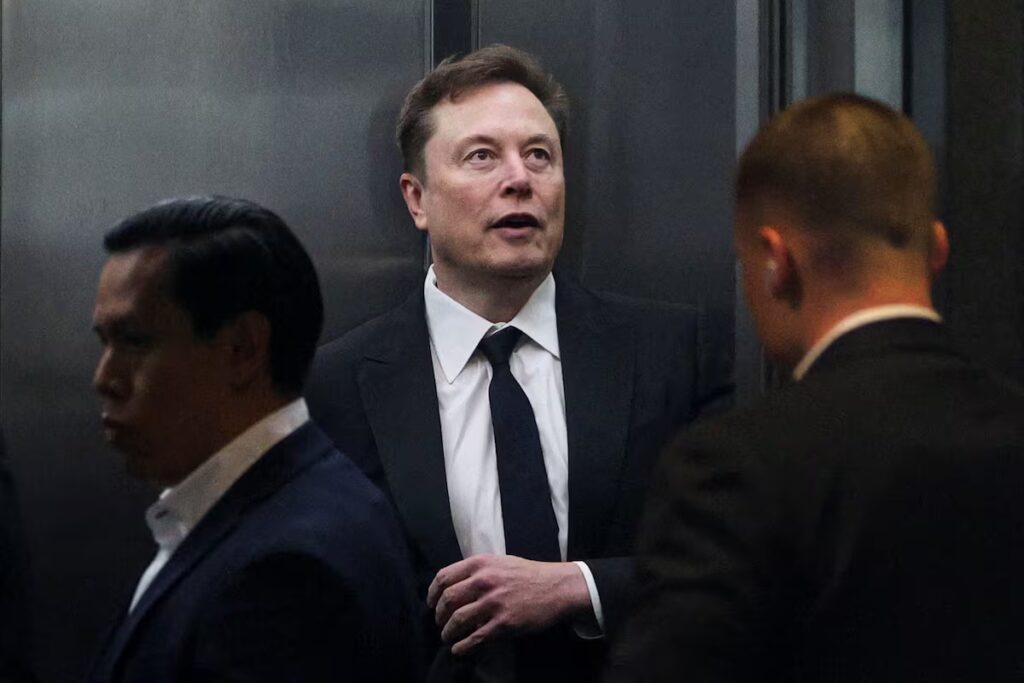
On Thursday, Elon Musk concluded the third and final day of his testimony in a courtroom in Oakland, California, as part of his lawsuit against OpenAI, the artificial intelligence company he co-founded with Sam Altman. Musk, who initially invested $38 million in OpenAI in 2015, departed from the organization in 2018. He alleges that Altman shifted the company’s focus from a non-profit model to a profit-driven enterprise to enrich himself, claiming damages of $150 billion (approximately €128 billion).
Interrogation Focus on Musk’s Involvement
The latter part of the trial saw Musk facing pointed questioning from OpenAI’s attorney, William Savitt, while briefly engaging with representatives from Microsoft. In contrast to his earlier confident demeanor, Musk appeared increasingly tense, responding to questions with short answers. Savitt’s aggressive line of questioning exposed inconsistencies in Musk’s accounts, forcing him to withdraw certain statements.
In a packed courtroom, Savitt probed Musk about his early involvement with OpenAI and his interactions with Altman. Musk repeatedly insisted that “you can’t steal from a non-profit,” prompting the judge to urge him to clarify his responses. The central discussion centered on the conflict between profit motives and the common good, with Musk asserting that OpenAI deviated from its foundational mission of serving humanity.
Controversies Surrounding Open Source
Savitt challenged Musk regarding the concept of open source software, highlighting Musk’s claims that OpenAI had diminished its commitment to collaborative technology. However, Savitt produced an email in which Musk acknowledged that with the rise of powerful AI, it might be prudent to move away from open-source practices. Additionally, Musk admitted to “partially” utilizing some of OpenAI’s technology for his own company, xAI.
Algorithm Manipulations and Resentment Allegations
During cross-examination, Musk was questioned about whether he had manipulated algorithms on X (formerly Twitter) to disadvantage competitors. He denied such accusations but acknowledged that his tweets sometimes received disproportionate visibility due to system changes. Musk’s lawsuit contends that OpenAI violated its mission by scaling back its open-source efforts, yet his past communications seemed to contradict this claim.
Additional Questions from Microsoft
The questioning from Microsoft’s lawyer revolved around why Musk chose not to pursue legal action earlier given Microsoft’s deep partnership with OpenAI, which included a $10 billion investment in 2020. Furthermore, Microsoft had allegedly offered Musk a chance to return to the company, which he declined.
Musk’s Final Remarks
The session concluded with Musk responding to questions from his own legal team, allowing him to convey a slightly more favorable narrative to the jury. He reiterated that he does not intend to develop generative AI for Tesla vehicles.
Judicial Concerns Over Conduct
Judge Yvonne Gonzalez Rogers expressed her dissatisfaction with the courtroom’s atmosphere, cautioning against photography and instructing Musk to refrain from posting about the trial on his X account. Additionally, she directed the court to avoid discussing how AI might impact the future, a topic Musk had touched upon. The judge remarked, “I suspect that there are many people who do not want to put the future of humanity in the hands of Mr. Musk,” clearly signaling the court’s intent to focus strictly on the case at hand.