Table of Contents
ToggleTikTok’s Influence on the 2024 U.S. Election
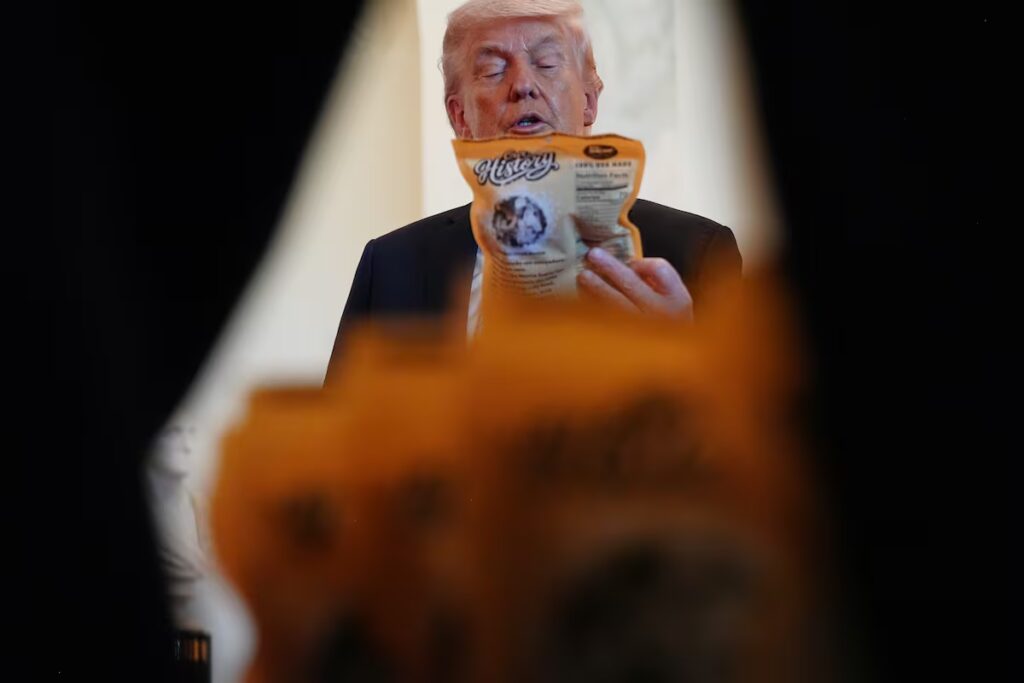
TikTok’s future in the United States faced significant challenges in 2024. President Joe Biden had enacted legislation requiring TikTok to separate from its Chinese parent company, ByteDance, to continue operations in the U.S. Following this, former President Donald Trump leveraged TikTok’s popularity during his campaign, stating, “I was not a fan of TikTok, but I started using it, became a fan, and it helped me win the elections by a landslide.”
Research Findings on Content Bias
A recent study published in the journal Nature revealed that TikTok showcased a larger proportion of conservative content to U.S. users in 2024. Researchers created 323 TikTok accounts in states like New York, Texas, and Georgia and collected over 280,000 recommended videos in the months leading up to the elections. Their findings indicated a significant bias towards the Republican Party: accounts identified as Republican received 11.5% more content related to their party, while Democratic accounts encountered 7.5% more anti-progressive content. TikTok did not respond to inquiries regarding these findings.
The study suggests that users interested in politics were more frequently exposed to pro-Trump content. The underlying reasons for this trend raise difficult questions. TikTok’s algorithm dictates video recommendations, influenced by various factors such as viewership numbers and content preferences. This leads to speculation: did TikTok intentionally amplify pro-Trump content, or were Americans simply more inclined to engage with it?
Algorithmic Examination
Yasir Zaki, a co-author and professor at New York University in Abu Dhabi, provided insight into the study, explaining, “We explored whether our findings were simply a result of TikTok promoting posts based on likes and shares. We built 48 models to simulate such a scenario, but in all cases, the observed bias exceeded our predictions. Some models even indicated the opposite trend, with Democratic content receiving more interaction.” This suggests that audience interest may not be the primary driver of the observed bias.
The possibility exists that TikTok may employ mechanisms to favor specific individuals or trends. A 2023 report by Forbes disclosed that TikTok possesses a “heating” feature that allows employees to manually promote select videos, regardless of the algorithm’s natural tendencies. While TikTok maintains that only a small number of U.S.-based employees have the authority to use this feature, it raises questions about its potential impact on political content.
Implications of Bias
While it remains unclear whether TikTok intentionally favored Trump, researchers acknowledge the study’s findings indicate a substantial bias. Hazem Ibrahim, another co-author and professor at NYU, argued that while the study can elucidate the algorithm’s behavior, it cannot ascertain the motivations behind it. “Biases may emerge from optimization and automated processes without direct human intervention,” he noted.
The implications of TikTok’s algorithm extend beyond American elections. Concerns had arisen about TikTok’s potential influence on public opinion, particularly regarding the Chinese government’s ability to manipulate information flow in favor of specific candidates or parties. Given that TikTok has over 170 million users in the U.S., the platform’s reach is considerable.
Cross-Cultural Concerns
Zaki highlighted existing research demonstrating social media’s capacity to shape user beliefs and behaviors. Although this study did not directly measure these effects, it emphasizes how TikTok’s recommendation system affects content exposure over time, influencing public perception and political narratives.
While this case primarily pertains to the United States, it raises broader concerns applicable to other countries. According to Talal Rahwan, a co-author and professor at NYU, “Algorithmic selection based on user preferences can occur wherever TikTok operates. Tailored audits would be necessary to identify how such bias manifests in different contexts.”