
Table of Contents
ToggleThe Race Towards Nuclear Fusion: Advancements in Spain and the UK
Nuclear fusion, the process that powers the sun by combining light nuclei to release energy, has long been an elusive goal for energy generation. For decades, predictions for commercial implementation have lingered at least 30 years in the future. However, recent developments in Europe suggest this timeline may be significantly shortened. Two groundbreaking prototypes—one in the UK and another in Spain—are now aiming for pilot plants capable of generating net energy within the next decade and a half.
Spain's Smart Nuclear Fusion Reactor Prototype
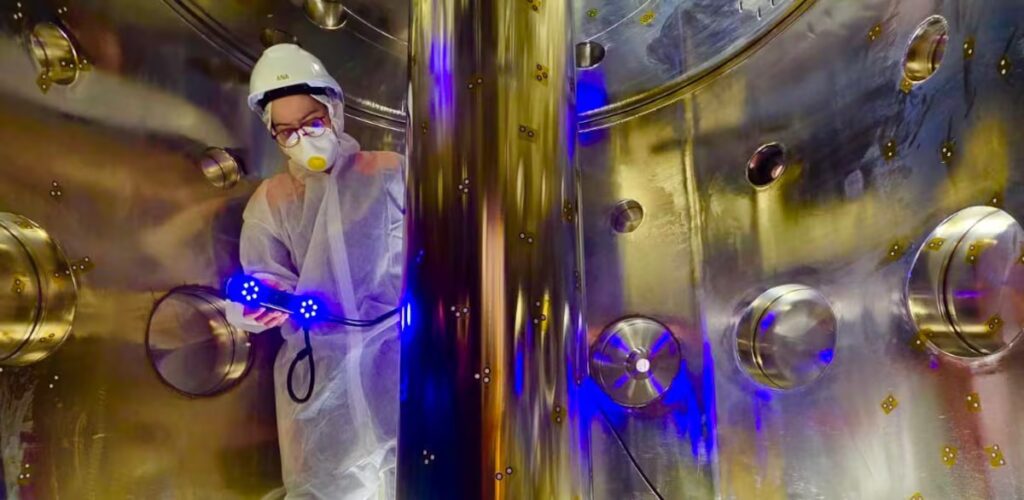
The Smart nuclear fusion reactor prototype, known as the Small Aspect Ratio Tokamak, is spearheaded by the University of Seville. This international consortium successfully initiated the reactor in the past year, generating plasma at around 10 million degrees Celsius and maintaining it for double the expected duration. Recently, the project received a substantial grant of eight million euros from the Andalusia FEDER Program to enhance its scientific equipment and infrastructure.
According to Manuel García Muñoz, a physicist at the University of Seville and co-director of the Smart project, “Smart has gone from being a research project to a key player in developing the most compact fusion reactor possible.” With a unique spherical design, the Smart project aims to create a reactor that is both economically viable and technologically feasible.
Technological Innovations in Compact Fusion
The Smart project emphasizes high-temperature superconducting magnets (HTS) to reduce costs and increase magnetic field strength in smaller spaces while utilizing a fuel geometry known as negative triangularity to enhance reactor performance and longevity. The next phase, termed hSmart, aims to boost temperatures to over 100 million degrees Celsius—ten times the initial launch temperature—targeting a thermal fusion output of approximately 650 MWt, sufficient to power over 300,000 homes in an average European city.
The SMART initiative is part of the larger Fusion2Grid strategy, designed to facilitate the connection of initial reactors to the energy grid in collaboration with public and private sectors. The project synergizes with the IFMIF-DONES initiative in Granada.
A Recognition in Plasma Physics
Eleonora Viezzer, co-director of the Plasma Science and Fusion Technology (PSFT) laboratory, has recently received an ERC Consolidator Grant from the European Research Council for her ongoing work in plasma physics. This funding will support the Turbo4energy project, which tackles wave-particle interaction, a critical component in maintaining stability and energy transport in fusion reactors. Innovative imaging techniques developed under this initiative will allow for unprecedented measurements of ions and electrons.
The British STEP Fusion Project
Meanwhile, across the Channel, the UK is spearheading its nuclear fusion ambitions through the STEP Fusion project, which aims for a viable commercial fusion plant by 2040. Paul Methven, the project's director, emphasizes the shift from theoretical concepts to detailed design and engineering work. STEP is also pursuing the same goal as the hSmart: to develop a compact reactor with effective plasma containment and lower operational costs.
The Joint European Torus (JET) facility in Oxfordshire has already made strides in fusion energy, achieving a record of 59 megajoules (MJ) for a sustained reaction. The aim for both Spanish and British projects is to reach temperatures of about 150 million degrees Celsius within a magnetic field capable of containing the plasma, thereby maximizing energy output.
Challenges and Common Goals
A shared challenge remains the production of fusion fuel. Both projects rely on deuterium and tritium, with deuterium easily sourced from seawater. However, tritium must be synthesized. Amy Gandi from the UK Atomic Energy Authority details ongoing work to transform lithium into tritium to meet these demands. Additionally, both teams are working on developing materials that can withstand the high temperatures generated during fusion reactions.
Both projects incorporate a compact reactor design to optimize efficiency and improve the economics of fusion energy. Their innovative approaches suggest a promising future for fusion technology as a sustainable energy source.