
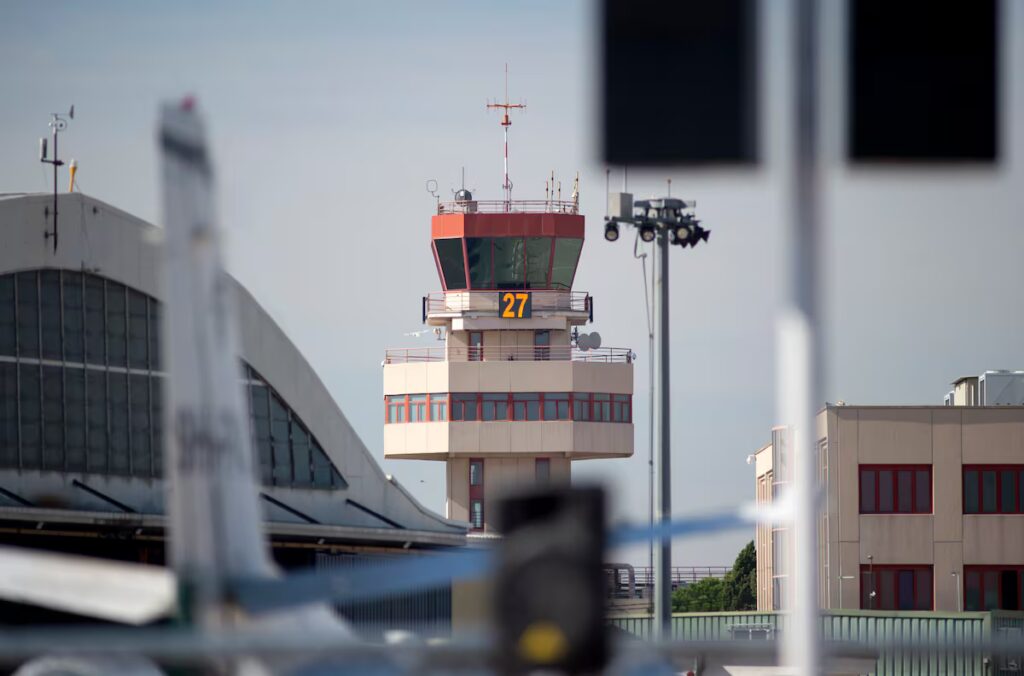
On June 4, 2025, air traffic controllers in the Canary Islands engaged in a clear and immediate conversation with a commercial pilot flying over the Atlantic. While this may appear routine to many, it represents a significant milestone in aviation communication over open waters.
Effective communication in air traffic management over the ocean is often limited. Long intervals between messages can lead pilots to take less efficient routes and challenge the management of air traffic across expansive skies.
Table of Contents
ToggleAdvancing a Unified European Airspace
To tackle these communication and surveillance blind spots, a cross-border team consisting of satellite engineers, air traffic specialists, airlines, and research organizations from Spain, Portugal, and Germany launched a four-year initiative named ECHOES, co-funded by the European Union. The project’s aim is to modernize air traffic management systems across Europe.
Running until December 2025, ECHOES is testing space-based very high frequency (VHF) radio systems along with aircraft satellite tracking systems (ADS-B) to improve air traffic management in remote and oceanic airspace.
“Currently, aviation relies on VHF radio as the primary means of communication, but many parts of the world lack this capability,” explained Gabriel García, coordinator and program manager of ECHOES at Startical—a Spanish public-private company focused on global air navigation satellite services.
Challenges of Oceanic Communication
When aircraft venture beyond the range of land-based coastal stations, usually around 350 kilometers offshore, they become invisible to radar and lose standard VHF radio contact. As a result, communication becomes slower, fragmented, and less accurate.
Pilots must switch to older high-frequency radio systems, which are prone to interference, background noise, and delays. Although pilots can still communicate their positions and receive instructions, the process is far from instantaneous.
Captain Pablo Poza, a seasoned pilot operating transatlantic routes, pointed out that communication delays can extend up to five minutes for exchanges between pilots and controllers. In urgent situations, this delay might reduce to three minutes in each direction.
“If I experience an issue while flying over the ocean, the response from controllers could take up to six minutes,” Poza explained. This waiting period can escalate stress and diminishes the available time to resolve any complications.
Due to the lack of continuous radar monitoring or instant communication, controllers compensate by increasing separation distances between aircraft. While aircraft can fly as close as 8 to 10 nautical miles apart inland, this distance can expand to 50 or even 80 nautical miles over the ocean, which restricts capacity and efficiency.
Innovations from Space
The ECHOES initiative aims to change this scenario. Building on prior proof-of-concept work, the research team developed and launched two small satellites into low-Earth orbit in 2025.
These satellites—one weighing about 35 kg and the other approximately 100 kg—are equipped with VHF antennas capable of retransmitting both voice and data signals that aircraft typically use for communication with ground stations.
“Technological advancements and the miniaturization of satellites have made this VHF system feasible,” García noted.
Positioned in low Earth orbit (at altitudes between 160 and 2,000 km), these satellites are ideally situated to minimize communication delays, ensuring clear VHF communications with aircraft.
The breakthrough came when researchers successfully demonstrated real-time VHF data communications from space for the first time. This achievement confirmed that aircraft could not only communicate via satellite as they would on the ground but also send and receive operational data messages through space.
Following this initial success, the ECHOES team conducted further tests with multiple airlines operating over the Atlantic, demonstrating that space-based VHF can seamlessly integrate with ground-based systems to provide comprehensive coverage over oceanic airspace.
For pilots, the experience was reassuring and familiar. Captain Poza commented after participating in the trials, “We just talk to them like we normally do with terrestrial VHF stations. I didn’t notice any difference; it felt completely normal.”
This sense of normality is indeed the primary goal of the initiative.
Enhanced Safety and Environmental Benefits
With the successful implementation of space VHF communication, the next objective for the ECHOES team is to broaden its coverage to include the entire globe. Achieving a truly global service would require the deployment of many more satellites.
“For continuous global coverage, we estimate an approximate need for three hundred satellites,” García explained.
Such reliable satellite connections could empower pilots to make real-time adjustments to their routes based on weather conditions, turbulence, or air traffic. Poza highlighted, “If we could maintain ongoing communication with air traffic control and receive reports from other pilots, it would vastly enhance situational awareness.”
Consequently, aircraft could navigate more direct routes, leading to reduced fuel consumption and lower emissions. Improved communication systems would also allow more aircraft to safely utilize busy ocean corridors, thereby increasing airspace capacity.
“Global VHF satellite communication will revolutionize the interaction between pilots and air traffic controllers,” Poza asserted. “By expanding VHF coverage from space, we can ensure continuous, standardized communication, enhancing safety and minimizing delays.”
If fully realized, this system would ensure that aircraft flying over the Atlantic remain as connected as those navigating through Europe’s busiest airspaces, effectively bridging current communication gaps into a cohesive global network. By implementing standard VHF communications from space, European aviation innovators are demonstrating how space technology can enhance the safety, efficiency, and sustainability of long-haul travel.