
Certain scenes, such as a sunset between mountains, a deserted beach, or a city aglow at night, elude traditional photography and videography. Attempting to capture these landscapes often sidelines unique details that contribute to their essence. This is where 360-degree cameras come into play. These innovative devices can record everything around you simultaneously, allowing viewers to explore the entire scene later. Consequently, any moment transforms into an immersive experience, bringing viewers closer to the environment captured in the images or videos.
Table of Contents
ToggleExploring 360-Degree Cameras
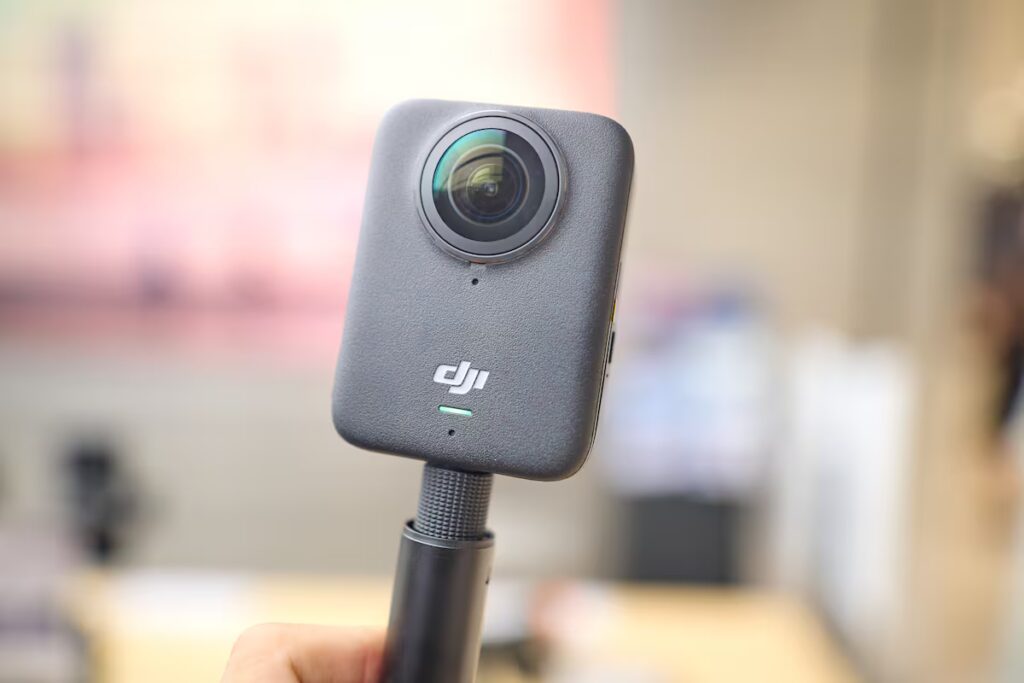
Numerous 360-degree camera models are now available on the market, including budget-friendly options that provide immersive imagery. Recently, I tested the DJI Osmo 360. This camera features dual fisheye sensors designed to capture wide segments of the environment, ‘stitching' them together to produce uninterrupted video. The process is fully automated; simply press the record button, and the camera manages the rest, requiring no prior experience. This user-friendly functionality allows anyone to create captivating content.
The DJI Osmo 360 also liberates users from the constraints of traditional framing. It records everything, permitting post-filming reframing via a mobile device or computer. Users can select various perspectives, including front shots, side tracking, or a ‘floating camera' effect where the device disappears from view. Notably, the camera excels in stabilization; it delivers fluid video regardless of the user's movement, whether running or descending stairs.
Other models, such as the Insta360 X5 and the GoPro Max 2, also embrace this concept of capturing the surrounding environment. These cameras allow viewers to look in any direction using a computer, mobile phone, or virtual reality headset. Consequently, they have become the go-to choice for non-professional users seeking to record immersive content. They are increasingly compact, featuring advanced image stabilization, wireless capabilities for remote operation, live streaming options, and intuitive editing tools that promote creativity. Some of these cameras are specifically designed for sports enthusiasts, offering shock and water resistance, allowing users to capture adventures without worrying about device damage.
Integrating 360-Degree Technology with Drones
The next frontier in this technology is airborne 360-degree capture via drones equipped with cameras capable of recording in all directions at once. These drones utilize strategically positioned sensors—one facing up and another down—to achieve complete spherical video without the drone appearing in the final footage. Their lightweight design allows them to navigate various areas without requiring special permits, although users must always adhere to restricted zones and may need a drone pilot's license in specific cases.
For instance, the Antigravity A1 is among the first drones incorporating an integrated 360 camera capable of recording at 8K resolution, which I also had the opportunity to test. A distinctive feature of this drone is its control mechanism. Instead of the conventional joystick, it includes a controller and goggles, simulating the experience of actually flying. Users can see exactly what the cameras are capturing, allowing them to look in any direction and operate the drone using gestures.
Applications of 360-Degree Photos and Videos
Beyond being a mere technological novelty, 360-degree recording possesses practical applications for both professionals and hobbyists. Professionals utilize this technology to create virtual tours, educational content, and immersive entertainment experiences. On the other hand, average users can effectively capture action sports, concerts, or social events, later enjoying the footage from any device by scrolling through the image with a mouse or finger. Additionally, many social media platforms and video sharing services support interactive 360 content, making it easy for users to share and explore these images without requiring specialized equipment.