Category: Travel
Tags: Matera · Basilicata · Italy · UNESCO · Sassi
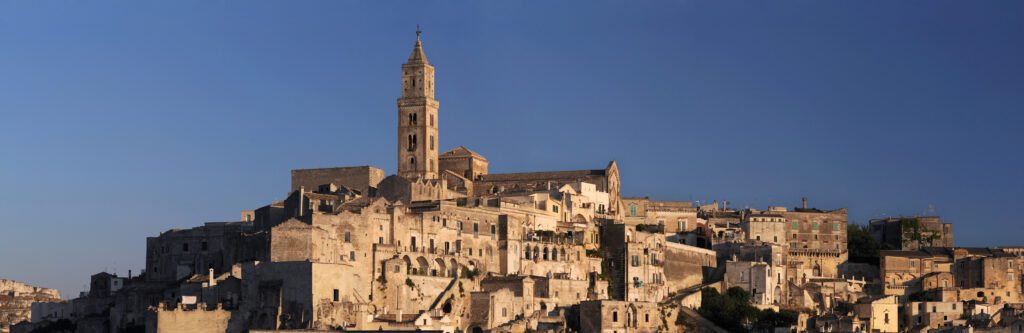
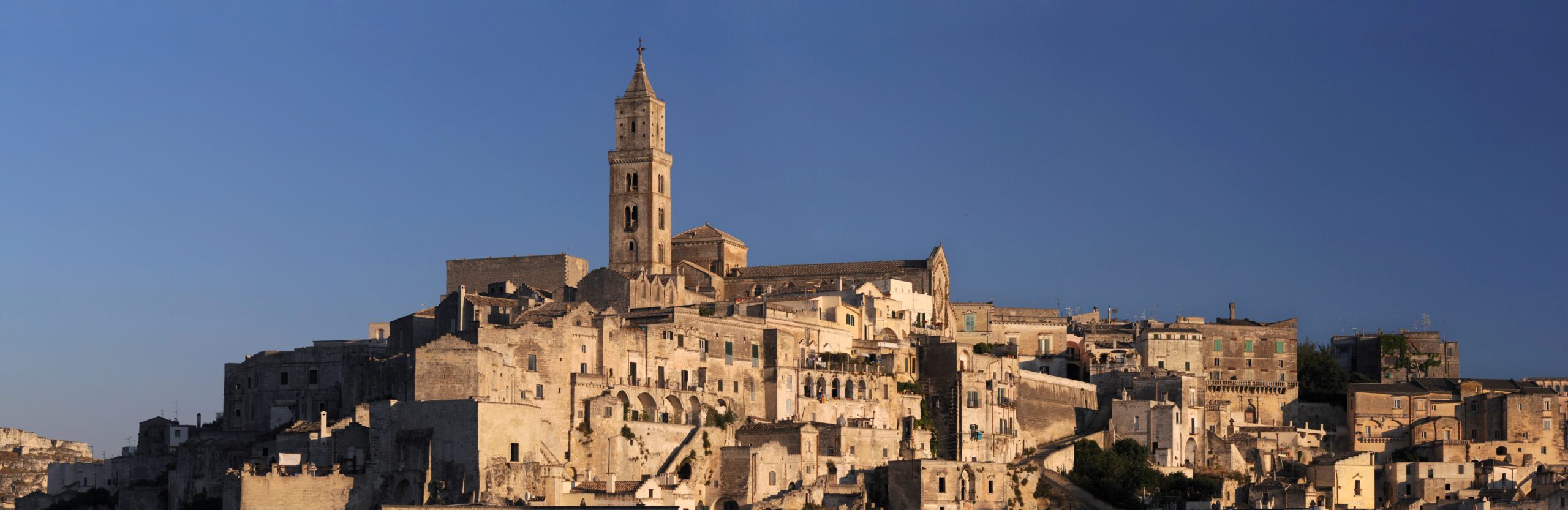
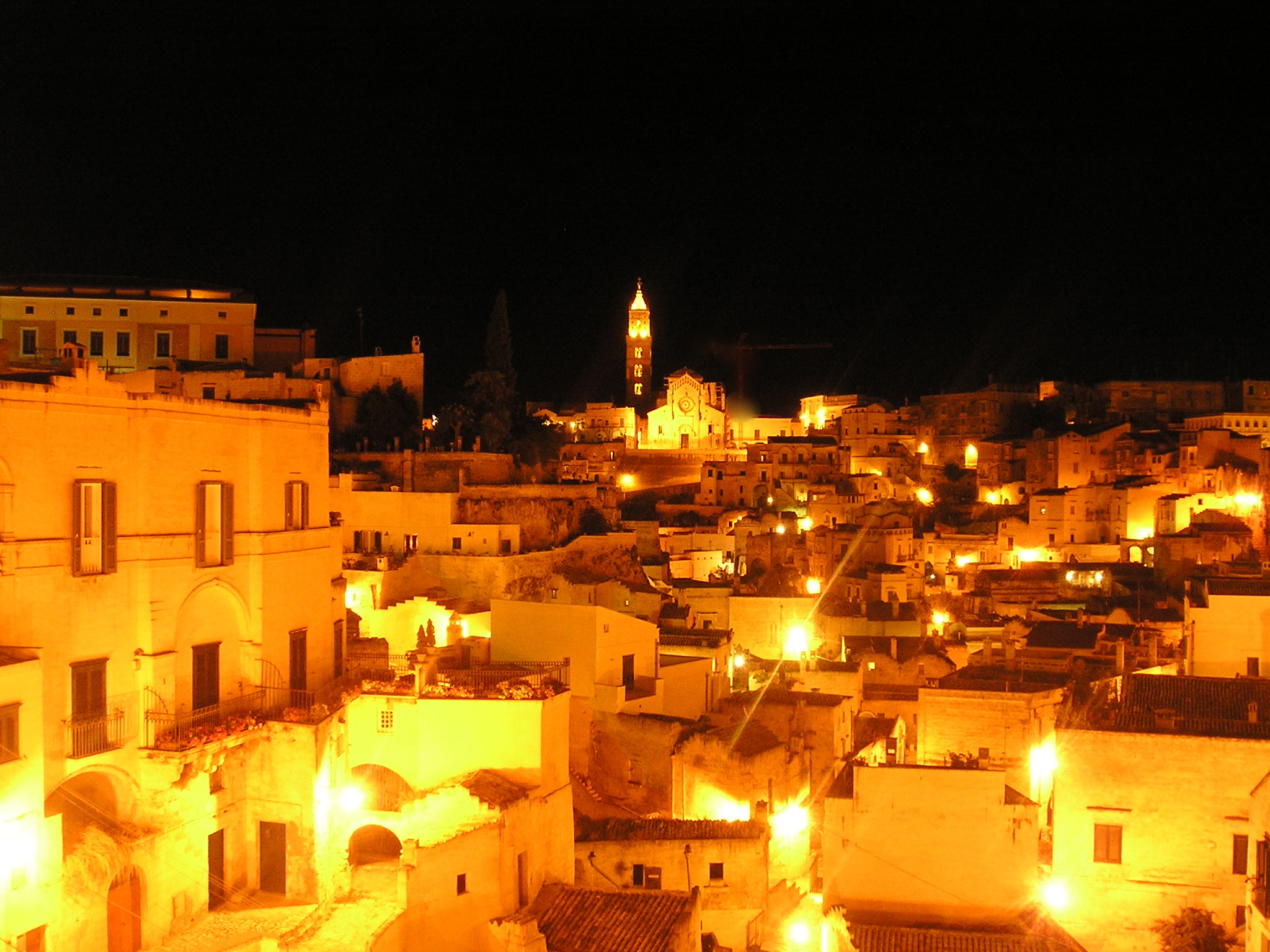
Matera does not behave like the hill towns most visitors use as a template for southern Italy. It does not sit on a ridge and look out. It is cut into the near side of a ravine, stacked downward, and finished in the same pale limestone it was carved from. From the modern streets above, the old quarters can look like a single eroded cliff. From inside them, they resolve into lanes, cisterns, churches and houses whose back wall is often the rock itself.
That settlement, the Sassi, together with the park of rupestrian churches on the opposite plateau, is a UNESCO World Heritage property. It was inscribed in 1993, reference 670, under criteria (iii), (iv) and (v). The property covers 1,016 hectares, with a buffer zone of 4,365 hectares, in the city and province of Matera, in the southern region of Basilicata. UNESCO’s own brief calls it the most outstanding intact example of a troglodyte settlement in the Mediterranean, adapted to its terrain and its ecosystem, with a first inhabited zone dating from the Palaeolithic and later layers that mark successive stages of human history.
A city organised by a ravine
The useful map is not a grid. It is a section through the land.
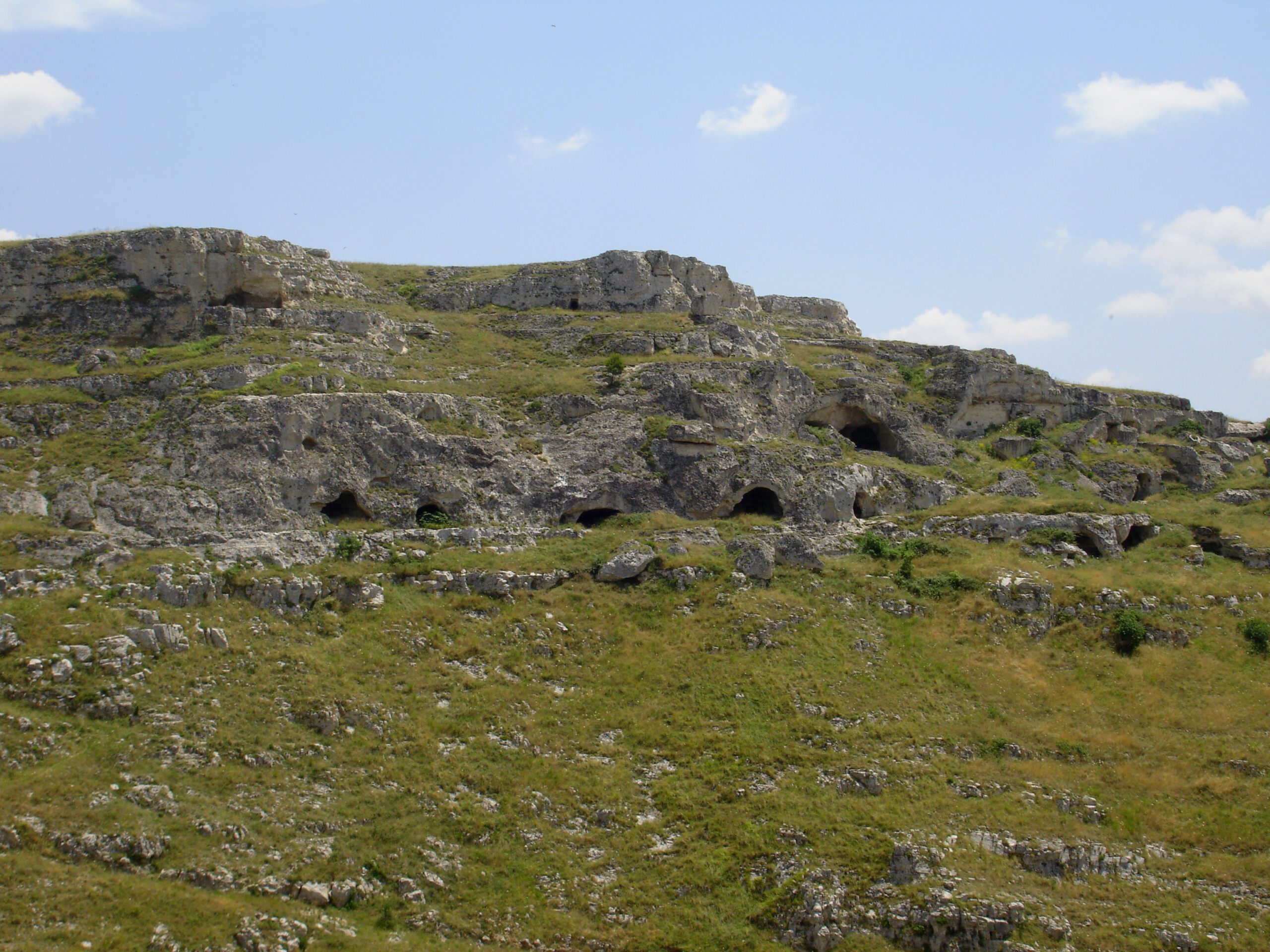
The site is the ancient districts of the city plus the Park of the Rupestrian Churches, spread across the Murgia, a calcareous highland plateau cut by deep fault fissures, ravines, rocks and caves. UNESCO describes that morphology plainly: deep ravines, locally gravine, bare highland plateaus, ancient cave churches, shepherd tracks marked by wells, and fortified farmhouses. The Gravina di Matera is the cut that gives the old city its frontage. Houses face the void. The plateau on the far side holds the open landscape and the rock-cut churches.
Occupation of the natural caves intensified from the eighth century, when the city began to spill beyond defensive walls dated to the Roman period and built around the first inhabited nucleus, the Civita. The earliest houses of the later settlement were simple caves closed by a wall of excavated blocks, set along two watercourses, the grabiglioni, in two districts that still organise a walk: Sasso Caveoso and Sasso Barisano. Between them, on the Civita, a Romanesque cathedral was built in the thirteenth century. The historic centre still keeps that distinction, and it also includes the fifteenth-century Casalnuovo district and the seventeenth- and eighteenth-century spine of the city known as the Piano.
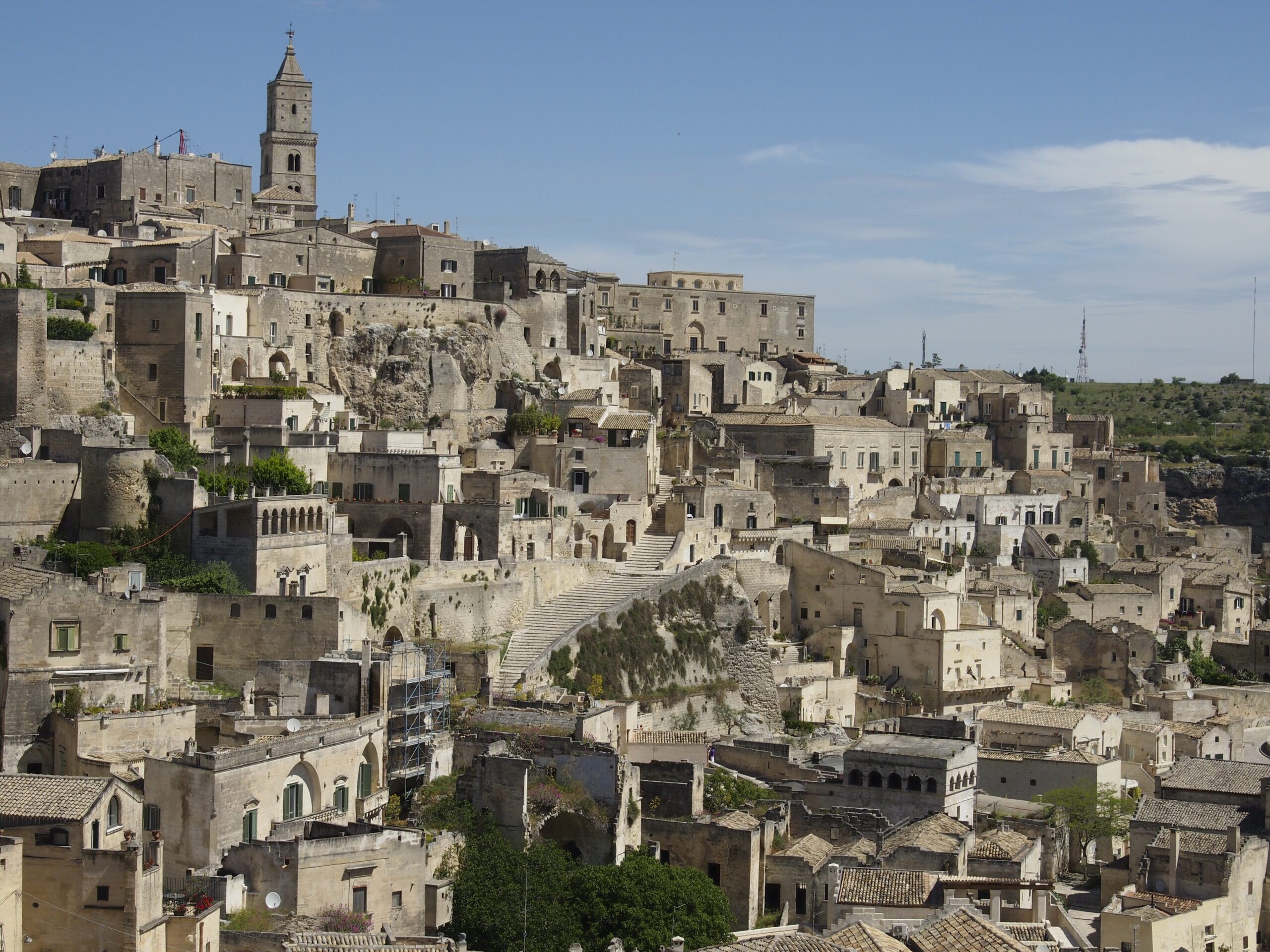
The property contains more than a thousand dwellings, along with a large number of shops and workshops. What reads, in a photograph, as a texture of stone is a working section of a city: houses above houses, cisterns cut where a courtyard used to collect water, and streets that are sometimes the roof of the dwelling below.
What the two Sassi actually are
Treat Sasso Barisano and Sasso Caveoso as two neighbourhoods with different temperatures, not as a single “old town” ticket.
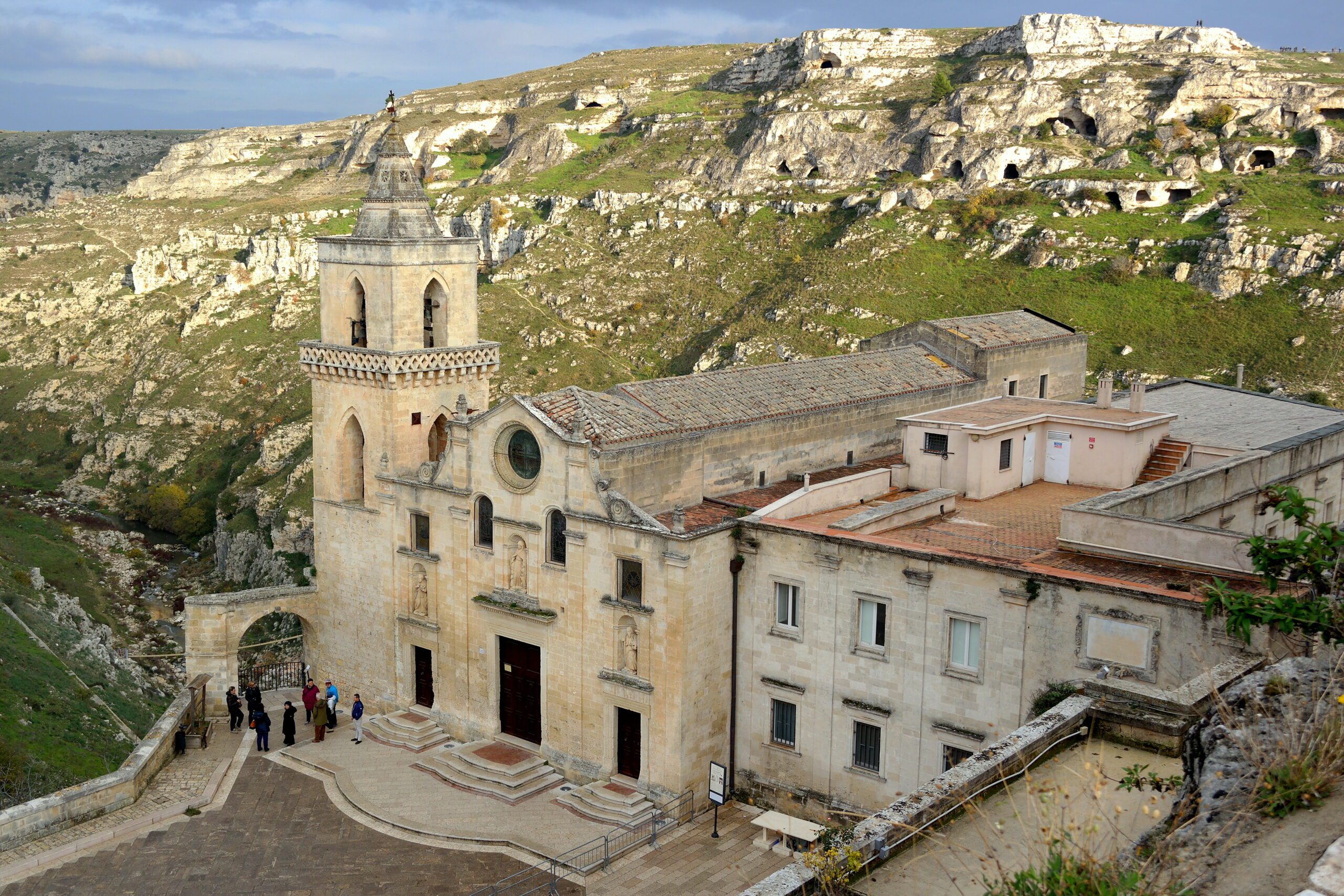
Sasso Barisano is the district you tend to enter first if you drop down from the streets of the later city. It is dense, stepped, and busy with the ordinary traffic of a place people still inhabit: doorways, small workshops, the odd dead-end that is really a private landing. Sasso Caveoso sits lower and closer to the edge of the ravine. Its public room is Piazza San Pietro Caveoso. The church of San Pietro Caveoso closes one side of that square; the FAI, Italy’s national trust, uses the square as the start of the walking directions to its house-museum in the quarter.
The Civita is the spur between them, and it is where the skyline collects. The cathedral’s position is not a scenic accident. UNESCO places that thirteenth-century Romanesque building on the Civita precisely because the Civita was the first urban nucleus, held between the two cave districts. A walk that starts on the Piano, drops through Barisano, crosses the Civita, and finishes on the Caveoso square is not a clever route. It is the city’s own sequence.
Above and beside those quarters, the later city is not a distraction to be avoided. The Piano is part of the historic centre UNESCO describes, and the tension UNESCO itself flags is exactly here: the buffer between the Sassi and the modern town of Matera needs watching, so that new building does not damage the ancient quarters. A honest visit includes that seam. The stone city is more legible when you have seen the ordinary city it was emptied into, and then partly returned from.
The evacuation, and the return
The romance of cave dwelling does not survive contact with the twentieth-century record, and it should not.
UNESCO’s statement of authenticity is unusually direct. The rock-cut settlement shows continuous occupation from prehistoric times until the mid-twentieth century. There was then an interruption: the entire population of the Sassi was relocated in the 1950s. The evacuation was carried out to improve sanitation and to renovate the ancient districts. Abandonment brought degradation. From the 1980s, people came back, and that return restored the traditional use and function of the property and, in the World Heritage language, “rejuvenated the spirit and feeling of the place.”
The legal machinery of that recovery is specific. Most of the historical area is owned by the Italian state and leased to the Municipality of Matera under Law 771 of 1986, which also set urban plans for how the area could be used and leased. One of those plans put particular emphasis on residential development as a way to rehabilitate the Sassi and re-establish a local population. The municipality’s Ufficio Sassi works with local offices of the culture ministry on building rules, state-owned buildings, and funds for restoration. National protection runs through the cultural heritage and landscape code, Legislative Decree 42/2004, which requires prior approval from the relevant superintendence for interventions that affect the property.
This is why Matera is a bad place for the usual heritage script in which “locals were pushed out and now only tourists remain,” or its opposite, in which “everything is authentic because it is old.” Both are too clean. The Sassi were judged unfit to live in, emptied, left to decay, and then deliberately repopulated under a law that treated housing as conservation. What you rent for a night may be a restored cave, a later facade over an older excavation, or a house rebuilt under rules written to bring residents back. The interesting question is not whether it is untouched. It is whether the restoration still reads as a dwelling rather than as a set.
In 2019 the city held the title of European Capital of Culture, shared with Plovdiv in Bulgaria. The European Commission’s culture directorate records Matera’s motto as “Open Future,” a programme framed around openness, social and cultural inclusion, and collaborative innovation, not around a postcard of poverty redeemed by travel writing. The title did not invent the city’s importance. The World Heritage inscription was already a quarter of a century old. It did change the volume of attention, and UNESCO had already warned, in the protection notes for the site, that increasing tourism can damage the presentation and the atmosphere of the property and has to be governed through visitor management.
A walk that respects the grain
Arrive with a sequence, not a checklist.
Begin on the edge of the Piano and spend the first half hour only on orientation. Find the Civita and the cathedral roofline, then the drop into Barisano, then the line of the ravine. Once those three are clear, the lanes stop feeling like a maze designed to trap you and start feeling like paths between roofs.
Descend Sasso Barisano in the morning, when the stone is still cool and the lanes are used by people going to work rather than by people posing on staircases. Cross to the cathedral when the light is high enough to read the facade, but do not treat the viewpoint as the visit. The view is the confirmation of a structure you should already have walked.
Continue into Sasso Caveoso and end at Piazza San Pietro Caveoso. If you want a single interior that explains the rest, use Casa Noha, the FAI house at Recinto Cavone 9. The trust describes it as a historical house and a gateway to the city: a multimedia telling of Matera’s story, meant as the start of a walk through the Sassi and the Murgia. From the square, the FAI’s own directions are simple. Take Via Muro to Via San Potito, turn right, and after about twenty metres go down the steps on the right into Recinto Cavone.
Check that stop before you build a day around it. Casa Noha is normally open every day except Wednesday, with hours that change by season, and last admission an hour before closing. The same page, as read on 3 October 2026, carries a closure notice: the house is shut to the public from 5 to 22 October for renovation and maintenance ahead of a reopening, with spaces, contents and displays being renewed. Ticket lines on that page do not even agree with each other. A short header lists adults at €6.50 and children at €3; a fuller tariff below lists adults at €7, ages 6–18 at €3, students up to 25 at €5, and a family ticket at €18 for two adults and two children. FAI members, Matera residents, and several other categories are listed as free. When a published page contradicts itself, the only serious advice is to confirm by phone or email before you go. The contacts on the page are +39 0835 335452 and fainoha@fondoambiente.it.
Give the far side of the ravine at least half a day, not a photo stop. The Park of the Rupestrian Churches is not a backdrop for the Sassi. It is half of the World Heritage property: the highland plateau opposite the city, with the cave churches, archaeology and open ground that show settlement across more than two millennia. Regional Law 11 of 1990 created the institution of the Archaeological Historic Natural Park and extended protection over some 6,500 hectares of the Murgia, including habitat, geology and watercourses as well as monuments. Walking there is how the city makes sense as a settlement rather than as a facade. You see the stratum the houses were cut from, and you see the distance people put between a dwelling and a church carved in the same rock.
Getting there, and staying in proportion
Matera is not on the Trenitalia map in the way Bari or Naples is, and planning as if it were produces a bad arrival.
The practical gateway is Bari. Matera’s own tourism site puts Bari Palese, the nearest airport, at 60 kilometres. From Bari Centrale, the connection that matters is Ferrovie Appulo Lucane, the regional railway whose station faces Piazza Aldo Moro, a short walk to the left as you leave the state-railway station. The same tourism page says FAL trains reach Matera Centrale in about 100 minutes, and it warns that on public holidays the train service gives way to buses. That is a reason to read the FAL timetable for the day you travel, not a reason to improvise. Brindisi’s airport is the long alternative, listed at about 154 kilometres, with a Pugliairbus connection that runs via Bari Palese. Naples Capodichino is listed at about 300 kilometres.
If a long-distance train drops you short of the city, two railheads recur in local instructions. Ferrandina, about 30 kilometres away, is served by FAL buses. Metaponto, about 50 kilometres away, is the connection for Sita buses into Basilicata. Coaches from farther north and from Rome are operated by several private companies the tourism office names, among them Marino, Marozzi, Liscio, Petruzzi, Miccolis, Flixbus and Itabus. Driving is straightforward on paper, via the A14 and the Altamura road from the Adriatic side, or via the Basentana if you are coming from the Tyrrhenian motorway, but the old quarters are a walking city. Park in the signed lots above them and go down on foot.
None of this is difficult. It is merely sequential. The mistake is to treat Matera as a side trip that can be “done” between a lunch in Alberobello and a flight from Bari. The property is a thousand hectares of city and plateau, and the part worth understanding is the relationship between them.
A few habits keep a visit from becoming another body in a narrow lane. Walk early, and again late, when the stone is occupied by residents rather than by tour groups timed to the same viewpoint. Do not climb on roofs, cistern mouths or church thresholds for a photograph; a great deal of what looks abandoned is either a home or a protected excavation. If you book a cave room, ask what the restoration actually did. A good host can tell you whether you are sleeping against living rock, a rebuilt wall, or a cistern that once held water for the house above. That conversation is worth more than any list of dishes, and it is the right scale of curiosity for a place that spent the 1950s being called a disgrace and the decades since being asked to perform authenticity on demand.
Matera has already survived both verdicts. The useful way to see it is to accept the complication: a prehistoric shelter, a medieval city, a twentieth-century evacuation, a legal programme of return, and a World Heritage site that now has to manage its own fame. Walk the two Sassi until the ravine is no longer a view and has become the reason the streets tilt the way they do. Then cross to the Murgia and look back. The city is clearer from the rock it was made of.
Sources
- UNESCO World Heritage Centre, “The Sassi and the Park of the Rupestrian Churches of Matera.” https://whc.unesco.org/en/list/670/
- UNESCO World Heritage Committee, Decision 17 COM XI, inscription of I Sassi di Matera, 1993. https://whc.unesco.org/en/decisions/3336/
- European Commission, Culture and Creativity, “Matera and Plovdiv” (2019 European Capitals of Culture). https://culture.ec.europa.eu/policies/culture-in-cities-and-regions/designated-capitals-of-culture/matera-and-plovdiv
- FAI – Fondo per l’Ambiente Italiano, “Casa Noha in Matera” (page consulted 3 October 2026; includes the 5–22 October closure notice and both published tariffs). https://fondoambiente.it/casa-noha-eng
- Matera Turismo, “How to get to Matera by plane, by train, by bus, by car.” https://www.materaturismo.it/en/how-to-get-to-matera/
- Ferrovie Appulo Lucane, official site (timetables; confirm holiday replacements before travel). https://ferrovieappulolucane.it/