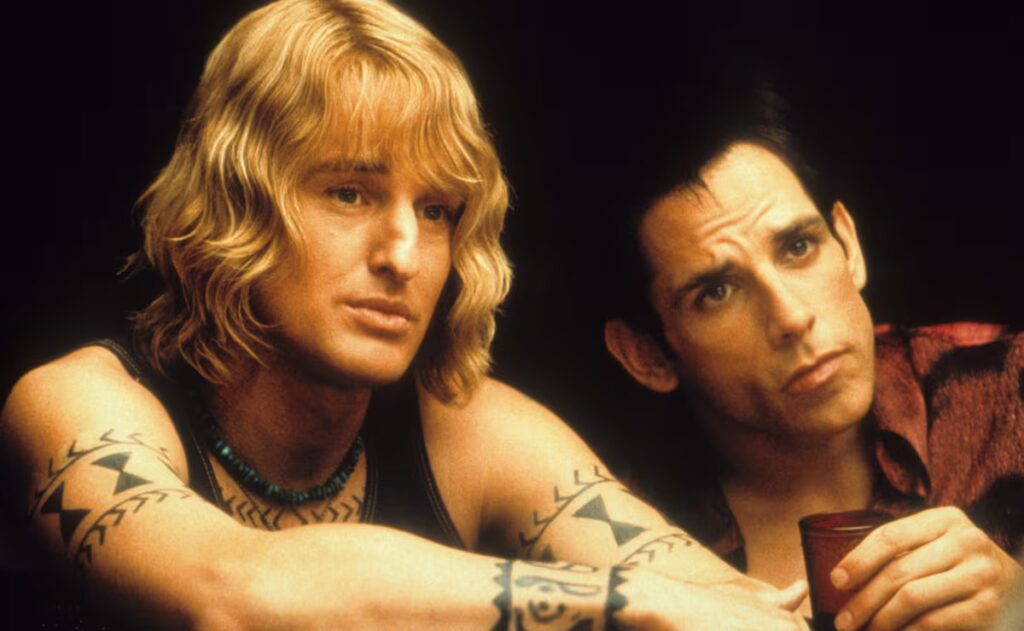
Recently, a large group of young individuals gathered near Barcelona‘s Arc de Triomf for a unique and unsettling event known as “aura farming.” This gathering involved hundreds of teenagers striking various poses and projecting an “original” attitude to gauge the “social respect” they could earn from onlookers. This spectacle, reminiscent of a certain film starring Ben Stiller released 25 years ago, could be described as part artistic performance and part collective delirium.
When Zoolander debuted in September 2001, it was met with harsh criticism. Major publications like The Washington Post referred to it as a “one-joke comedy,” while Time Out‘s global edition labeled it a “banal comedy that fails on every level.” Ángel Fernández Santos critiqued it as “utterly dull” and “clumsy.” Box-office sales also struggled, likely due to the film's release just two weeks after the September 11 attacks, a period when audiences were generally unresponsive to absurd humor. However, as we reflect on the film after a quarter-century, it becomes clear that it serves as a caricature of fashion, a sociological forecast of issues like image fixation, selfie culture, and heightened self-awareness dominating society in 2026.
Table of Contents
ToggleThe Emergence of “Faces”
Despite its comedic intent, one critical aspect of Zoolander is its examination of male modeling and how it subverts traditional gender roles, notes Estel Vilaseca, director of the Fashion Design Area at LCI Barcelona. The film's focus is primarily on looks—those in the film are almost treated as art forms. Iconic poses like the “Blue Steel” and the “Magnum face” are examples of constructs that today dominate social media, with many users adopting similar expressions that have infiltrated the collective imagination.
Stylist Rocco Marvin observes that, while framed as absurd comedy, Zoolander delivers a powerful critique regarding societal emphasis on appearance, fame, and public image construction. Underneath the comedic absurdity, the film probes how individual identity can become subservient to communal perception.
Derek's “Blue Steel Look” exemplifies the contemporary obsession with achieving a striking, iconic image. As the film exaggerates this pursuit, it remains relatable to today's social media landscape, where individuals meticulously curate their online personas.
John Hamburg, the project's screenwriter, noted in an analysis for Esquire that Zoolander was ahead of its time for addressing issues in the fashion industry, including child labor and eating disorders, while also prefiguring the dynamics of visual oversaturation that would eventually culminate in selfie culture and the rise of modern digital celebrities, such as the Kardashians and Hadid sisters.
The Trend of “Ugly” Luxury
Derek's pose not only anticipated the rise of Instagram culture but also satirized a controversial fashion trend—the commodification of poverty, as showcased by Mugatu's fictional Derelicte collection. Vilaseca highlights that the fashion world was already flirting with this trend at the time, citing John Galliano's spring/summer 2000 collection for Dior as an example. Galliano's designs, controversial for their reference to the homeless, were depicted in the film with a similar ironic twist.
The outfits gained notoriety for their newspaper-print pattern, inspired by homeless individuals spotted by Galliano during a jog. While Galliano's interpretation might have aimed for poetic commentary, it mirrored the provocative allure that drives the fashion industry today. Current brands, like Balenciaga, sell distressed clothing and trash bags at premium prices, reflecting a strategy where controversy and perceived ugliness become marketable.
Marvin notes that the Derelicte line epitomizes the arbitrary nature of the fashion industry's standards, revealing how something traditionally deemed ugly can transform into a trend through institutional endorsement. Although the portrayal in Zoolander is exaggerated, it critiques the industry's influence in determining desirability.
The Assimilation of Parody
Another noteworthy aspect of Zoolander is its complex relationship with the fashion industry it satirizes. Initially shunned by many fashion houses during production in 2000, designers later embraced the film—or more precisely, its sequel, Zoolander 2, after the original became a cult classic. Vilaseca points out this typical trajectory in the fashion world: a fear of reputational damage during initial exposure often turns into enthusiastic participation once the phenomenon is recognized for its profitability.
The path from rejection to acceptance mirrors what occurred with The Devil Wears Prada, where the first installment received little but cautious coverage while the sequel saw significant collaboration from influential media. This shift illustrates how the industry reacts to marketable trends, although critics often view the initial works as having more authenticity.
Ultimately, Zoolander‘s most striking predictions encompass the archetype of a modern influencer—individuals fixated on their image while disconnected from the complexities of reality. A pivotal scene portrays Derek Zoolander destructively critiquing a model of the Derek Zoolander Center for Kids Who Can't Read Good, culminating in his bewildered exclamation: “What is this? A center for ants?” This moment embodies the current state of many content creators whose flawless presentation often overshadows their understanding of the underlying context.
As we navigate today's relentless pursuit of aesthetic perfection, Zoolander serves as a humorous yet prescient commentary on how the absurdity of its narrative increasingly mirrors our contemporary reality.