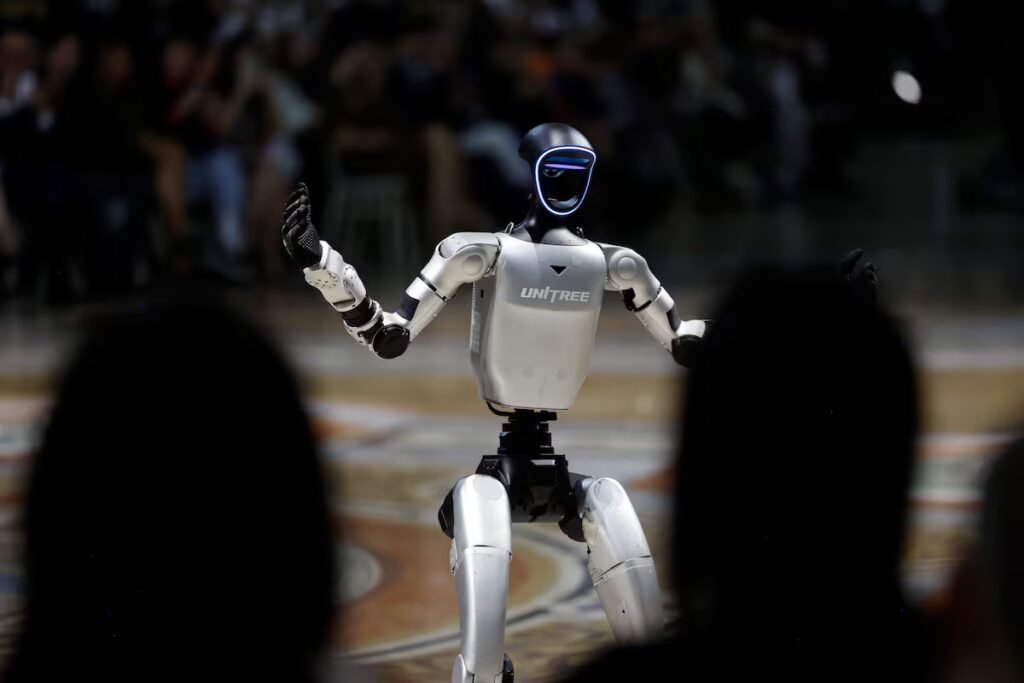
Yumi Nu, an acclaimed American model of Dutch and Japanese descent, is recognized globally for her contributions to the fashion industry. As the niece of DJ Steve Aoki, she has graced the covers of Sports Illustrated and walked the runway for prestigious brands such as L'Oréal and Victoria's Secret. This year, on September 22, Nu participated in Vogue World in Milan, where she shared the runway with four humanoid robots designed by the Chinese company Unitree Robotics.
Table of Contents
ToggleThe Intersection of Fashion and Technology
This groundbreaking showcase dubbed The Age of Intelligence, highlighted Vogue's initiative to integrate technology into an industry traditionally rooted in its rich history. Alongside Nu, elite models Ruth Deng and Alex Consani observed the mechanical newcomers with a mix of curiosity and resignation. As concerns mount regarding artificial intelligence potentially replacing a significant number of human workers in the next decade, the fashion modeling sector faces similar uncertainty.
Juan Costa Paz, Vogue's creative director, later elaborated on the intention behind featuring these androids. He described the spectacle as a pivotal moment in human history, asserting, “Robots are here to stay.” Despite their initial clumsiness and awkwardness on the runway, Costa stressed the inevitability of robotic integration into our future, stating, “They're still very clunky, like how the first cellphones were suitcase-sized.” He added that observing these robots is both fascinating and intimidating, acknowledging the permanence of AI and robotics in society.
Mixed Reactions to the Robotic Models
The response to the robots was not universally positive. Shane O'Neill, writing for the Washington Post, criticized the robots as “stupid” and “ugly,” claiming they disrupted what should have been a top-tier celebration. O'Neill expressed particular disdain for the androids' simplistic performances, which included clapping and dancing to engage the audience, alongside the unexpected appearance of a robotic dog, adding another layer of peculiarity to the event.
Fashion designer Alessandro Michele, the creative director at Valentino, reacted negatively to the presentation, questioning why the androids were “naked.” He implied that the display seemed to compromise the essence of showcasing fashion, further illustrating the mixed sentiments surrounding the evolution of robotic models in the industry.
Commentaries in various fashion and technology outlets echo similar sentiments. While some recognize the advancements in robotics, they argue that these androids lack essential skills demonstrated by previous models. For instance, Boston Dynamics' robots have showcased basic catwalk abilities in the past, such as dressing and undressing, capabilities reportedly missing in Unitree's creations. Critics suggest that the Milan event reflected a regression rather than progress in robotic presentation.
The Growing Hesitance Towards Robots
As robots become more prevalent in areas once dominated by humans, public feelings towards them have turned increasingly ambivalent. While these machines offer considerable advantages in many sectors—including manufacturing, healthcare, and even creative endeavors—they also raise concerns about the future of employment.
The perception of robots has evolved over the years. Where once they were charming, now many find them unsettling. Sherry Turkle's research indicates that children today resist forming emotional connections with robots, preferring interactions with their pets or peers over so-called intelligent machines. This shift reflects a broader societal skepticism regarding the role of robots in our lives.
The Future of Robotics in Fashion and Society
The integration of robots into various aspects of life, including events like the Mutua Madrid Open, where robots were employed as security, highlights a pragmatic but uneasy relationship with technology. Despite the functionality of these innovations, their integration comes with public unease. Robots, as they stand, often evoke fear due to their unpredictable counterparts in the animal kingdom, establishing an ironic contrast between perceived intelligence and actual capabilities.
The future of humanoid robots remains uncertain. They may not signify an apocalyptic takeover; instead, they pose potential challenges relevant to employment and societal roles. As the technology perseveres in advancing, Androids may offer a glimpse into a new era of possibilities, reshaping industries from fashion to beyond.