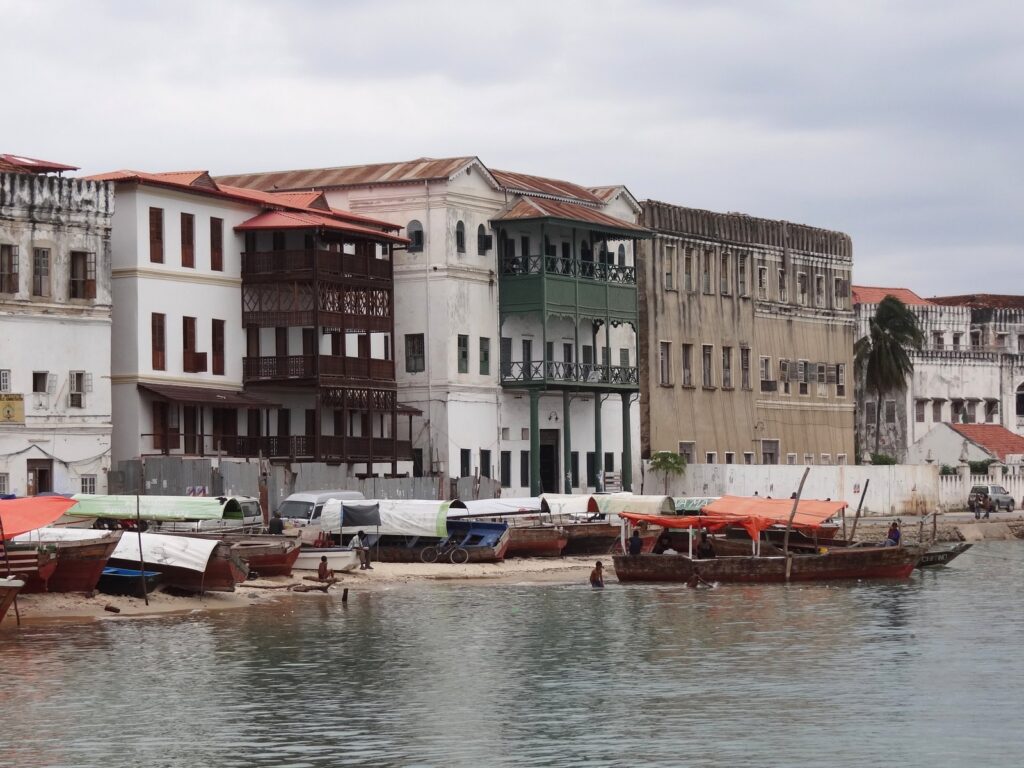
Most visitors give Stone Town a single night: a carved door, a spice tour, then a taxi to the beach. Resist that itinerary. The historic centre of Zanzibar City is not a prelude to the resort. It is one of the last intact Swahili ports, a city of coral-stone houses, harbour palaces and alley markets that still earn their keep. This is how I would spend two or three days learning to read it.
In 2000 UNESCO inscribed the “Stone Town of Zanzibar,” recognising an urban fabric as much as a list of monuments. The town sits on the western shore of Unguja, the main island of Zanzibar, in the United Republic of Tanzania. One night turns it into a stopover; two full days let the waterfront, the alleys and Darajani market belong to different hours of the same city.
Orient Yourself: A Peninsula Between Creek and Sea
Before you chase doorways, fix a mental map. Stone Town occupies a compact peninsula: the Indian Ocean along Mizingani Road to the west, and, to the east, Creek Road, where a tidal creek once separated the stone city from Ng’ambo, “the other side.” The creek has largely been filled, but the division still matters. West of it the lanes tighten into a coral-rag labyrinth; along it, Darajani market keeps the town in contact with the rest of the island.
The architecture is a ledger of the Indian Ocean. A Swahili trading settlement stood here for centuries; the Portuguese left a lighter sixteenth-century footprint. The decisive layer is Omani. In 1840 Sultan Said bin Sultan moved his capital from Muscat to Zanzibar, and the town became the court and counting-house of a clove and ivory economy that also trafficked enslaved people. A British protectorate followed, then the 1964 revolution and the union with Tanganyika that created Tanzania. You will walk all of those centuries in a few hundred metres, in houses of coral stone and mangrove beams, with stone benches, or baraza, set against the street. Distances are short, but the sun is not. Start early, and treat getting briefly lost as the point.
Walk the Alleys, Then Read the Doors
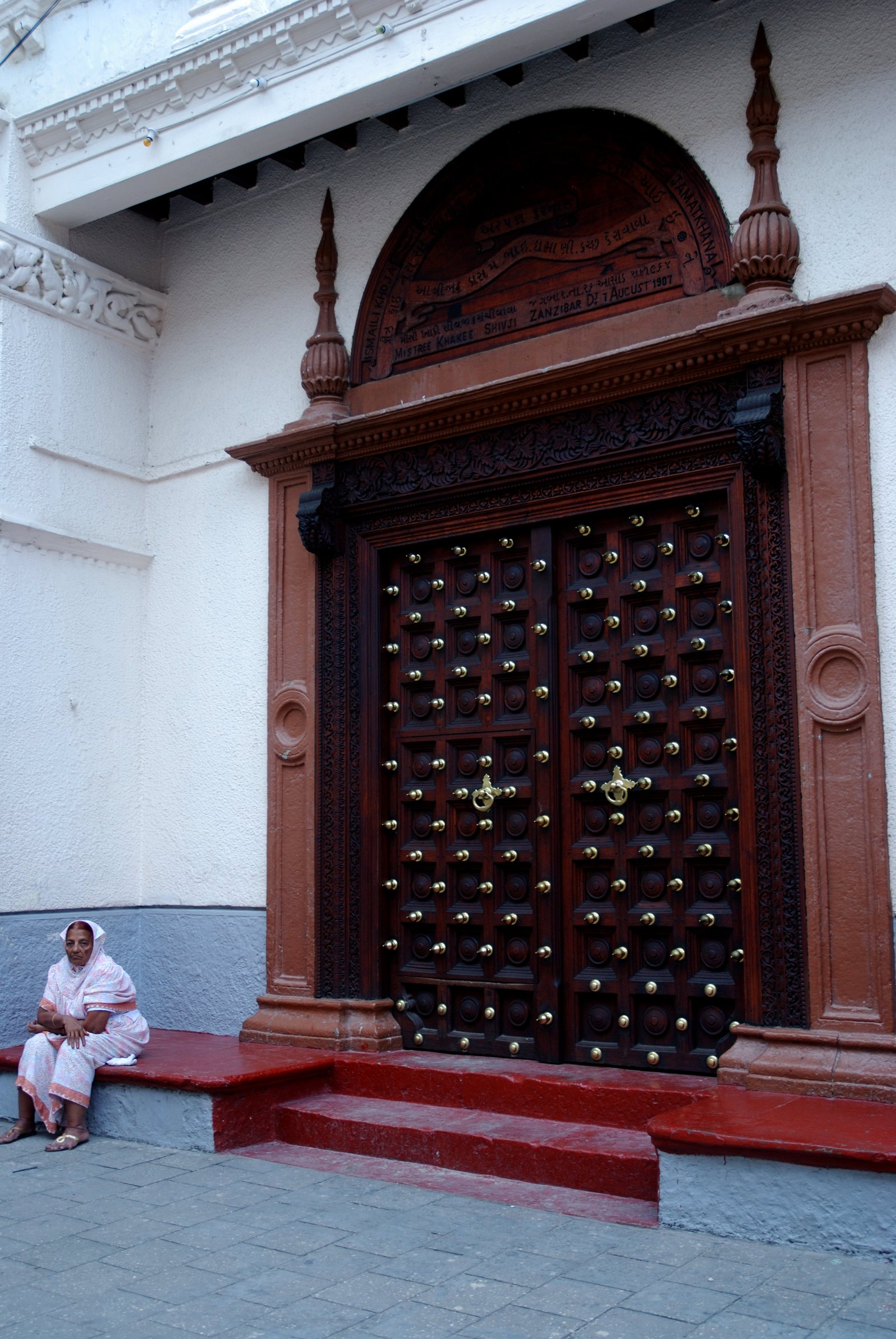
The carved doors of Stone Town deserve a close look, but they are not all the same. Older Omani-influenced doors tend to be rectangular, with heavy lintels and inscriptions; later Indian-style doors often rise to a rounded arch, dense with floral carving and brass studs. Many carry a date or the name of the household that commissioned them. The brass spikes, sometimes explained as a defence against elephants, are better read as display: wealth made visible at the threshold.
Look at the door, then look away from it. The baraza along the façade is social furniture, a place to sit and watch the lane. Upper floors project over the street; houses turn inward around courtyards; the lanes narrow, kink and open onto a square or the flank of a mosque. If you only collect doors, you will miss how the city works. Move slowly, dress modestly, and ask before you photograph people. Stone Town is a living, predominantly Muslim neighbourhood, not an open-air museum.
The Waterfront: Fort, Palaces and Forodhani After Dark
On the seafront, begin with the Old Fort, or Ngome Kongwe, a late-seventeenth-century Omani fortress on earlier Portuguese remains, and the oldest surviving fortification in the town. Inside you will usually find an amphitheatre and workshops. Some parts have been altered or are under works; go for the mass of the walls, and expect a working site rather than a perfectly restored relic.
Next to it stands Beit al-Ajaib, the House of Wonders, the ceremonial palace Sultan Barghash bin Said completed in 1883, often described as the first building in East Africa with electric lighting and a passenger lift. On 25 December 2020 part of the building collapsed. Restoration has continued with support from Oman; by 2026 official accounts placed the work at around sixty percent complete, but the interior remains closed, with no firm reopening date. See it from the waterfront as a monument under repair, not as a museum you can tick off.
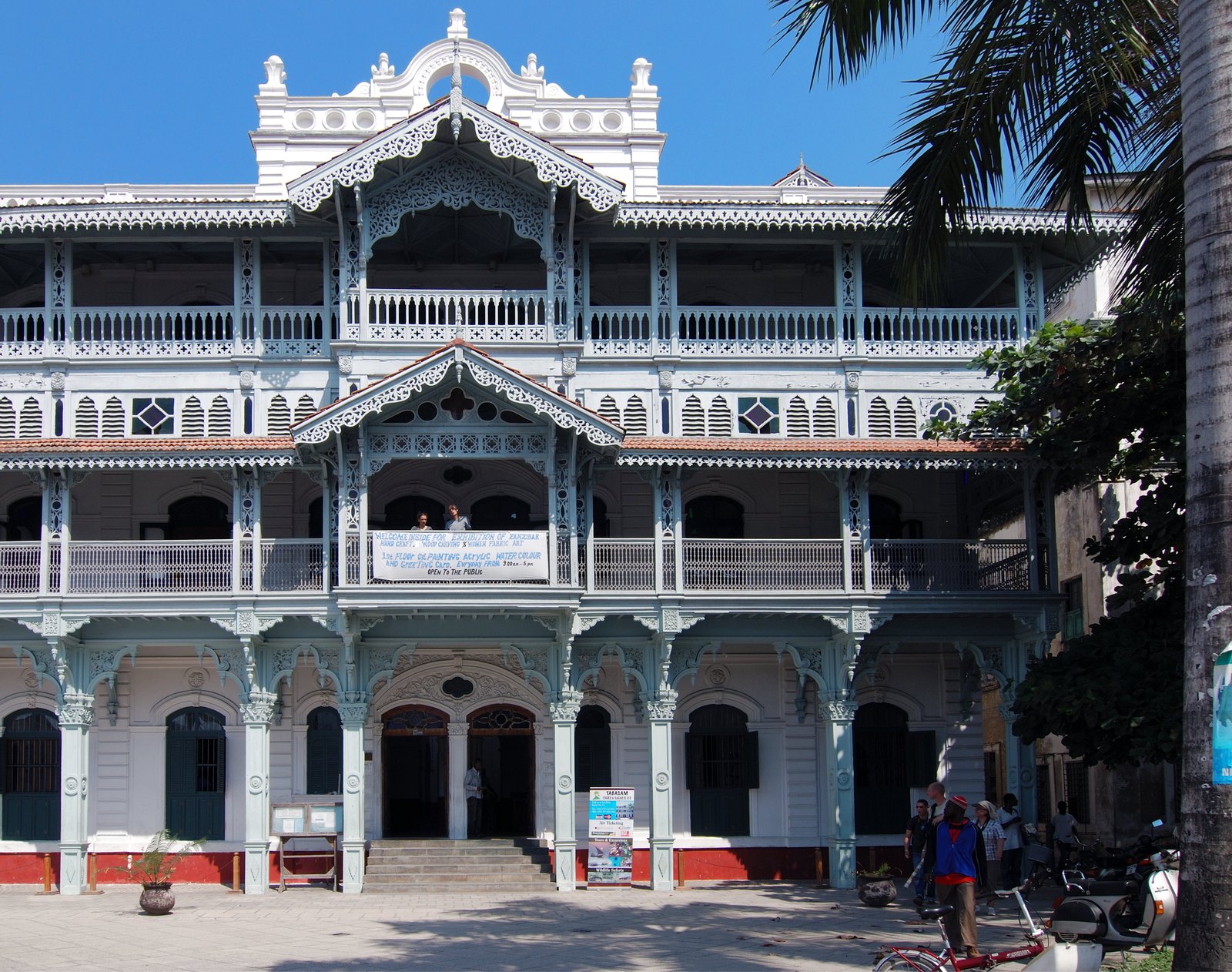
A short walk toward the port brings you to the Old Dispensary, whose tiered verandahs were financed in the late nineteenth century by the Indian merchant Tharia Topan and later restored with help from the Aga Khan Trust for Culture. The façade alone is worth the detour. Together, the fort, the wounded palace and the dispensary tell you more about this port than a dozen spice stalls.
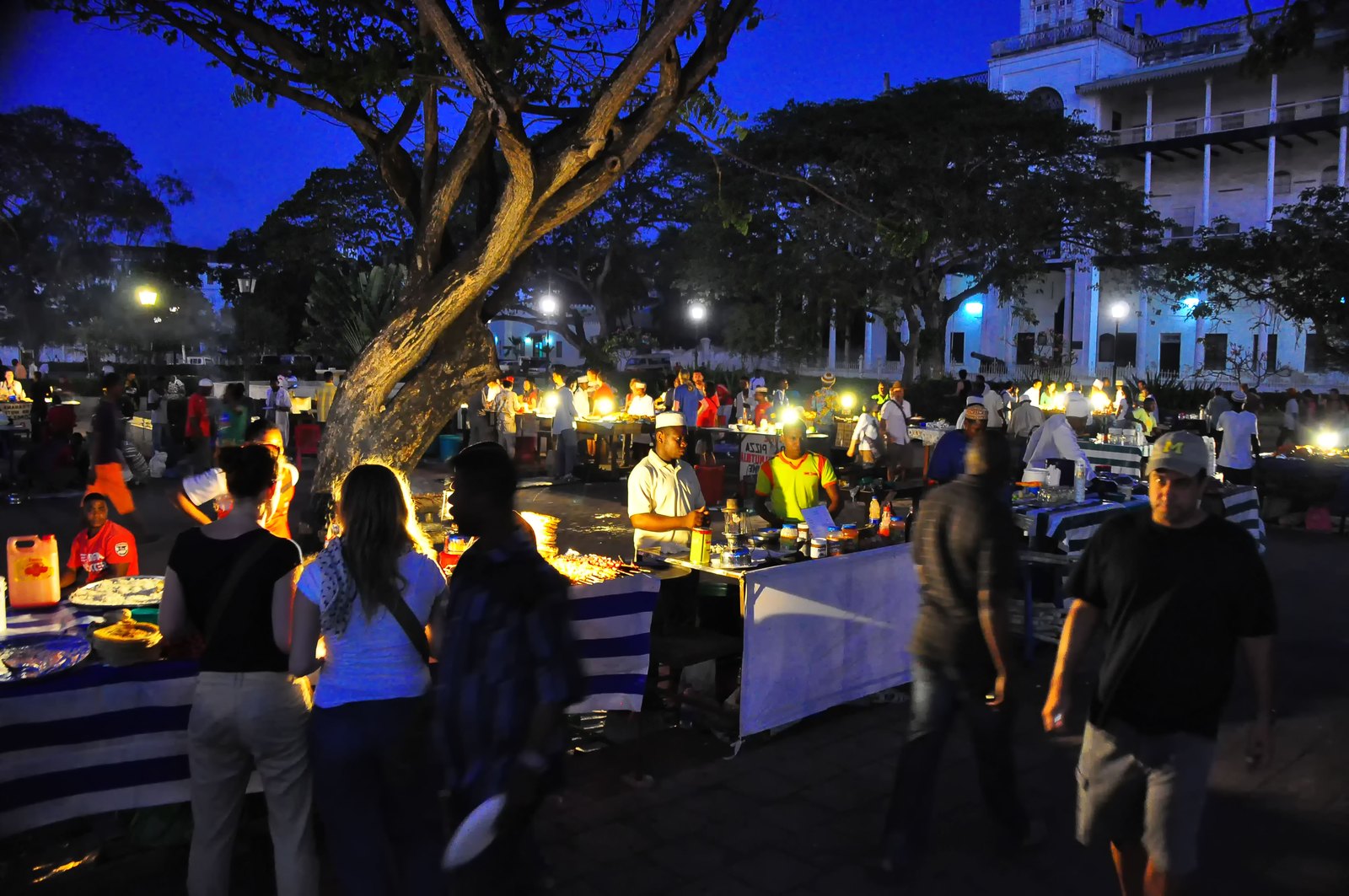
Return at dusk to Forodhani Gardens, the waterfront park that becomes the town’s evening table. After sunset, stalls lay out grilled seafood, Zanzibari “pizza” cooked on a griddle, urojo (a tangy potato-and-mango soup), sugar-cane juice and cassava. Agree prices, watch your bag, and eat where the turnover is brisk. In daylight Forodhani is only a pleasant park; after dark it is one of the best arguments for a second night in town.
Mkunazini: The Cathedral and What the Market Left Behind
Inland, on Mkunazini Road, Christ Church Cathedral occupies the site of Zanzibar’s principal slave market. Bishop Edward Steere laid the foundation stone on Christmas Day 1873; the church opened at Christmas 1879 and was consecrated in 1903. It is built largely of coral stone, with a barrel-vaulted roof of Steere’s devising and a mix of Gothic and island forms. The high altar is traditionally said to stand where the market’s whipping post once stood. Steere is buried behind it. In the grounds a memorial of chained figures marks the site; an exhibition in the adjacent St Monica’s buildings interprets the trade.
Go with more time than a photograph requires. This is still a working Anglican church as well as a memorial. Follow the photography rules that are posted. The wealth visible in the waterfront palaces and the studded doors is not a separate story from the market that once stood here. A serious visit has to hold both in view.
Darajani, Coffee and the Taste of the City
The packaged spice tour has its place — the clove plantations in the island’s interior are real, and a good guide will talk about botany and labour, not only cinnamon bark on a souvenir tray — but it should not be the only way you taste Zanzibar. Darajani market, along the old creek line, is where fruit, fish, meat and spices change hands in the morning. Come early, ask before you photograph traders, and carry small notes in Tanzanian shillings.
In the lanes around the market you will find canteens serving pilau, biryani, grilled octopus, mbaazi (pigeon peas in coconut), mandazi and strong coffee poured in the street. Follow the local lunch crowd more faithfully than a restaurant list. Zanzibar’s kitchen is a Swahili one, seasoned by Oman, India and the coast: richer, and more ordinary, than the word “spices” suggests. Dress with covered shoulders and knees in town, not only at religious sites. During Ramadan the rhythm of the day changes, and Forodhani after iftar can be especially vivid; be discreet with food and drink in daylight hours. Alcohol belongs in certain hotels and restaurants, not in the street.
Practical Stone Town: Ferries, Visas and When to Stay
Getting there: The simplest arrival is a flight into Abeid Amani Karume International Airport (ZNZ), a short taxi ride from the old town. Many travellers still come by sea from Dar es Salaam on Azam Marine’s Kilimanjaro fast ferries, or other operators, in about two hours. Book at official offices or the operator’s own site, pay non-resident fares in US dollars, and carry your passport: Zanzibar keeps its own immigration desk, so there is a check even though you have not left Tanzania.
Visas and insurance: Most visitors need a Tanzanian visa; one visa covers the mainland and Zanzibar. Apply at the official portal, immigration.go.tz. The ordinary single-entry tourist visa is typically USD 50 for a stay of up to 90 days; US passport holders must apply for a multiple-entry visa (USD 100). An eVisa in advance is more reliable than visa on arrival; check the official site for your passport before you book. Visitors must also hold mandatory inbound travel insurance, set by first port of entry: the Zanzibar Insurance Corporation (inbound.visitzanzibar.go.tz) if you land on the islands first, or the National Insurance Corporation (inbound.nicinsurance.co.tz) if you enter via the mainland. Keep the QR certificate; a private policy does not automatically replace this 2026 requirement. Travellers arriving from a country with a risk of yellow fever transmission may also need a vaccination certificate.
When to go: June to October is the kindest season for walking: drier and a little cooler. January and February are relatively dry but hotter. The long rains, roughly March to May, can flood alleys. Two nights is a minimum; three lets you see the waterfront by day and after dark, reach the cathedral without hurry, and still keep a morning for Darajani. Walk the town, use a licensed taxi for the airport, and carry a small torch. Beaches, spice farms or Changuu (Prison Island) make good day trips once the town has had its due.
Stone Town is the place where East Africa’s Swahili coast still meets the sea as a city, not a backdrop. Give it time, read the doors without stopping at them, and let Mkunazini complicate the prettiness. The spices will be offered to you anyway. The port only appears when you stop treating the town as a night between the runway and the beach.
More in Travel · Stone Town
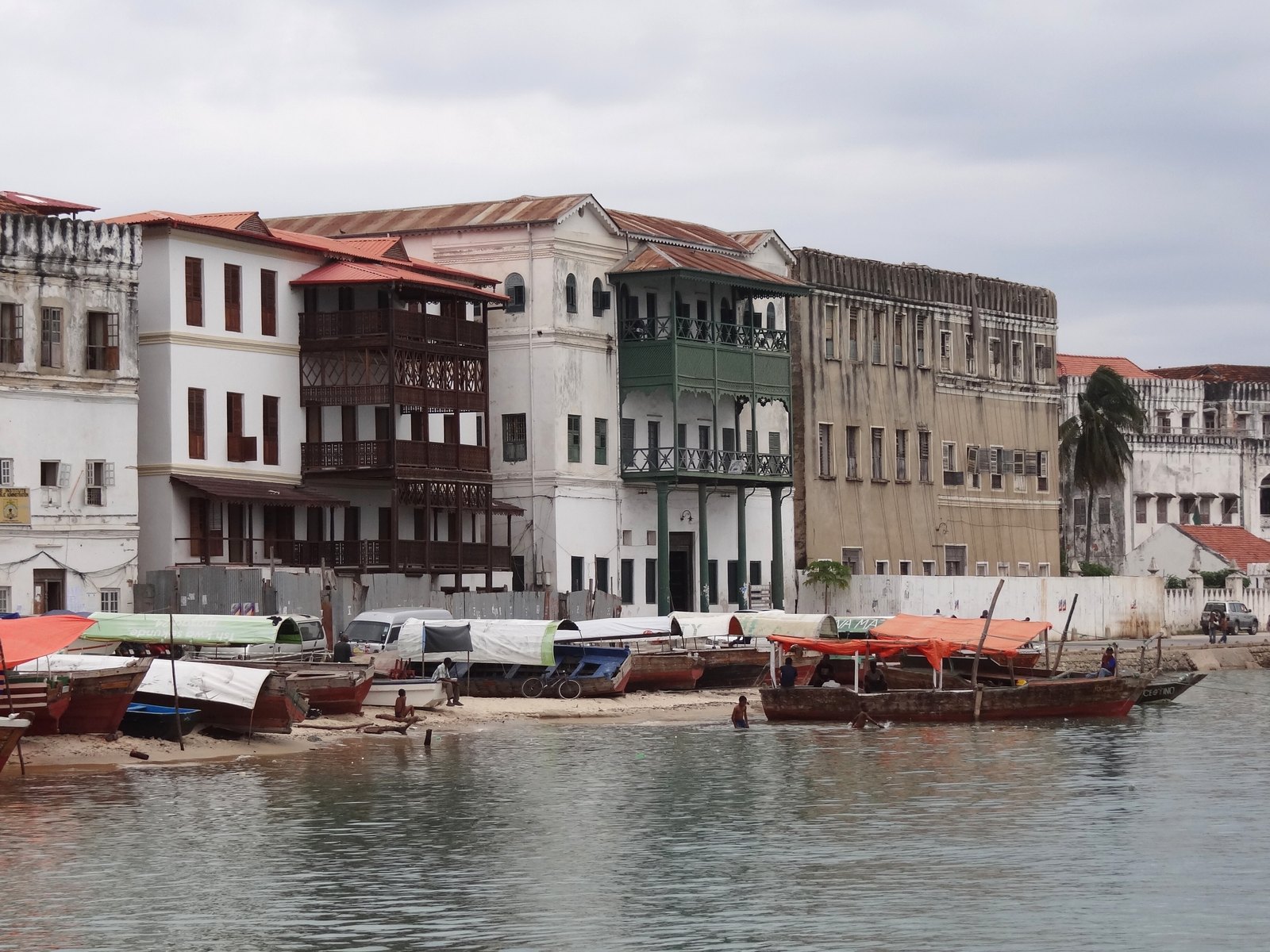
Featured image: The Stone Town waterfront, with coral-stone houses, carved balconies and working boats. Photo: Adam Jones / Wikimedia Commons, CC BY-SA 2.0